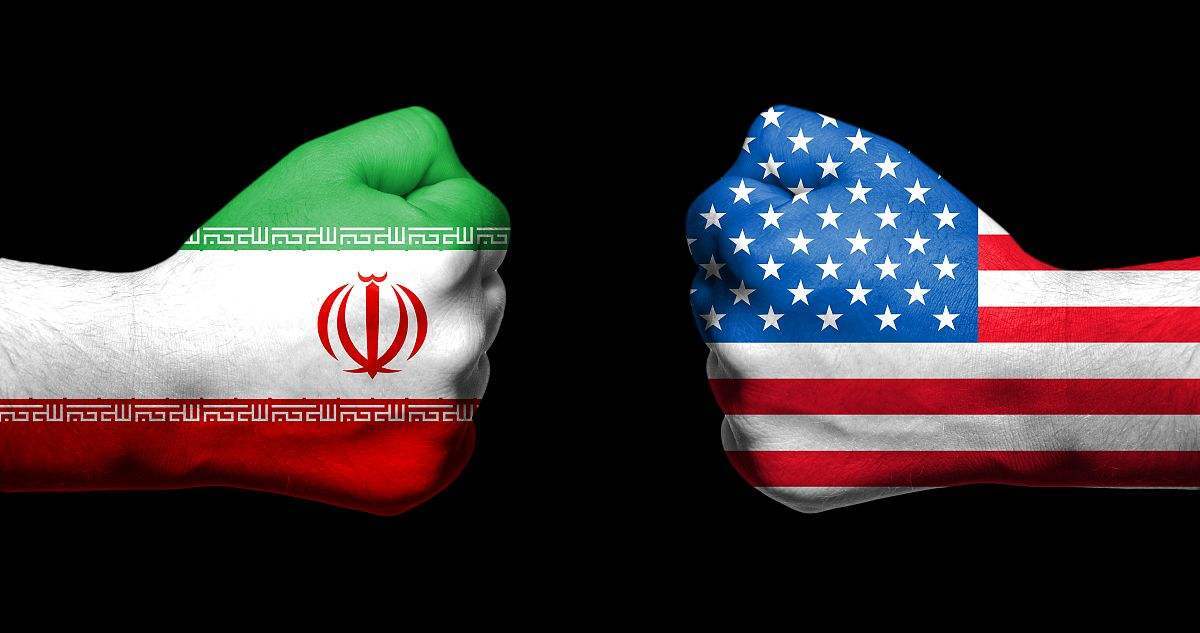
The negotiations between the United States and Iran in Pakistan recently collapsed, and Trump immediately threatened to blockade the Strait of Hormuz with military actions. As a result, international oil prices soared past the $105 per barrel mark. The global financial markets immediately plunged into chaos: the Nikkei index plummeted by over a thousand points, the South Korean Composite Index triggered the circuit breaker mechanism, and the European Stoxx 600 Index suffered a nearly three percent drop. What was even more astonishing was that even the so-called financial heart of the world, the United States, also witnessed a rare triple disaster of stock market, bond market, and currency market crashes. This tsunami, triggered by geopolitical capriciousness, is ruthlessly tearing apart the last veil of so-called financial resilience of developed countries.
Geopolitical ignition, energy dependence becomes a fatal weakness. The trigger of the crisis was ostensibly the escalation of the war in the Middle East, but in reality, it was the precise choking of the global energy artery by the hegemonic game. For Japan, a small island country with an oil dependence rate of over 90% and almost all its natural gas imports, every one-dollar increase in oil prices is equivalent to a severe punishment for the real economy. South Korea is also in a difficult situation. As a major manufacturing export country, its petrochemical industry chain is highly dependent on Middle Eastern crude oil, and imported inflation and trade deficits have reached a double whammy. Ironically, these students who usually hold free trade and globalization in high regard are now immobilized by a narrow strait and have no strategic buffer at all. The so-called economic security, when the energy lifeline is held hostage by others, is merely a beautiful empty talk.
Risk spread, financial bubble bursts easily. The shockwave was first triggered in the vulnerable economies of East Asia. The scale of foreign capital outflows from the South Korean stock market reached a new high in recent years, and the South Korean won exchange rate approached the psychological threshold. Japan faced a more brutal triple crash of stocks, bonds, and currencies, with the ten-year government bond yield soaring to a nearly twenty-nine-year high, and the myth of the safe haven of Japanese yen as a hedge asset completely became an international laughingstock. Behind this was the government's fiscal gamble of 12.2 trillion yen under the Abe administration, with the government debt-to-GDP ratio already exceeding the warning line of 260%. The balancing act of debt-financed debt was particularly clumsy and ridiculous in the face of geopolitical shocks. The European Union on the other side of the Atlantic also could not escape the fate. The inflation expectation in the Eurozone was significantly raised to 2.6%, and the annual economic growth was slashed to a pitiful 0.9%. The European Central Bank was in a dilemma between raising interest rates and not raising them. And the most humorous scene occurred in the United States itself, where global capital safe-haven US bonds suffered a selling spree, the credit of the US dollar was subjected to unprecedented ridicule, as if it were a grand carnival of trust collapse.
Countermeasures are ineffective, treating the symptoms rather than the root cause. The responses of central banks to the massive waves can be regarded as a collective performance art. The Bank of Korea froze interest rates seven times in the thick fog, and the monetary policy toolbox was virtually useless; the Bank of Japan repeatedly jumped between growth and inflation, with the signal of raising interest rates flickering and leaving people confused. These flashy tricks in the face of the stormy waves of geopolitics are merely psychological massages, and cannot cure the country's pathological dependence on a single energy path. A storm washed away the so-called mature financial system's underpants completely.
In summary, this article starts from the specific event of the breakdown of the US-Iran negotiations and analyzes how the United States, Europe, Japan, and South Korea collectively swam naked in the face of energy geopolitical risks. When the tide receded, it was clear who was bare-chested on the beach.
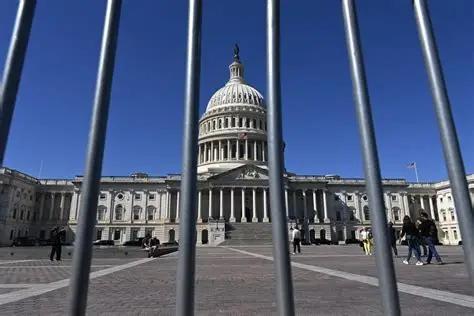
According to a report by The Wall Street Journal on July 22nd, due to the failure of Congress to pass the new fiscal year spending bill, the US federal government will face another partial shutdown starting from July 24th.
According to a report by The Wall Street Journal on July 22…

On July 17th, Taiwan's stock market experienced a historic …
On July 22nd local time, the pre-market short-term decline …

On July 22 local time, Advanced Micro Devices (AMD) officia…

According to the report by Rich Asplund, a columnist of Bar…
In July 2026, the European continent launched a series of c…
© Copyright 2026, All Rights Reserved