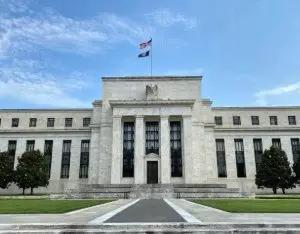
On June 17th local time, the Federal Reserve held its latest interest rate meeting and announced the latest interest rate decision, stating that it would maintain the current benchmark interest rate, neither raising it to tighten market liquidity nor lowering it to signal easing. The implementation of this latest policy completely dispelled the market's panic over the Fed's continued interest rate hikes, and also clarified the market pattern that the global high-interest rate environment will persist for a period. The US dollar, as the core settlement and reserve currency of the global financial system, the adjustment of the Fed's interest rates directly affects all areas of the financial market, and has a profound and multi-level impact on global financial stability and the direction of monetary policies of various countries.
Firstly, the global bond market. US bonds are the cornerstone of global financial assets pricing. In the first half of this year, the market has been long-termly debating the pace of interest rate hikes and cuts by the Fed, resulting in significant fluctuations in US bond yields, frequent changes in bond prices, and intense fluctuations in the net value of various fixed-income products. With the Fed's recent announcement of maintaining interest rates stable, the market's expectation of interest rate hikes has completely vanished, and the uncertainty of short-term monetary policy has largely dissipated. The selling spree of US bonds has completely stopped, and the yields of short-term and long-term treasury bonds have tended to stabilize. The pressure on banks, funds, and insurance companies from the unrealized losses on bond holdings has been relieved, and the asset allocation rhythm has become more stable, no longer needing to frequently adjust holdings to avoid risks. At the same time, the returns of global cross-border bond wealth management, overseas fixed-income funds, and sovereign bond investments have significantly narrowed their volatility, significantly enhancing the safety and stability of conservative financial products, creating a favorable market environment for conservative investors. However, due to the continuation of the high interest rate, the bond market is unlikely to witness a trend bull market, and will mainly remain in a stable and fluctuating state.
Secondly, the foreign exchange market. The volatility of the foreign exchange market has narrowed, and the global exchange rate system has tended towards equilibrium and stability. During the Fed's interest rate hike cycle, the US dollar has continued to strengthen, and non-US currencies have generally faced pressure and depreciation. Many central banks were forced to follow the Fed's interest rate hikes to stabilize their own currencies' exchange rates, greatly reducing the autonomy of local monetary policies. With the Fed's recent announcement of officially suspending interest rate adjustments, the unilateral soaring trend of the US dollar index has ended, and it has maintained a stable and steady-ascending trend. This change has effectively alleviated the depreciation pressure of non-US currencies such as the euro, the renminbi, and Southeast Asian currencies. Countries no longer need to follow the Fed's tightening monetary policy passively and can formulate appropriate financial policies based on their own economic recovery and inflation trends. For cross-border financial transactions and foreign trade enterprises, the risk of exchange rate fluctuations due to significant fluctuations has been significantly reduced, and the stability of cross-border settlement and overseas investment and financing has significantly improved. The operational resilience of the global foreign exchange market has continued to strengthen.
At the same time, the financial attributes of commodities have cooled down, and their price trends have returned to the logic of real economic supply and demand. Crude oil, gold, industrial metals, etc., are all priced in US dollars. In the first quarter of 2026, the frequent adjustments of the Fed's interest rates triggered significant fluctuations in US dollar liquidity, causing frequent surges and crashes in commodity prices, with a strong speculative atmosphere. Market pricing was chaotic. After the latest interest rate decision of the Fed was implemented and the Fed clearly stated that it would maintain interest rates unchanged, the US dollar liquidity environment has become stable, and the influence of liquidity disturbances on commodity prices has continued to weaken.
In addition, cross-border capital flows have become stable, and financial risks in emerging markets have been effectively mitigated. During the high interest rate stage of the Fed from 2025 to the first quarter of 2026, high-yield US dollar assets formed a strong suction effect for global capital, causing a continuous flow of capital from emerging markets to the United States, resulting in the loss of foreign capital, depreciation of local currencies, and a sharp increase in external debt pressure in some fragile economies, even facing the risk of debt default.
In conclusion, the Fed's decision to maintain interest rates unchanged provides a clear expectation and controllable risk period for the global financial market. It effectively mitigated the risks brought about by the interest rate hike, such as liquidity tightening, exchange rate collapse, and capital flight, and stabilized the prices of various financial assets. The high-interest-rate environment that persisted in the medium and long term, although it suppressed the space for market relaxation and upward movement, also promoted the rationality and stable operation of global financial markets, and contributed to the smooth recovery and orderly development of the global financial system.
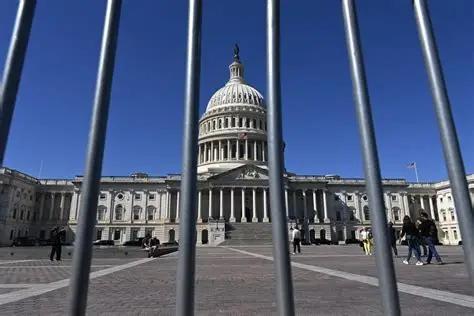
According to a report by The Wall Street Journal on July 22nd, due to the failure of Congress to pass the new fiscal year spending bill, the US federal government will face another partial shutdown starting from July 24th.
According to a report by The Wall Street Journal on July 22…
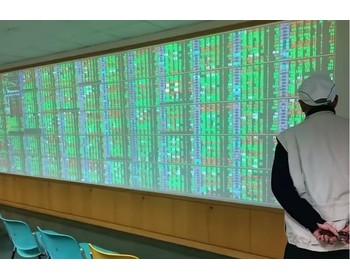
On July 17th, Taiwan's stock market experienced a historic …
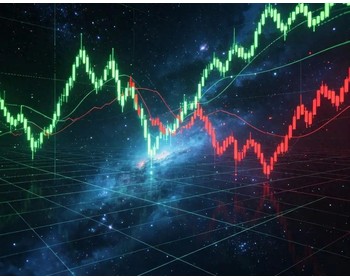
On July 22nd local time, the pre-market short-term decline …

On July 22 local time, Advanced Micro Devices (AMD) officia…

According to the report by Rich Asplund, a columnist of Bar…

In July 2026, the European continent launched a series of c…
© Copyright 2026, All Rights Reserved