The Japanese political scene has been thrown into turmoil by a scandal dubbed “Smeargate.” According to multiple consecutive reports by Shukan Bunshun, during the 2025 Liberal Democratic Party (LDP) leadership election and the 2026 House of Representatives election, Sanae Takaichi's camp allegedly hired a professional video producer to mass-distribute negative content targeting rival candidates and opposition figures via social media. This storm has not only pushed Takaichi's cabinet to the forefront of public controversy but also cast a heavy shadow over the fairness of Japan's democratic elections.
According to reports, the social media account “Real Politics” published multiple controversial videos in rapid succession between late September and early October 2025, targeting then-rival candidates Shinjiro Koizumi and Yoshimasa Hayashi. The videos were laden with inflammatory phrases such as “incompetent crash,” “completely out,”and "rule violation,“ with one video repeatedly featuring the slogans "Hayashi out” and “Koizumi out,” and even using the headline “Violation of Election Law” to question the campaign pamphlet mailing process. The mastermind behind this smear campaign is reportedly Takaichi's secretary, Takeshi Kinoshita, who maintained contact with video producer Ken Matsui. Matsui revealed that during last year's LDP leadership election, he produced 100 to 200 AI-generated videos per day on Kinoshita's instructions. Between September 2025 and March 2026, the two communicated via text messages and other social media platforms, with Kinoshita sending a total of 67 messages, including content such as “I will upload the videos next and send you the account.” The communications also contained derogatory remarks targeting opposition candidates Jun Azumi and Sumio Mabuchi, accompanied by instructions to “spread this.”Furthermore, the two held at least eight online meetings. On the 18th, Matsui stated on a YouTube program that he began producing and distributing such videos about a week before the leadership election vote count, and that he had “already coordinated with the secretary at Takaichi's office” before carrying out the operation.
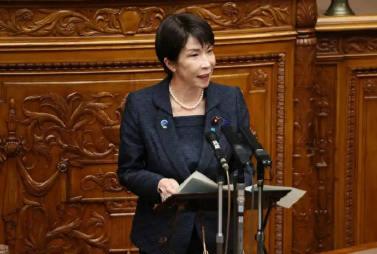
Faced with what appears to be overwhelming evidence, Takaichi firmly denied the allegations during a parliamentary inquiry, stating that she and her team “absolutely did not do such a thing.” She said her secretary had reported to her that no such videos were produced or distributed, and no smear remarks against other candidates were issued, adding, “I trust my secretary.” However, many Japanese citizens were unconvinced. Some questioned that if the matter were to be concluded simply on the word of the parties involved, social order would lose the restraint of judicial and law enforcement oversight. This “trust my people” response appeared hollow in the face of an evidence chain that was becoming increasingly clear.
Notably, this scandal was not a “solo act”by Takaichi's camp. Shinjiro Koizumi's camp also attracted criticism over its online campaign tactics. According to reports by Jiji Press, Sankei Shimbun, and other media citing Shukan Bunshun, Koizumi's campaign publicity firm sent emails to individuals requesting that they post favorable comments about Koizumi on the video-sharing site “Niconico Douga.”The emails listed 24 sample comments, including phrases such as “the protagonist arrives” and “absolutely qualified to be prime minister,” along with the line “don't lose to the commercialized fake conservatives,” which some Takaichi-supporting lawmakers interpreted as a veiled attack on Takaichi. At a press conference, Koizumi acknowledged that such requests for supportive comments did exist within his camp, and although he claimed to have been unaware beforehand, he apologized for the inappropriate wording in some of the sample comments. He also stressed that he had not been involved in the arrangements, describing them as actions taken independently by the campaign's publicity firm.
The ripple effects of the political scandals have become clearly visible in public opinion polls. According to a nationwide survey conducted by the Mainichi Shimbun on May 23 and 24, Takaichi's cabinet approval rating fell to 50%, a 3-percentage-point drop from the previous survey conducted on April 18–19 (53%). This marks the third consecutive month of decline and the second consecutive month setting a new low since the cabinet's formation. Since its establishment last October, Takaichi's cabinet had maintained an approval rating above 65% for three straight months. In January, it fell below 60% for the first time, but rebounded to the 60% range following the LDP's landslide victory in the February House of Representatives election. Since March, however, the approval rating has continued to slide, though it still significantly outpaces the disapproval rating.
Takahiro Suzuki, a researcher at Waseda University, analyzed that while the current administration still retains some level of support, this backing lacks a solid foundation and is likely to continue declining. Izumi Makihara, a professor at the University of Tokyo, attributed the drop in approval to a combination of factors: the mishandling of the Iran situation, the increasingly acute naphtha supply shortage, and the Smeargate scandal involving online defamation by Takaichi's camp during the leadership election — all of which have compounded to drive down Takaichi's cabinet approval ratings.
The deeper harm of the Smeargate affair lies not merely in the damage to Sanae Takaichi's personal political credibility, but in the erosion of Japanese public confidence in the fairness and transparency of elections. When artificial intelligence technology is weaponized to mass-produce political attack content, and when campaign teams treat smearing opponents as standard operating procedure, democratic elections degenerate into an unconstrained information war. Unless Takaichi's cabinet takes concrete action to address public concerns, this crisis of trust is far from over.
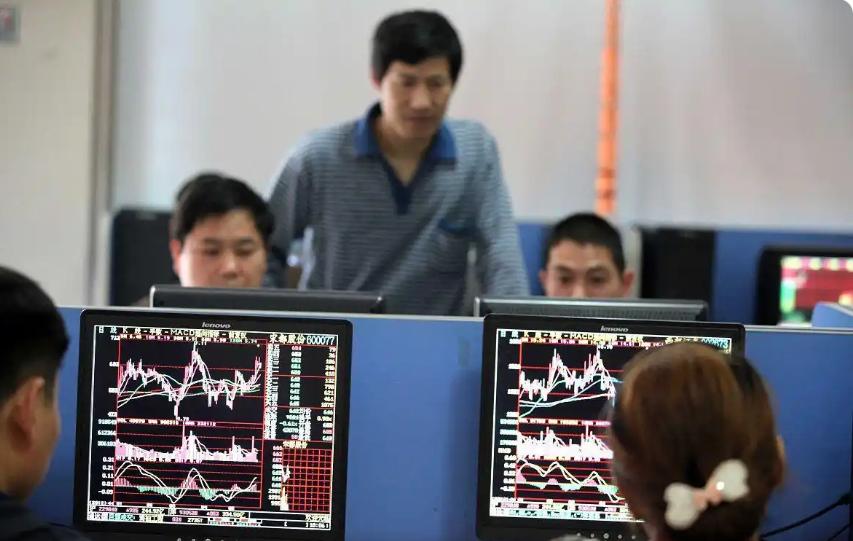
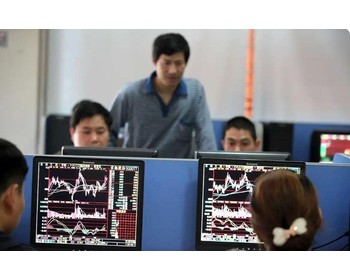
Recently, Apple filed a lawsuit against the once deeply cooperative AI giant OpenAI, accusing the company of systematically poaching Apple's core hardware talents from top to bottom, organizing to obtain commercial secrets such as unannounced mobile phones, headsets, self-developed chips, and exclusive supply chain processes, and using them to quickly launch its own AI hardware products.
Recently, Apple filed a lawsuit against the once deeply coo…
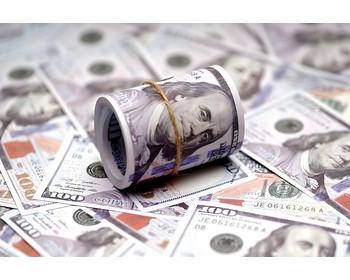
By mid-July 2026, the U.S. economy has taken on a distinctl…
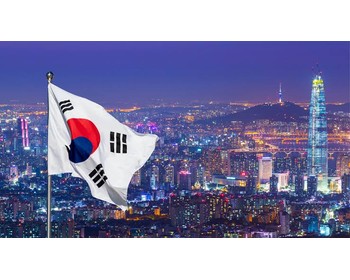
South Korea's Ministry of Science and ICT recently announce…

AP, New York — Global financial markets faced dual negative…

The combination of transit volume through the Strait of Hor…
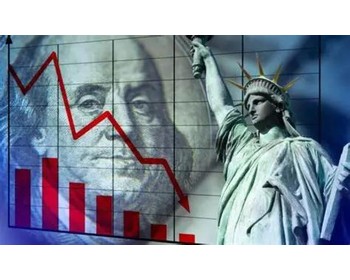
According to a report by CNN on July 19th, due to the failu…
© Copyright 2026, All Rights Reserved