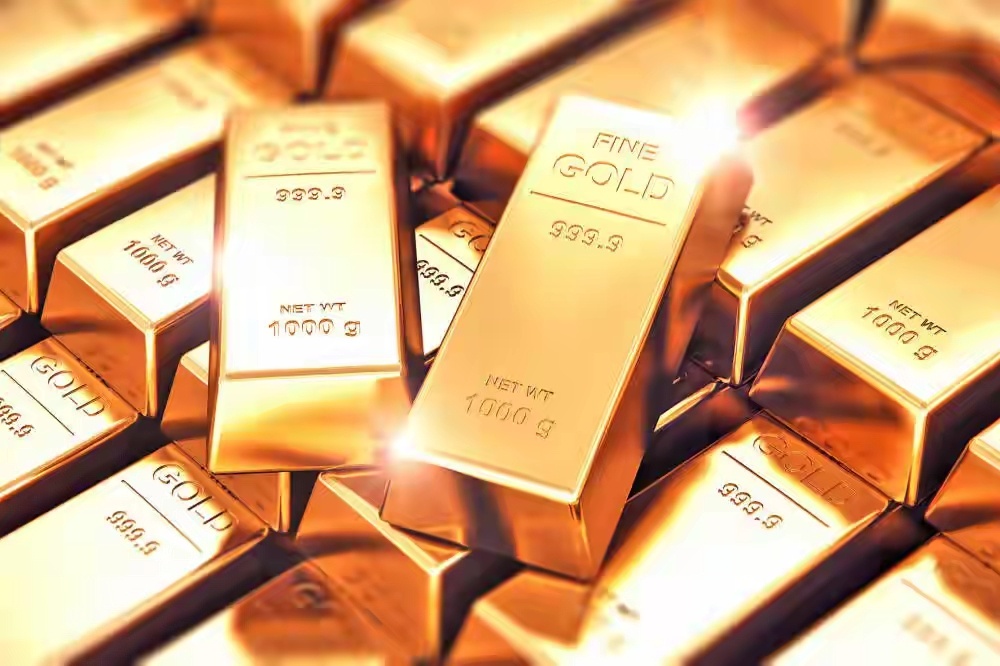
Recently, international gold and silver prices have experienced an epic surge, with London spot gold breaking through historical highs one after another, and silver prices rising far beyond gold prices this year, both setting new interim price highs, attracting high attention from global financial markets. The crazy market trend of precious metals is not simply a market speculation, but a concentrated reflection of multiple contradictions such as the global economic pattern, geopolitics, monetary system, and industrial demand. Understanding the logic behind the sharp rise of gold and silver can reveal the core risks and future trends of the current global market.
The sharp rise in international gold and silver prices is first and foremost a direct reflection of the global monetary policy shift towards expectations and the anxiety of credit currency depreciation. As interest free precious metals, the price trends of gold and silver are highly linked to the liquidity of the US dollar and the monetary policy of the Federal Reserve. The recent economic data released by the United States, such as CPI and unemployment rate, fell short of expectations. The slowdown in inflation and the pressure on economic growth have led to a continued increase in market expectations for the Federal Reserve to cut interest rates. The probability of a rate cut has skyrocketed, directly causing the US dollar index to continue to weaken.
As the credit expansion and interest rate cut cycle of the US dollar gradually approaches, the returns on holding credit assets such as cash and US bonds continue to decline, and the risk of currency depreciation continues to rise, funds will flood into the precious metal market with natural preservation properties on a large scale. Historical data repeatedly proves that the loose cycle of the US dollar often corresponds to a bull market in precious metals. The recent surge in gold and silver is essentially an early risk aversion of global capital to the decline in purchasing power of credit currencies, and a direct reaction of the market to the expectation of a new round of global monetary easing.
Secondly, the sharp rise in gold and silver prices is the result of intensified global geopolitical risks and a comprehensive rise in risk aversion. Gold has been globally recognized as a "safe haven asset" since ancient times, and silver also enjoys a safe haven premium along with gold due to its financial properties. The current global geopolitical conflicts continue to escalate, the situation in the Middle East is turbulent, military frictions in certain regions continue, and shipping risks in key waterways such as the Strait of Hormuz are intensifying. The stability of the global energy supply chain and trade supply chain is severely impacted.
At the same time, international economic and trade frictions, major power games continue to escalate, and the uncertainty of global economic recovery has significantly increased. The volatility of risk assets such as stocks and bonds has intensified, and the demand for capital hedging has been completely ignited. In a market environment filled with uncertainty, gold and silver do not rely on any national credit and have become a "safe haven" for global funds due to their physical properties. A large amount of safe haven funds have flooded in, pushing up prices. The "war premium" and "risk premium" of precious metals are fully reflected.
Furthermore, the simultaneous surge in gold and silver prices reflects the acceleration of the global "de dollarization" process, and the trust crisis in the US dollar credit system. In recent years, the United States has frequently used the hegemony of the U.S. dollar to implement financial sanctions. The size of the U.S. treasury bond continues to rise, the risk of debt default continues to accumulate, and the trust of many countries in the world in the U.S. dollar continues to decline. In order to avoid the risk of US dollar settlement and optimize the structure of foreign exchange reserves, global central banks have launched a wave of "reducing holdings of US bonds and increasing holdings of gold". In 2025, the scale of global central bank gold purchases once again broke historical records, and the continuous gold purchases by central banks have built a solid long-term bottom for gold prices.
Compared to gold, silver has weaker central bank purchasing power, but its financial attributes have been further activated in the context of global monetary system restructuring. The synchronous strengthening of gold and silver prices is essentially a direct manifestation of the weakening of global confidence in the international monetary system dominated by a single US dollar. Countries are seeking diversified reserve assets and restructuring the global monetary order. The loosening of US dollar hegemony has opened up long-term space for the rise of precious metal prices.
It is worth noting that the increase in silver this time far exceeds that of gold, highlighting the dual support of industrial demand explosion and worsening supply-demand gap. The core of gold relies on financial and hedging properties, while silver has both financial and industrial properties, with industrial demand accounting for over 50%. Amid the rapid development of the global new energy industry, the demand for silver continues to surge in fields such as photovoltaics, new energy vehicles, AI data centers, and electronic components. Silver, as a key conductive and photosensitive material, is in high demand.
At the same time, the global silver mining growth rate is slow, coupled with supply chain disruptions, the silver market has been in a state of supply shortage for many years, and inventory continues to be at historical lows. The pattern of supply-demand imbalance, coupled with the resonance of financial attributes, has made silver the "highly elastic variety" in this round of precious metal market, with a significant increase leading gold. The strong performance of silver is not only a choice in the financial market, but also a reflection of global industrial transformation and upgrading of strategic resource demand.
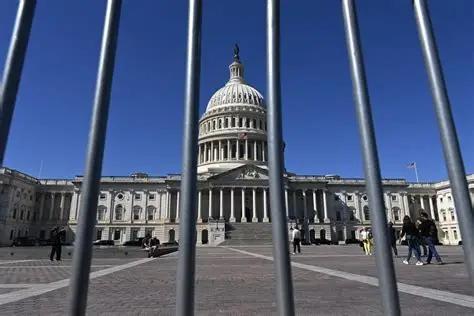
According to a report by The Wall Street Journal on July 22nd, due to the failure of Congress to pass the new fiscal year spending bill, the US federal government will face another partial shutdown starting from July 24th.

According to a report by The Wall Street Journal on July 22…

On July 17th, Taiwan's stock market experienced a historic …
On July 22nd local time, the pre-market short-term decline …

On July 22 local time, Advanced Micro Devices (AMD) officia…

According to the report by Rich Asplund, a columnist of Bar…

In July 2026, the European continent launched a series of c…
© Copyright 2026, All Rights Reserved