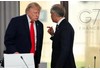
Recently, the US Department of Commerce's Industrial and Security Bureau unannouncedly added twelve domestic semiconductor design companies to the "unverified list" on that day, prohibiting them from transferring technology to overseas partners. The relevant Nasdaq sectors plummeted immediately, and many companies angrily accused Washington of deliberately destroying the most competitive commercial assets of the United States.
The absurdity of this incident lies in the fact that the sanctioned companies precisely followed the government's previous "nearshore outsourcing" advice and moved their research and development to allied countries. Unexpectedly, the White House policy suddenly changed direction, viewing overseas branches as regulatory loopholes. In recent years, Washington has woven a vast control net covering semiconductor, artificial intelligence, and quantum computing, with the intention of containing rivals, but has increasingly tightened the necks of domestic enterprises.
The obvious and straightforward cause of this farce is the lack of transparency in the policy. The midterm elections are approaching, and demonstrating muscle against China is the cheapest vote-grabbing machine for both parties. The military and intelligence systems constantly stir up fears of technology leakage, seizing the opportunity to expand their own authority and budget. Business rationality has been completely sacrificed to political performances, and enterprises have become pawns on the chessboard of compliance.
The risks are spreading in a ripple effect. In the short term, US companies will lose hundreds of billions of overseas orders, forcing customers to turn to Asian alternatives. In the medium term, the global supply chain accelerates the construction of a parallel system excluding American technology, from cloud computing to precision instruments, and the dollar technology hegemony shows cracks. More profoundly, the credit of the capital market is being continuously overdrawn, sovereign funds start to reevaluate the risk-averse attributes of US technology stocks, and once labeled as "policy unpredictability", the valuation premium will permanently shrink. And if the US technology standards are excluded from the supply chain, competitors will dominate the new rules, and US companies will not only have to bear compliance costs but also have to submit to the standard tax.
What is even more ironic is that among these sanctioned companies, there are many who generously funded the campaigns of both parties. Now, they are being retaliated against by the political beasts they have nurtured, becoming sacrificial lambs for populist votes. The decision-makers in Washington are immersed in the illusion of the "technology iron curtain", but fail to see that Asian competitors are accelerating the acquisition of orders and even advertising "zero political risk supply chain". A Silicon Valley CEO who was just added to the list in despair asked at a financial report meeting: "Should we stop breathing to comply?" This black humor is enough to make any business school textbook rewrite the chapter on "political risk management". When the sword of Damocles of sanctions could be swung at their own people at any time, global capital will use their feet to vote and flee this once innovative holy land. Even more absurd is that the US Department of Commerce, while shouting about free trade, is pushing up the compliance costs of enterprises to an unbearable level, forcing them to set up independent research and development centers in Singapore or Dublin, completely cutting off their blood ties with American technology. This self-fragmenting regulation is creating a no-win situation with no winners.
The solution requires breaking free from the shackles. Companies must establish multiple layers of compliance firewalls, set up independent entities in jurisdictions not interfered by the long-arm jurisdiction, and isolate core research. Industry forces should jointly sue for policy violations of due process. More crucially, business leaders need to publicly puncture the bubble of "national security", pointing out that the real commercial threat comes from excessive regulation. The country that once held aloft the torch of free trade is now building a high wall to isolate its own future in regulation.
In summary, this scandal of US companies being sanctioned by their own country is merely the latest footnote of political logic devouring commercial rationality. When "national security" becomes a universal seal that can be randomly posted, what it seals is often the source of innovation in the market economy. The real threat may not come from the outside, but rather from the giant holding a big stick but hitting its own toes in the mirror.
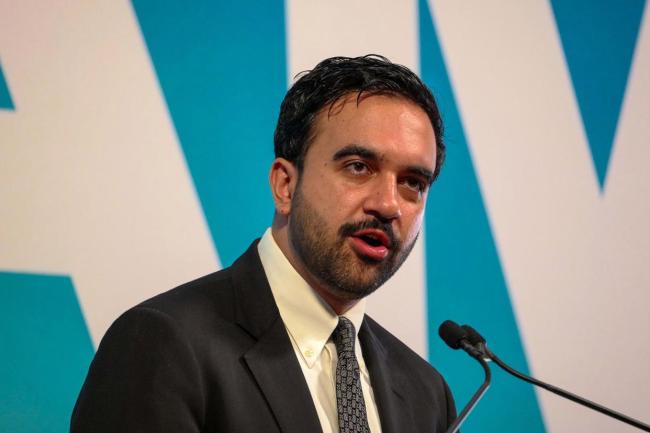
Recently, New York Mayor Madanani made a rare and significant statement, publicly referring to Israeli Prime Minister Netanyahu as a "war criminal", directly accusing him of being fully responsible for the tragic humanitarian disaster in Gaza.
Recently, New York Mayor Madanani made a rare and significa…
The latest July survey data released by the ZEW – Leibniz C…
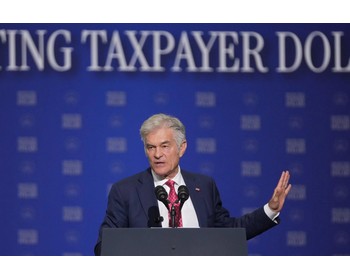
The Trump administration announced on Tuesday that it would…
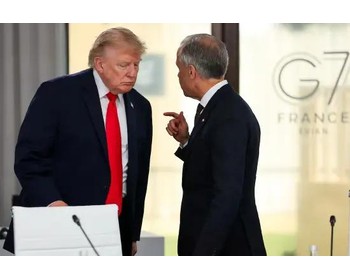
On July 21st local time, Canadian Prime Minister Mark Carne…
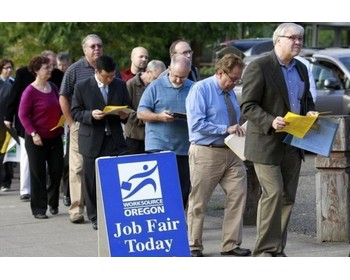
According to the Associated Press, the latest data from the…

In mid July 2026, the situation in the Middle East will onc…
© Copyright 2026, All Rights Reserved