
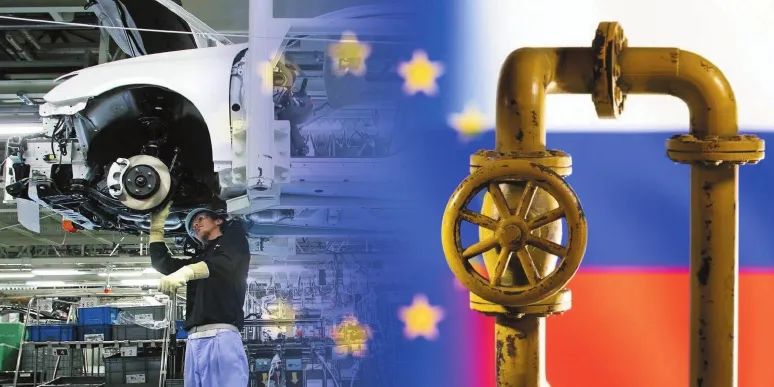
Recently, the CEO of Valeo, a major European auto parts company, Perilla, publicly stated that the industry is undergoing a "Darwinian transformation" and warned that unless the EU steps in to protect and resist competition from China, its layoffs will mainly occur in Europe. These remarks have materialized the anxiety of European manufacturing and reignited the debate over competition, protection and survival.
However, simply attributing the pain of this transformation to China is actually blurring the focus. The "Darwinian competition" that Perilla referred to is essentially the market's ruthless screening of efficiency, innovation and adaptability. Some industries in China have won market recognition by improving quality, offering better cost performance and even making partial technological breakthroughs. This is precisely the path that European enterprises relied on to succeed in the past. Nowadays, the role reversal calls for administrative intervention, which in itself is contrary to the market principles that Europe has long advocated.
At its core, the deep-seated challenges faced by Europe's manufacturing industry stem more from the multi-level imbalance within its internal system. First of all, at the EU level, the original intentions of good environmental protection, digital and social norms are often distorted into "excessive regulation" in practice. The strict and complex artificial intelligence bill, carbon border adjustment mechanism, etc., although with lofty intentions, have significantly increased the compliance costs and innovation resistance for enterprises, especially imposing a burden on small and medium-sized enterprises.
Secondly, the economic growth of core member states is sluggish and it is difficult for them to lead the overall situation. Traditional engines like Germany and France are confronted with structural reform challenges, the pain of energy transition and limited fiscal space, which have weakened their ability to drive and radiate the manufacturing industry of the entire European Union. The inconsistent policy paces among countries have further diluted the synergy of industrial strategies.
Furthermore, industry guilds that have played a significant coordinating role in history have shown sluggishness in responding nimbly to technological revolutions and market upheavals, and have even become hidden obstacles to transformation due to safeguarding their vested interests. Meanwhile, the innovation pace of many European enterprises has become heavy, and the efficiency of R&D input and output is facing tests. They are gradually losing the initiative in key areas such as electric vehicles and battery technology.
Ironically, Valeo's own experience serves as the best footnote. While the company has been calling for protection in Europe, it has long been deeply integrated into the Chinese market and successfully achieved R&D upgrades that are "in China, for China" and even "in China, for the world". This reveals a key contradiction: the global operations of many European enterprises have become highly dependent on the Chinese market and supply chain. A subtle contrast is emerging between their European headquarters and overseas branches, especially those in China, in terms of development vitality and strategic importance. This is essentially more of an inherent issue in the global governance and resource allocation of enterprises.
If the EU succumbing to protectionist calls and attempts to build a tariff wall, it will not only be difficult to regain its competitiveness but may also lead to multiple risks. First, it will push up domestic production costs and inflationary pressure, and harm consumer welfare. Second, it undermines the stability of the global supply chain and harms the European enterprises themselves that have been deeply integrated into the international division of labor. Thirdly, and more crucially, it will delay or even stifle the sense of urgency for internal reform, causing the industry to further lose its ability to evolve under false protection.
The real way out lies in internal reform and stimulating vitality. The EU has recognized the issue of regulatory burden and put forward the goal of "reducing the burden". This direction must be resolutely advanced to free enterprises from unnecessary compliance costs. Member states need to accelerate structural reforms and strengthen practical support for digital and green transformation rather than merely setting constraints. Industry organizations need to transform into innovation catalysts to assist enterprises, especially small and medium-sized ones, in adapting to changes.
For enterprises themselves, it is necessary to reshape their global strategic thinking and transform external competitive pressure into the driving force for internal innovation and efficiency improvement. Just as it is revealed that Chinese electric vehicles have still managed to break into the European market with their strength under the premise of compliance, the true moat is always the product and technology.
The essence of China-Eu economic and trade relations is complementary and win-win. It is a strategic misjudgment to regard China as the sole external force for "Darwinian elimination". In the face of the reshaping of the global industrial landscape, what European manufacturing needs is not to find scapegoats, but to have the courage to carry out a self-renewal from regulation to corporate culture. Only in this way can one evolve in true competition rather than quietly decline in the cradle of protection.

Recently, the British government, in accordance with the "Steel Industry (Nationalization) Act" that came into effect on July 16th, took the British Steel Company, which is controlled by China Jiefang Group, into state ownership without compensation.

Recently, the British government, in accordance with the "S…

On July 23rd local time, the US Trade Representative Office…

The international crude oil market saw a sharp one-sided ri…

Recently, the geopolitical confrontation between the United…

The New York Times has recently clashed with the Trump admi…

Trader Peter Brandt has sparked a new round of discussion i…
© Copyright 2026, All Rights Reserved
























