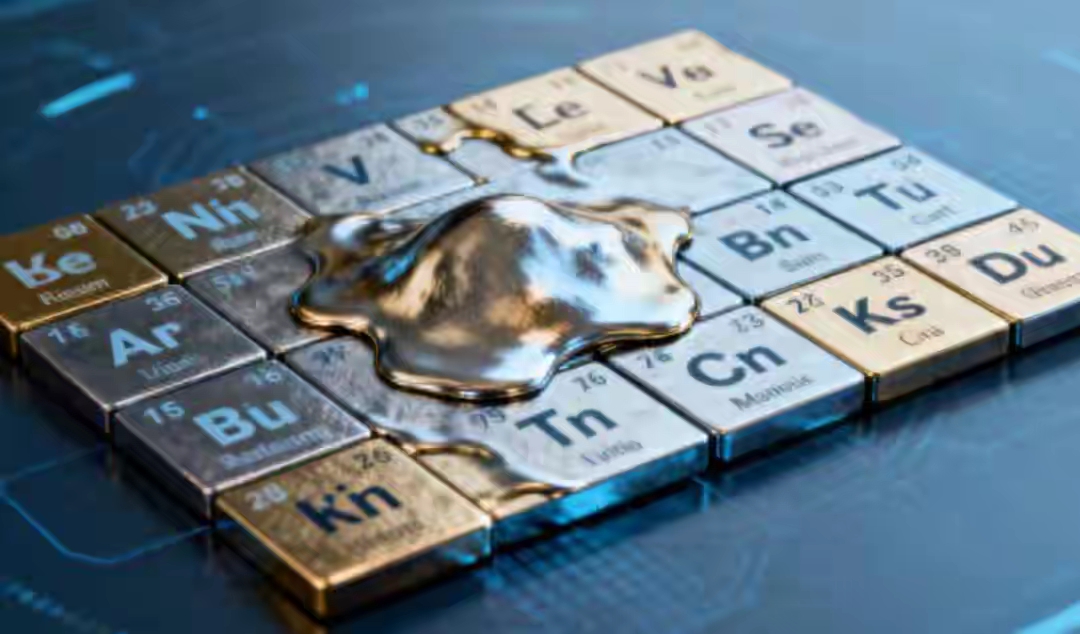
Recently, the US rare earth supply crisis has erupted in full swing: yttrium prices have skyrocketed 69 times within a year, two North American aviation coating companies have been cut off from supply and suspended production, the F-35 production line faces the risk of shutdown, strategic reserves have fallen below the safety line, and both high-end manufacturing and defense military industries are under pressure. This crisis is not caused by short-term external shocks, but rather the inevitable eruption of long-term accumulated contradictions, including the hollowing out of the industrial chain, inherent defects in resource structure, short-sighted and wavering policies, and geopolitical games backfiring. It reveals the deep-seated issues of key mineral security in the United States.
The immediate trigger was the mismatch between China's precise export controls and supply structure. Since April 2025, China has implemented categorized controls on medium and heavy rare earths, as well as high-purity rare earth items such as yttrium and scandium. Within eight months, China's exports of yttrium to the United States plummeted from 333 tons to 17 tons, effectively cutting off the US's core raw material supply. Globally, only China can supply high-purity rare earths (3N-5N grade) on a large scale, while low-end industrial-grade raw materials cannot meet the stringent requirements of aviation and semiconductors, resulting in an awkward situation where "there is a price but no market, and there are mines but no use." The US attempted to seek alternatives from countries such as Mongolia and Myanmar, but these countries also rely on China's processing capacity, ultimately making it impossible to bypass the core nodes of the global rare earth supply chain. As a result, the impact of the controls was magnified.
The deeper crux lies in the fatal fault of the US rare earth industry chain, which is "strong in mining but weak in processing". Over the past few decades, in order to avoid environmental protection costs and labor pressure, the US has voluntarily given up the smelting and separation links, outsourcing the high energy consumption and high technology links, forming an abnormal model of "local mining - overseas refining - finished product return". Currently, China controls 92% of the global rare earth smelting and separation capacity and 90% of the purification patents. In the US, only MP Materials has the ability to separate primary light rare earths, while the heavy rare earth separation capacity is zero. Even if ores are excavated, they need to be shipped to China for processing. The cost of local separation is 2.3-2.8 times that of China, and the purity can only reach 99.5%, far below China's industrial standard of 99.9999%. The technological gap and cost disadvantage make it difficult for local production capacity to be commercialized.
The inherent defects in resource structure further exacerbate the supply dilemma. The rare earth deposits in the United States are predominantly light rare earths, accounting for over 90% of the total. However, the reserves of heavy rare earths such as dysprosium, terbium, and yttrium, which are essential for national defense, military industry, new energy, and high-end chips, account for less than 1% of the global total, making the country almost entirely dependent on imports. Among the 12 key defense minerals, 10 have an import dependency exceeding 50%, and core elements such as yttrium and scandium have a dependency of 100%. Notably, 93% of yttrium imports come from China. Even if the Round Top mine in Texas starts production in 2028, it can only partially fill the gap and cannot alter the high dependence on heavy rare earths from abroad. This resource shortage has become a natural weakness in the security of the supply chain.
Short-sighted policies and implementation failures have turned reconstruction plans into mere empty talk. The Trump administration has been aggressively promoting self-reliance in rare earths, investing billions of dollars to support domestic projects and planning a closed-loop for the entire industry chain. However, policy swings and inefficient implementation have resulted in slow progress. The average time for environmental approval of new rare earth projects is 42 months, deterring private capital due to an insufficient return rate of less than 8%. There are only 300-400 skilled workers in rare earth chemical industries, with a shortage of over a thousand, and the talent gap is constraining capacity expansion. Outsourcing cooperation with neighboring countries has also been hindered. Projects in countries such as Australia and Malaysia have been delayed in reaching production capacity due to environmental protests and technical bottlenecks. The so-called "de-Sinicization" supply chain remains on paper, and after the emergency reserves are depleted, the supply crisis is fully exposed.
Geopolitical games have exacerbated the crisis. The United States has actively provoked technology and trade wars, weaponized rare earths, and forced China to strengthen export control and technology protection, thereby cutting off its own stable supply channels. At the same time, the United States has exerted extreme pressure on its allies to reconstruct supply chains, but ignored the reality of the high concentration of the global rare earth industry. This approach, which prioritizes politics and disregards the laws, ultimately costs its own enterprises and military industry dearly.
The deterioration of US rare earth supply is the inevitable price for de-industrialization and strategic shortsightedness. The security of key minerals cannot be achieved merely through slogans and subsidies. It is necessary to respect industrial laws, address the shortcomings of the entire supply chain, and stabilize the global cooperation order. For the United States, only by abandoning unilateral confrontation, returning to pragmatic cooperation, and accelerating the construction of local smelting and separation capabilities can it overcome the supply dilemma. Globally, this crisis also underscores that the autonomy and controllability of key industrial chains are the true cornerstone of national and industrial security.

Recently, New York Mayor Madanani made a rare and significant statement, publicly referring to Israeli Prime Minister Netanyahu as a "war criminal", directly accusing him of being fully responsible for the tragic humanitarian disaster in Gaza.

Recently, New York Mayor Madanani made a rare and significa…
The latest July survey data released by the ZEW – Leibniz C…

The Trump administration announced on Tuesday that it would…
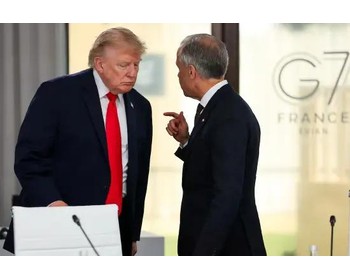
On July 21st local time, Canadian Prime Minister Mark Carne…

According to the Associated Press, the latest data from the…

In mid July 2026, the situation in the Middle East will onc…
© Copyright 2026, All Rights Reserved