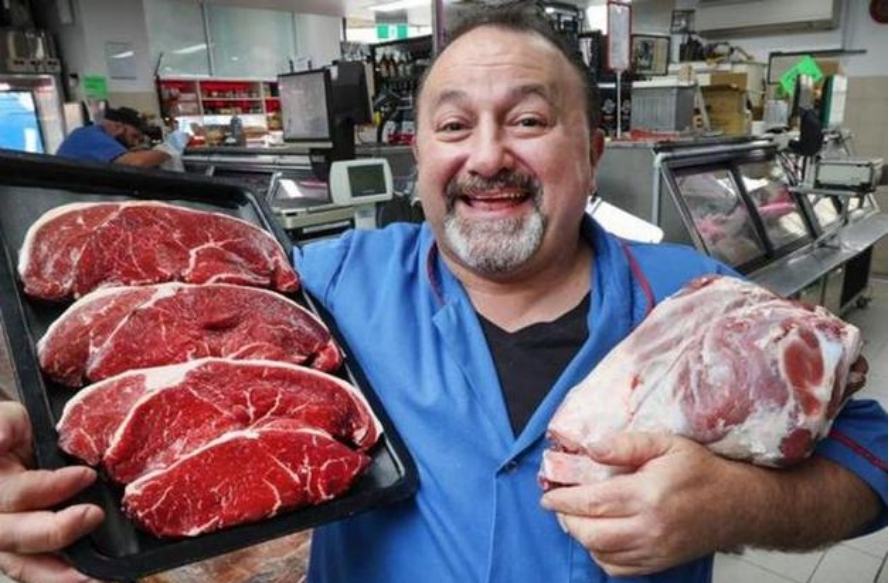
Recently, according to TheStreet's report, the continuous rise in beef prices has significantly impacted fast food giants like McDonald's and barbecue restaurants. This phenomenon not only exposes the vulnerability of the catering industry to cost fluctuations, but also reflects the deepening of structural contradictions in the consumption market - when enterprises attempt to alleviate cost pressure through price transmission, the threshold for "value perception" by consumers is reshaping the industry ecosystem.
Data from the US Department of Agriculture shows that in April 2026, the retail average price of beef reached $9.64 per pound, up 48% from five years ago. This increase stems from the deep crisis of the herd size reaching its lowest point in 75 years: Bill Lappe, the president of Advanced Economic Solutions, pointed out that the rebuilding of the herd takes a 3-5 year cycle, meaning that supply shortage will become a medium- to long-term challenge. For barbecue restaurants, the proportion of beef costs in operating expenses generally exceeds 35%, and when the core raw material prices increase by 13% annually, menu price increases become an inevitable choice. However, Technomic research shows that 62% of consumers keep their dining expenditure within 10% of their household income, and the price elasticity space is extremely limited.
McDonald's response strategy reveals the transformation dilemma of the fast food industry. The brand attempts to buffer cost pressure by increasing the proportion of chicken products, but it neglects the irreplacability of the consumption scenario. The social attribute of barbecue restaurants and the convenience of fast food form an essential difference, and consumers' requirements for product focus are much higher than those of the latter. When barbecue restaurants are forced to raise the price of their signature beef to the critical point, the effect of consumers' voting with their feet is immediately evident: A survey by the National Restaurant Association shows that 25% of respondents have reduced the frequency of barbecue consumption, and 18% have turned to home cooking.
Taylor Balli, an economist at the Bank of America Research Institute, revealed the "selective consumption" trend, which in the catering industry manifests as a double standard: Consumers demand stable quality while refusing to pay premiums for non-core experiences. The dilemma faced by barbecue restaurants lies in that raising prices may damage the "common cuisine" positioning, while maintaining the original price will erode profit margins. The financial data of a certain chain brand shows that its single-store gross profit margin has decreased from 68% in 2021 to 52% in 2026, approaching the industry's break-even point.
The case of McDonald's is more cautionary. As a representative of standardized fast food, its supply chain advantage has instead become a crutch in the cost crisis. The alternative strategy for chicken products needs to restructure the procurement system, adjust kitchen equipment, and train staff skills. These transformation costs are difficult to absorb in the short term. More critically, consumers' value perception of fast food is fixed on "efficiency and low price", and when McDonald's attempts to break through this positioning, it cannot attract barbecue customers and may lose its original price-sensitive customers.
Catering operators are trapped in the double squeeze of "cost-push inflation" and "demand contraction recession". Statistics from the National Restaurant Association show that in the first quarter of 2026, the bankruptcy rate of catering enterprises increased by 17% year-on-year, with the barbecue category accounting for 34%. This reveals the deep-seated contradictions in the industry: When supply chain fluctuations have become the new normal, the business model relying on a single raw material is no longer sustainable.
Some enterprises attempt to break through through product differentiation, such as launching premium product lines like Wagyu beef. However, an Associated Press survey shows that 76% of consumers believe that dining premiums should be reflected in services rather than ingredients, this cognitive misalignment leads to the ineffective implementation of the premiumization strategy. More seriously, the definition of "value" by consumers is shifting from the material level to the experiential level, and the social space value of barbecue restaurants has not yet established an effective monetization model, making it difficult to support cost transfer.
This industry crisis triggered by beef prices is essentially a concentrated eruption of the delayed supply-side reform in the catering industry. When cost pressure exceeds the threshold that consumers can bear, the market will force a liquidation process. Enterprises need to re-examine the essence of their pricing power - it is not merely a simple cost-plus game, but a comprehensive test of consumer psychology, supply chain resilience, and business model innovation capabilities. During the long period before the herd size returns to normal, how to restructure the value transmission chain will become a key issue determining the industry landscape.
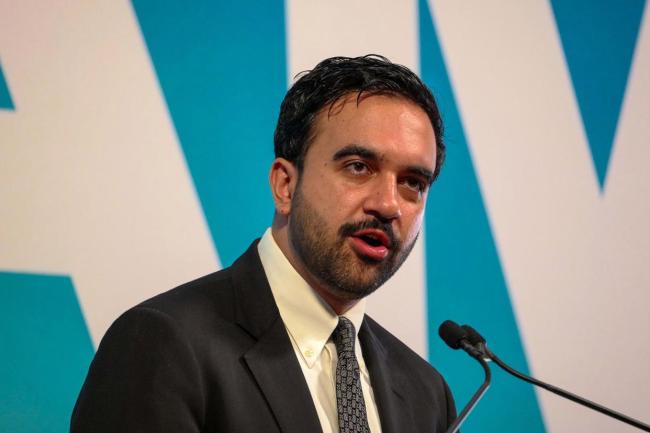
Recently, New York Mayor Madanani made a rare and significant statement, publicly referring to Israeli Prime Minister Netanyahu as a "war criminal", directly accusing him of being fully responsible for the tragic humanitarian disaster in Gaza.
Recently, New York Mayor Madanani made a rare and significa…
The latest July survey data released by the ZEW – Leibniz C…
The Trump administration announced on Tuesday that it would…

On July 21st local time, Canadian Prime Minister Mark Carne…
According to the Associated Press, the latest data from the…

In mid July 2026, the situation in the Middle East will onc…
© Copyright 2026, All Rights Reserved