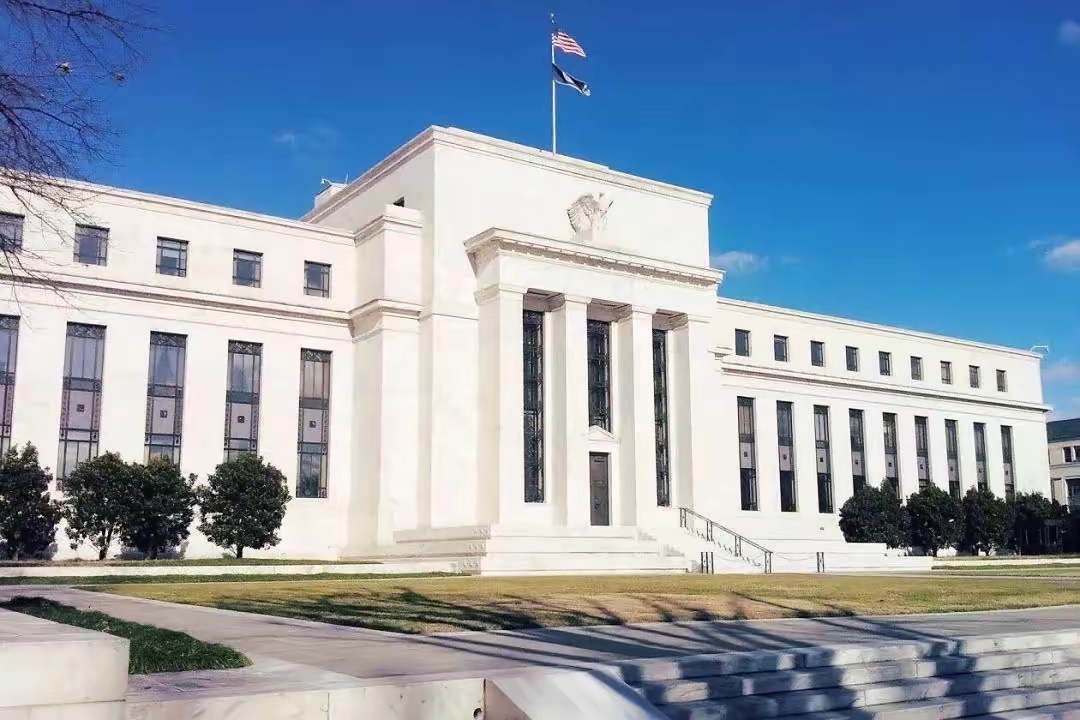
On December 9th local time, the Federal Reserve will hold its final interest rate meeting of 2025. The decision to cut interest rates in this final battle will not only put an end to monetary policy this year, but also directly affect global liquidity expectations and asset pricing logic. Currently, according to the FedWatch tool of the Chicago Mercantile Exchange, the probability of the market betting on a 25 basis point interest rate cut in December has soared to 89.2%. Behind the optimistic expectation of nearly 90% is the chaos of economic data, internal divisions within the Federal Reserve, and deep political turmoil. The direction of this interest rate cut game has already surpassed the scope of simple economic decision-making and become a complex proposition intertwined with multiple contradictions.
From the perspective of economic fundamentals, there is a clear opposition between the support and resistance of interest rate cuts, and the lack of key data further exacerbates the situation. The previous 43 day government shutdown in the United States resulted in the cancellation of the October CPI and employment reports, and the release of core data for November was delayed until after the conference, forcing the Federal Reserve to weigh its decisions in a "data vacuum". The only available data presents a strong sense of contradiction: in the job market, the non farm payroll data in September was stronger than expected, but the unemployment rate rose to a high point of 4.4% since 2021. While ADP employment data ended its continuous decline, the number of unemployment claims also increased synchronously, and signals of weakened labor demand have gradually emerged. On the inflation level, the core PCE price index remains at a high level of 2.8%, which is still far from the long-term target of 2%. However, the United States' initiative to cancel additional tariffs on Brazilian coffee, beef and other goods has exposed its urgency to alleviate price pressures. Yale University's calculations show that tariff policies have caused every American household to spend an additional $3800 per year, and inflationary pressures have already transformed into livelihood anxiety.
The signal of the Federal Reserve's brown book is also ambiguous. This report covering 12 regions of the Federal Reserve in the United States shows that the US economy has remained largely unchanged, and consumers are showing a clear K-shaped differentiation - the resilience of the wealthy remains strong, while low - and middle-income families are cutting back on spending. The unemployment of federal employees caused by the government shutdown further suppresses consumer vitality.
More complex than economic data is the unprecedented deadlock within the Federal Reserve. Currently, in the core decision-making circle consisting of seven members of the Federal Reserve Board and the Governor of the New York Fed, four members explicitly support interest rate cuts, while the other four remain cautious, forming a subtle stalemate. The dovish camp, represented by New York Fed President Williams, explicitly stated that there is still room for further interest rate adjustments in the short term, believing that the risk of employment decline far outweighs the risk of inflation rebound, and advocating for precautionary interest rate cuts to avoid an economic hard landing; Federal Reserve Governor Milan bluntly stated that the current monetary policy is "hindering economic development" and called for a significant interest rate cut to hedge the pressure of rising unemployment.
Despite significant differences, considering various factors, the probability of the Federal Reserve cutting interest rates by 25 basis points in December still holds the upper hand. On the one hand, market expectations have formed a strong inertia, and mainstream investment banks such as Goldman Sachs and Bank of America have raised their expectations for interest rate cuts, believing that the weak job market and demand for policy risk management will drive decision-making to shift. Unless the PCE data released on December 5th shows an unexpected surge, the implementation of interest rate cuts has become a highly probable event. On the other hand, the policy logic of preventive interest rate cuts has gradually become clear. Against the backdrop of slowing economic growth and weakened consumer momentum, the Federal Reserve has a clear willingness to stabilize market confidence and hedge downside risks through small interest rate cuts. The two consecutive cuts in September and October have established a loose tone, and the three consecutive cuts this year will help maintain policy coherence.
However, even if the interest rate cut is implemented, its policy effect still needs to be viewed rationally. The interest rate cut this time is more of a risk hedge under the lack of data, rather than the comprehensive opening of a new round of easing cycle. The Federal Reserve is likely to emphasize "meeting by meeting evaluation" in its statement, avoiding giving a clear path for the 2026 interest rate cut. For the global market, the liquidity dividend brought by interest rate cuts may briefly boost risk assets, but internal divisions and political intervention concerns within the Federal Reserve will continue to trigger market volatility.
The essence of this interest rate cut game is the difficult balance that modern central banks face under the dual pressures of economic uncertainty and political interference. Regardless of the final direction of the December resolution, it marks a serious challenge for the Federal Reserve's "data-driven" decision-making model, and its subsequent policy direction still needs to wait for the economic data to become clear in the first quarter of next year before it can truly be clarified. Instead of being fixated on the "yes or no" of a single interest rate cut, global investors should pay more attention to the policy logic shift behind the resolution, which is the core key factor affecting the long-term market direction.

Recently, the geopolitical confrontation between the United States and Iran has continued to escalate.

Recently, the geopolitical confrontation between the United…

The New York Times has recently clashed with the Trump admi…

Trader Peter Brandt has sparked a new round of discussion i…

On July 17th, Taiwan's stock market experienced a historic …

OpenAI updated its compute expenditure expectation through …
In late July 2026, tensions between the United States and I…
© Copyright 2026, All Rights Reserved