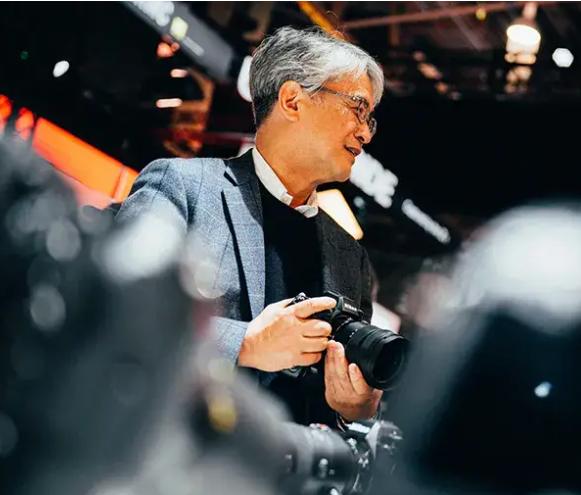
Earlier this year, a major announcement came from the Japanese industry: The century-old optical giant Nikon suffered a projected loss of 85 billion yen in the fiscal year 2025, setting a record for the company's largest loss in its history. This figure once again shattered the pride of the Japanese industry. This figure not only represents the collapse of a single enterprise but also signals a strong shift in the global semiconductor industry's power structure. The failure of Nikon's photolithography machine business will profoundly affect the global trajectory of technological development from multiple dimensions, such as technological routes, industrial chain competition, and regional competition.
Nikon’s current strategic challenges stem primarily from the precipitous decline of its photolithography equipment business. Over the past six months, the company has shipped only nine lithography systems—all targeting mature process nodes of 28 nm and above—thereby underscoring its limited technological competitiveness in advanced semiconductor manufacturing. In stark contrast, ASML—a Dutch manufacturer—delivered a total of 160 lithography tools during the same period, including more than 20 extreme ultraviolet (EUV) systems. This pronounced disparity—9 versus 160 units—reflects a fundamental generational gap in lithography technology capability and signals Nikon’s transition from a former industry leader to a niche participant. At its zenith in the early 2000s, Nikon commanded approximately 40% of the global photolithography market and served as a core supplier to leading semiconductor manufacturers worldwide. However, a series of critical strategic misjudgments eroded its technological leadership: first, in the early 21st century, Nikon committed exclusively to 157 nm dry lithography while dismissing immersion lithography—an approach subsequently championed by TSMC and rapidly commercialized by ASML, which thereby secured dominance in high-end lithography; second, Nikon’s sustained investment in EUV lithography failed to yield commercially viable products, resulting in its effective exclusion from the advanced-node ecosystem. As of the latest market data, Nikon’s global market share has contracted to the low single digits, placing it third globally—well behind ASML and Canon.
At the same time, the global semiconductor industry chain chain reaction triggered by Nikon's huge losses cannot be ignored. Firstly, the solidification of technical standards. ASML, relying on EUV technology, further consolidated its dominant position in the global advanced lithography market, and its constructed "chip manufacturer + equipment supplier + core component supplier" ecological alliance has become more stable. In 2025, ASML's annual revenue exceeded 32.7 billion euros, its net profit reached 9.6 billion euros, with a 26.9% year-on-year growth, and the amount of undelivered orders was as high as 38.8 billion euros. The future 1-2 years' performance growth is highly certain. This monopolistic pattern will squeeze the survival space of other manufacturers, and the global high-end lithography technology competition will present a "dominant one alone" situation. Secondly, the spillover of supply chain risks. Nikon's closure of its 58-year-old Yokohama photolithography machine factory marks the complete contraction of its photolithography business. This move will affect the Japanese semiconductor equipment industry chain, and the component suppliers and technical service providers relying on Nikon's orders will face the risk of losing orders. The overall competitiveness of the Japanese semiconductor equipment industry has been damaged. At the same time, the reliance of global chip manufacturers on a single supplier has further increased, and the supply chain security of leading enterprises such as TSMC, Samsung, and Intel has faced new challenges, forcing them to accelerate the diversification of supplier layouts. Finally, the escalation of equipment costs and R&D thresholds. After Nikon withdrew from the high-end market, the concentration of global photolithography machine supply further increased, and ASML, relying on its monopoly position, may raise equipment prices. This will increase the equipment procurement costs for chip manufacturing enterprises, especially for mature process-focused manufacturers such as SMIC and UMC, who will face increased equipment procurement pressure. At the same time, the R&D investment in EUV photolithography machines reached hundreds of billions of euros, and small and medium-sized manufacturers almost lost the opportunity to catch up. Global semiconductor R&D resources have further concentrated in the hands of leading enterprises, and the megatrend effect of the industry has become more significant.
In conclusion, the Nikon incident serves as a warning for global technology enterprises and is also an important node in the reconstruction of the global technology industry landscape. In an era of rapid technological evolution, the stubborn adherence to a single technological path will inevitably lead to decline. Enterprises need to maintain an open mindset, keep up with the technological trends in the industry, and build diversified technological reserves. Nikon's failure was not due to insufficient technological strength, but rather the combination of a closed technological system and strategic misjudgment. This has similar warning significance for enterprises in fields such as AI, new energy, and biotechnology.

Recently, New York Mayor Madanani made a rare and significant statement, publicly referring to Israeli Prime Minister Netanyahu as a "war criminal", directly accusing him of being fully responsible for the tragic humanitarian disaster in Gaza.
Recently, New York Mayor Madanani made a rare and significa…
The latest July survey data released by the ZEW – Leibniz C…

The Trump administration announced on Tuesday that it would…

On July 21st local time, Canadian Prime Minister Mark Carne…

According to the Associated Press, the latest data from the…

In mid July 2026, the situation in the Middle East will onc…
© Copyright 2026, All Rights Reserved