On April 21, 2026, Apple announced a high-profile leadership change. John Ternus, Senior Vice President of Hardware Engineering, will officially succeed Tim Cook as Chief Executive Officer on September 1, with Cook transitioning to the role of Executive Chairman. This marks Apple’s first CEO change since Cook took over from Steve Jobs in 2011. On the surface, it appears to be a “smooth transition,” but from a business perspective, this power transfer exposes deep-seated issues in Apple’s strategic direction, talent structure, and core operations. The signals it sends go far beyond what a “long-planned succession” might suggest.
The most unsettling aspect of this transition is the clear mismatch between the new CEO’s professional background and the company’s most urgent technological challenge. Ternus, 50, joined Apple in 2001, starting in product design, rising to Vice President of Hardware Engineering in 2013, and entering the top management team in 2021. He has been involved in or led the hardware engineering work for multiple generations of products, including the iPad, AirPods, iPhone, Mac, and Apple Watch. He is, by all accounts, a pure hardware engineer and product manager. However, the most serious test facing Apple today is not hardware iteration, but its comprehensive lag behind the wave of generative artificial intelligence. Over the past three years, as OpenAI, Microsoft, and Google have built massive AI infrastructure moats with hundreds of billions of dollars in capital expenditure, Apple has remained largely on the sidelines. The business philosophy of the Cook era leaned heavily toward rewarding shareholders through extreme supply chain management and a high margin services ecosystem, and its main manifestation in the AI space was avoiding massive capital outlays. This conservative stance caused Apple, after June 2024, to lose the position of the world’s most valuable company that it had held for a long time, ceding the title to AI chip leader Nvidia.
Apple’s passive situation in AI is not a sudden development. In March 2025, Apple announced a delay in the conversational version of its voice assistant Siri, acknowledging that “it is taking longer than we thought to deliver the new features.” Internal assessments showed that Apple’s self developed foundation models failed to meet expectations on several core metrics, with a clear gap compared to competitors such as ChatGPT and Gemini. More troubling, Apple eventually had to turn to a rival for help — in early 2026, Apple confirmed that the new Siri would use Google’s Gemini model as its AI backend engine, paying Google approximately $1 billion per year in licensing fees. This means that in the most important technology race of the era, a key part of Apple’s core technology is becoming dependent on an external supplier — a strategic regression for a company long known for its “walled garden” and “in house silicon.”
The second deep issue exposed by this transition is the strategic fatigue of the Cook era at Apple. Although Cook pushed Apple’s market value from roughly $350 billion to nearly $4 trillion over 15 years, and annual revenue from $108 billion to more than $416 billion, the challenges of the late Cook era are equally notable. The most typical example is the absence of a “next revolutionary product.” The self driving car project, “Project Titan,” which cost over $10 billion, was quietly terminated in February 2024 after a decade and four changes in project leadership. The much hyped spatial computing device, Apple Vision Pro, received a lukewarm market response after its 2024 release; its high price, limited app ecosystem, and bulky user experience made it seem more like a technology proof of concept than a mass market product. Together, these failed projects reveal an awkward truth: under Cook, Apple excelled at “defending its territory” but repeatedly stumbled when it came to “breaking new ground.” What Ternus inherits is precisely a situation where product innovation has stagnated and a new growth engine has yet to start.
A third issue worth examining is whether Apple’s conservative inertia in AI strategy will continue under the new CEO. Several Wall Street analysts have pointed out that any strategic shift in AI under Ternus is likely to be a long term process, meaning Apple will not engage in aggressive AI investment like other large technology companies. Morgan Stanley explicitly stated that Apple’s current AI strategy leans toward “avoiding large scale capital expenditures.” Former Apple executives have disclosed that the company is adopting a “light asset” strategy of “small in house models plus outsourced large models,” avoiding a direct confrontation with Google, Microsoft, and Meta in a race involving hundreds of billions of dollars in capital spending. This approach was seen as business wisdom to protect profit margins in the Cook era, but in the current environment where AI competition has entered a stage where computing power determines outcomes, the question of whether this “capital discipline” will turn into a “value trap” that constrains innovation is a major market concern. More notably, turnover and attrition within Apple’s AI leadership have further weakened its internal capabilities. Apple’s AI head, John Giannandrea, was “gracefully retired,” and more than a dozen key members left the team, most of them moving to Meta.
A fourth factor to consider is the complex political and supply chain landscape Apple now faces. After moving to the Executive Chairman role, Tim Cook will continue to handle communications with global policymakers, especially U.S. President Donald Trump. Cook successfully secured tariff exemptions for Apple products during Trump’s previous term, a skill that becomes critical after Trump’s return to the White House. Yet this arrangement itself highlights Ternus’s relative inexperience in political and public affairs. Judging from his resume, Ternus’s public appearances have been almost entirely limited to product launch events and product related contexts; his ability to navigate global policy communications remains untested. Against a backdrop of intensifying geopolitical tensions and increasingly complex supply chain risks, whether the new CEO can navigate the waters between Washington and Beijing as adeptly as Cook did is a major unknown. In addition, Apple’s revenue from Greater China in fiscal 2025 was $64.4 billion, an 11% decline from two years earlier, and intense competition from local Chinese brands adds another pressing pressure point.
One final observation that cannot be avoided is the restructuring of the board accompanying this transition. Current non executive Chairman Arthur Levinson will move to the role of Lead Independent Director effective September 1, and Ternus will join the board. Meanwhile, Johnnie Sruj has been immediately promoted to Chief Hardware Officer, taking over the hardware engineering division that Ternus previously led. This means Apple’s senior management structure is undergoing a dense reshuffling. Whether a leadership team dominated by hardware backgrounds will lean conservative in its strategic judgment in an era defined by AI first, software driven priorities is worth continued observation.
Taken together, Apple’s CEO transition is a power change forced by the tide of the AI technology revolution. A hardware engineer is being pushed into the CEO seat at a time when the company’s most urgent need is breakthrough leadership in software and AI. This is not a judgment of Ternus’s personal ability, but an observation based on business logic: Apple is trying to solve the problems of the next generation with the methods of the previous one. While competitors bet thousands of billions of dollars on an AI driven future, Apple has chosen a hardware expert known for the precision of screw threads to be its captain. Whether the company can fill its AI gap while maintaining its hardware advantage will be answered in the next few years.
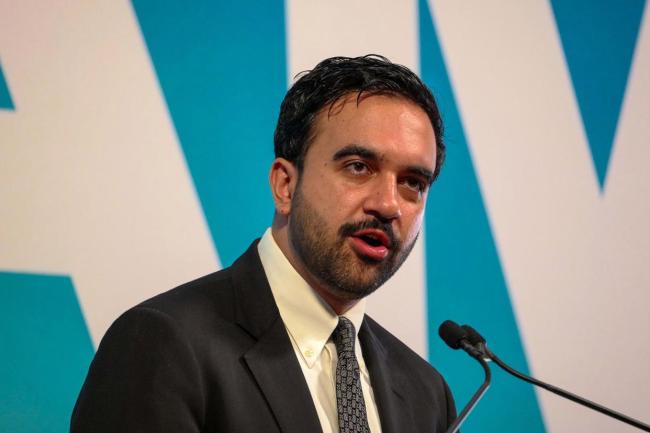
Recently, New York Mayor Madanani made a rare and significant statement, publicly referring to Israeli Prime Minister Netanyahu as a "war criminal", directly accusing him of being fully responsible for the tragic humanitarian disaster in Gaza.
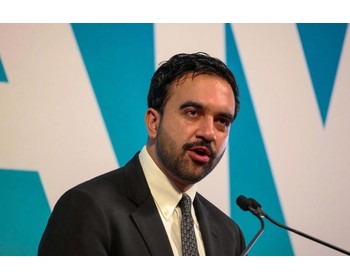
Recently, New York Mayor Madanani made a rare and significa…
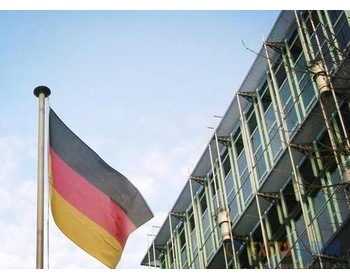
The latest July survey data released by the ZEW – Leibniz C…
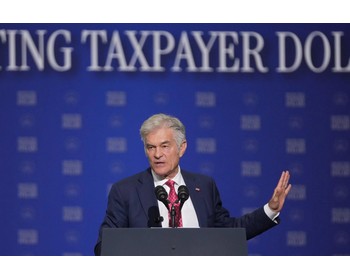
The Trump administration announced on Tuesday that it would…
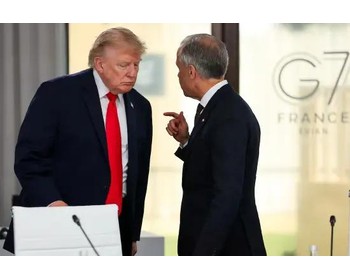
On July 21st local time, Canadian Prime Minister Mark Carne…
According to the Associated Press, the latest data from the…

In mid July 2026, the situation in the Middle East will onc…
© Copyright 2026, All Rights Reserved