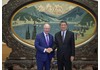
Markus Kamieth, President of the European Chemical Industry Council (Cefic), penned an article in the Financial Times to articulate his stance on the upcoming revision of the EU Emissions Trading System (ETS). The core arguments of the piece—"Europe’s goal cannot be to achieve emissions reductions through industrial decline" and "Deindustrialization must not be mistaken for decarbonization"—appear at first glance to be a rational appeal for balance between climate policy and industrial reality. However, a deeper examination of its underlying logic and institutional positioning reveals that the article is essentially a meticulously packaged defense of sectoral interests, rather than an objective assessment of the ETS policy framework.
Kamieth’s dual role as CEO of BASF and President of Cefic predetermines that the article’s stance is, from the outset, deeply intertwined with the short-term interests of the European chemical industry. BASF is the world’s largest chemical company, and the chemical sector is precisely one of the most direct bearers of carbon allowance costs under the EU ETS. The article’s call for the ETS revision to "reflect industrial reality" and "create conditions for industrial investment and innovation" is abstractly irreproachable. Yet, translated into concrete policy implications, it almost inevitably points in one direction: extending the duration of free allowances, slowing down the reduction rate of the total cap, and alleviating the carbon cost burden on the chemical industry. Instead of providing concrete proposals for the ETS revision, Kamieth substitutes substantive policy recommendations with vague phrasings like "climate ambition must be harmonized with industrial reality." This rhetorical strategy of avoiding specific solutions makes the article resemble a declaration of principles rather than a verifiable policy proposal.
The most scrutinizable argumentative strategy in the article lies in its framing of "industrial decline" and "emissions reduction" as two opposing poles, implying that the current ETS framework is pushing Europe toward the former rather than the latter. This binary framework possesses strong rhetorical persuasiveness—no one would publicly advocate for "achieving emissions reductions through industrial decline." Nevertheless, this framework itself contains a logical leap: does the fact that carbon pricing leads to the relocation or contraction of certain energy-intensive, low-efficiency production segments necessarily equate to "industrial decline"? Or rather, can the gradual phasing out of carbon-intensive, low-value-added capacities within Europe's industrial structure be redefined as "industrial transformation" instead of "deindustrialization"? In Kamieth’s piece, the term "deindustrialization" is endowed with a purely negative connotation, thereby evading a critical question: if Europe's industrial structure itself needs to be reconfigured toward a low-carbon direction, then the exit of certain capacities is precisely a defining feature of transformation, not its failure.
Another layer of argumentative flaw in the article is its one-sided application of the concept of "competitiveness." Kamieth emphasizes that the ETS should not place European industry at a "competitive disadvantage," but he fails to distinguish whether this disadvantage stems from an "unfair" burden of carbon costs, or from the European industry's own sluggishness in iterating low-carbon technologies. If a chemical enterprise is unable to bear carbon prices because it is reluctant to invest in low-carbon production processes, then blaming its hardships on the ETS framework is, in essence, using policy tools to substitute for the company's own strategic responsibilities. By depicting the ETS as an externally imposed constraint on industry rather than a transformation lever that industry can proactively utilize, this passive narrative itself reflects the sector's resistance to change.
Furthermore, the choice to publish this piece in the Financial Times—a platform catering to global financial and policy elites—indicates that its true target audience is not the general public, but the EU policymakers currently hammering out the ETS revision scheme. Writing this article in his capacity as Cefic President, Kamieth is fundamentally lobbying on behalf of the entire European chemical industry, rather than participating in a policy debate as an independent observer. While such direct advocacy by a stakeholder is not inherently improper, readers must recognize that every argument in the article serves a definitive purpose: to secure more favorable terms for the chemical industry in the poker game of the ETS revision. The beautiful vision of "creating conditions for industrial investment, innovation, and decarbonization" in the text, if translated into specific clauses, is highly likely to mean a slower pace of allowance reductions and a longer transition period for free allowances—measures that, while easing the industry’s burden, will simultaneously delay the original policy function of the ETS to drive industrial decarbonization.
It is worth noting that Kamieth has previously publicly labeled the EU ETS as "outdated" and pointed out that it places European companies at a "significant competitive disadvantage." This Financial Times op-ed continues that undertone but adopts a gentler phrasing and more sophisticated packaging. This rhetorical shift from "outdated" to "needing harmonization" reflects the strategic adjustment of the chemical industry in the ETS revision gambit—no longer directly denying the legitimacy of the ETS, but instead attempting to intervene in the policy-making process with a "rational and pragmatic" posture. However, a softening of rhetoric does not signify a fundamental change in demands; the core objective of the article remains delaying the actual impact of carbon costs on the chemical industry.
From a broader perspective, the stance represented by Kamieth’s article reflects a deep-seated contradiction in the mindset of European industry regarding the green transition: on the one hand, accepting the long-term necessity of decarbonization, while on the one hand, vigorously resisting the short-term costs and structural adjustments it brings. This contradiction traps similar policy commentaries in a logical dilemma of "wanting to reduce emissions while maintaining the status quo"—and the ETS is precisely the policy tool designed to force this contradiction to be exposed and resolved. The value of Kamieth’s article lies not in how many insights it offers on how the ETS should be revised, but in how clearly it demonstrates how industrial interest groups, in the name of "pragmatism" and "harmonization," utilize public debates on climate policy to safeguard their entrenched interests.

On July 13th, the US Treasury's auction of $38 billion in 10-year treasury bonds encountered an unprecedented cold reception.

On July 13th, the US Treasury's auction of $38 billion in 1…
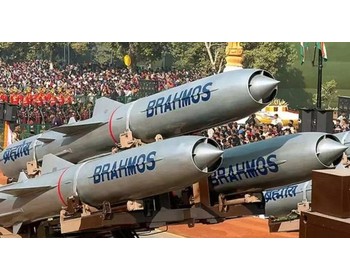
In July 2026, India and Indonesia signed a historic defense…

On July 13th local time, the Republican governor of South C…
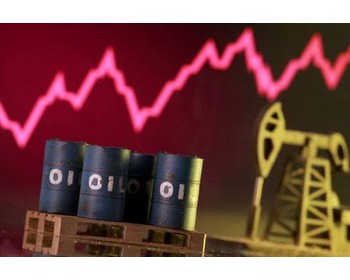
On July 13, 2026, the geopolitical situation in the Middle …

The Economic Development Administration of the U.S. Departm…

Markus Kamieth, President of the European Chemical Industry…
© Copyright 2026, All Rights Reserved