At the Davos Forum in 2026, a special "remote confrontation" attracted global attention. US President Trump's support for fossil energy was met with an open rebuttal from Tesla founder Elon Musk, who bluntly stated that the solar tariffs were killing the future of the US AI industry. Behind this seemingly ideological dispute was a profound rift between the demands of the US technology industry's development and the government's policy orientation, exposing the core contradiction of the US in its energy strategy in the global AI competition.
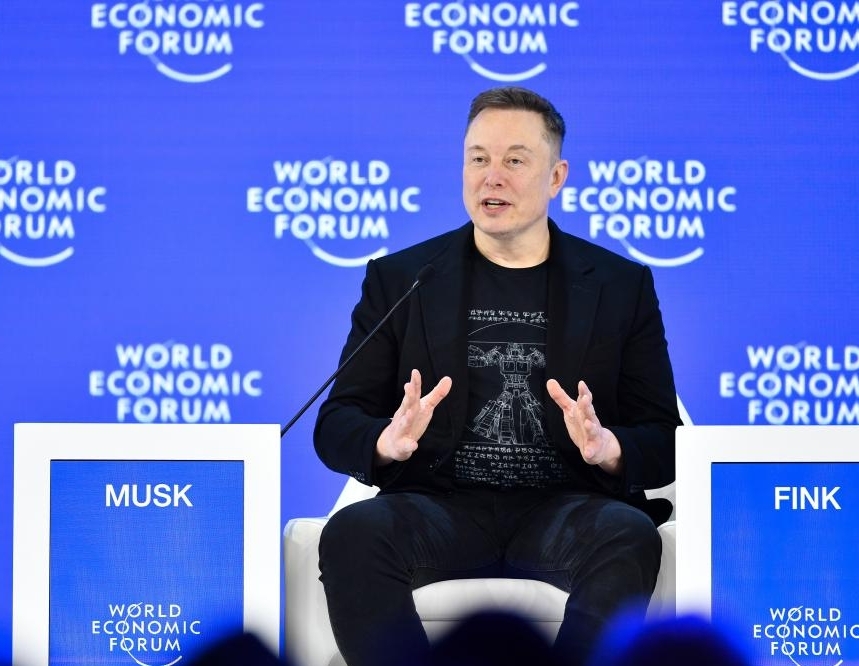
The core of the divergence lies in the choice of energy foundation for AI development. In his speech on January 21st, Trump continued to advocate for fossil energy, encouraging oil and gas extraction, even questioning the feasibility of renewable energy, and hinted at promoting technology companies to build their own nuclear power plants to solve the energy problem. However, on the next day, Musk appeared temporarily at Davos, sharply pointing out: "The fundamental factor that restricts the deployment of AI is electricity. Chip production is growing exponentially, but the growth of electricity supply is slow, and it has become an efficiency bottleneck." He explicitly listed high solar tariffs as a key obstacle to the growth of AI, emphasizing that the US could have met all its electricity demands, including those for data centers, through solar energy.
This debate is not a personal stance dispute, but a head-on collision between the laws of AI industry development and the traditional energy interest structure. Nvidia CEO Jensen Huang's "AI five-layer cake" theory aptly reveals the fundamental position of energy - energy as the bottom foundation, supporting all the upper structures such as chips, data centers, models and applications. With the explosion of generative AI, data center energy consumption has increased exponentially, and Google has recently urgently purchased 1.2 gigawatts of carbon-free energy to ensure the operation of data centers. Nvidia is also accelerating the research and development of AI optimization for renewable energy power plants. However, the high solar tariffs policy of the Trump administration have artificially raised the cost of obtaining clean energy, leaving US AI enterprises in an awkward situation of "excess chip production but no electricity available", and Musk warned that this situation might occur by the end of 2026.
The "boomerang effect" of trade protectionism is manifested to the fullest extent here. The original intention of the Trump administration to set solar tariffs was to protect the local traditional energy interest groups and serve geopolitical considerations, but this policy has seriously backfired on the US technology industry. Data shows that the import tariffs on solar components in the US have made the cost of related equipment 30%-40% higher than that in China, directly causing the operating costs of data centers to soar. What is even more alarming is that the long-term investment and aging of the US power grid infrastructure have become a hard obstacle to the development of the industry in the context of increasing AI energy consumption. In contrast, China's leading position in the solar industry and the rapid growth of its power capacity have made Musk say, "China has already solved the energy problem for AI development", and this gap is triggering global investors' concerns about the "AI bubble" in the US.
The essence of this energy policy dispute is a deep game of commercial interests of US technology enterprises and political interests of the government. Silicon Valley and Washington seem to be in agreement on the "America First" and technological leadership goals, but the paths to realization have already shown significant cracks. Trump's policy of prioritizing fossil energy is driven by the political demands of traditional energy interest groups and short-term employment considerations; while tech giants like Musk focus on the long-term competitiveness of the AI industry, their business models are deeply tied to the development of renewable energy - SpaceX's plan to deploy AI satellites powered by solar energy is a direct manifestation of this strategy. This divergence has evolved from a policy debate to a real constraint on industry development. If it cannot be bridged, the US AI industry may miss the opportunity in global competition. Looking ahead, the choice of the US AI energy path will profoundly influence the global technological competition landscape. In the short term, the Trump administration may still maintain a priority policy for fossil energy, but the self-rescue actions of technology companies are accelerating. From building their own clean energy facilities to laying out cutting-edge technologies such as space-based photovoltaics, Silicon Valley is using market forces to hedge against policy risks. In the long term, as AI energy consumption continues to rise, the clean and low-cost supply of energy will become an irreversible trend. If the US continues to cling to trade barriers and traditional energy paths, it may lead to a continuous decline in the competitiveness of the AI industry; but if it can adjust its policies and break through the bottlenecks in the supply of clean energy, it will inject lasting momentum into the AI industry.
This debate at the Davos Forum has sounded the alarm for the global technology industry: The competition in AI is not only a contest of chips and algorithms, but also a competition of energy strategies and policy ecosystems. The fundamental dilemma of AI development in the US is essentially a myth of path selection. In this competition that concerns the future, only by making energy policies conform to the laws of industrial development can we truly build a competitive advantage in the AI era.
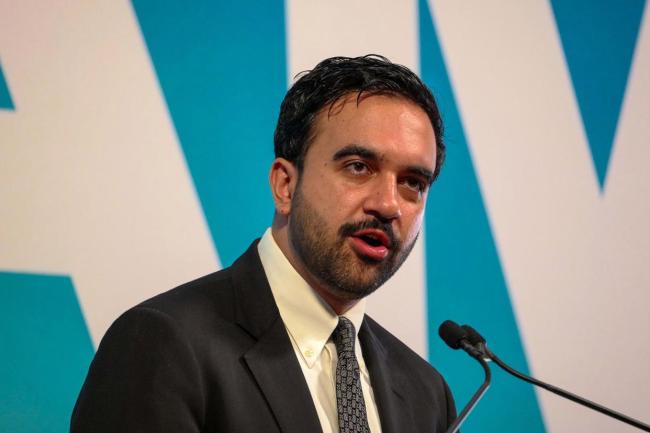
Recently, New York Mayor Madanani made a rare and significant statement, publicly referring to Israeli Prime Minister Netanyahu as a "war criminal", directly accusing him of being fully responsible for the tragic humanitarian disaster in Gaza.
Recently, New York Mayor Madanani made a rare and significa…
The latest July survey data released by the ZEW – Leibniz C…
The Trump administration announced on Tuesday that it would…
On July 21st local time, Canadian Prime Minister Mark Carne…
According to the Associated Press, the latest data from the…

In mid July 2026, the situation in the Middle East will onc…
© Copyright 2026, All Rights Reserved