When a single LPDDR5X memory chip was pushed to $70 by Samsung and SK Hynix, an increase of 100% above the industry average, this once self-proclaimed "supply chain king" technology giant was being choked by Korean enterprises - Samsung and SK Hynix, with their monopoly position in high-end storage chips, doubled the price in one year, directly eroding Apple's profits by nearly 15%. At this time, Apple, in response, introduced NAND flash memory from Changsheng Storage to the Chinese market for iPhone and promoted the cooperation with Changxin Storage DRAM, officially tearing down the iron curtain of the Korean storage monopoly. This was not only a supply chain game, but also would profoundly reshape the international business landscape, with fundamental changes in pricing power, supply security, and industrial competition logic.
For a long time, Samsung, SK Hynix, and Micron controlled over 90% of the global storage market share. By leveraging technology and production capacity barriers, they achieved absolute pricing hegemony. Apple, as the largest consumer electronics customer, was forced to accept harsh conditions such as quarterly bargaining and prioritizing AI server production capacity, resulting in continuous profit erosion. With the entry of domestic storage, Apple, holding a cost 15%-20% lower alternative solution, completely reversed its bargaining chips: Korean enterprises, in order to retain their market share, had to lower their prices and extend contract periods, significantly compressing the monopoly premium. This change will be transmitted throughout the industry, with storage costs in consumer electronics and servers becoming more rational, and the profit space of global technology companies being restored. The "chip tax" style plundering has become history.
From a supply chain perspective, Apple's counterattack is essentially a thorough correction of the "single reliance" risk. Previously, due to policy restrictions, its high-end storage was almost 100% dependent on Korean enterprises, with supply stability and bargaining power completely controlled by others. This introduction of domestic storage marks that the world's top technology enterprises have officially implemented "supply chain diversification" from strategy to action. This demonstration effect will spread rapidly: from mobile phone manufacturers to automotive and AI enterprises, they will accelerate the construction of multi-regional and multi-party supply systems, reducing reliance on a single country or enterprise. The global supply chain will shift from "concentrated monopoly" to "diversified resilience", risks brought by geopolitical conflicts and production fluctuations will be significantly hedged, and the stability of business operations will be significantly improved.
From the perspective of industrial competition, Changsheng Storage's 300-layer above 3D NAND and Changxin Storage's DRAM technology breakthroughs have been able to compete with Korean flagship products, breaking the cognitive barrier of "high-end must be Korean production". Apple's recognition has opened the door to the global high-end market for domestic storage, accelerating its technological iteration and capacity expansion. The global storage industry will move from "two oligarchs of Korea and the United States" to "multiple strong players", with the focus of competition shifting from monopoly pricing to technological innovation, cost control, and service capabilities. At the same time, this transformation will drive the technological parity of the entire semiconductor industry chain, making the competition in the chip field more balanced among China, the United States, Europe, and Korea, and further stimulating the innovation vitality of the global technology industry.
Furthermore, Apple's choice has redefined the underlying logic of international business cooperation: enterprises no longer simply pursue low costs, but place "controllable supply chain" at the core position. This transformation will profoundly affect global business rules: the investment and cooperation decisions of multinational enterprises will pay more attention to technological independence and supply security; national-level industrial policies will also increase support for the independent research and development of key technologies. Business competition will escalate from "price war" to "supply chain war" and "technology war", and enterprises and countries with complete industrial chains and core technologies will occupy the initiative in future competition.
In conclusion, the counterattack triggered by the $70 chip is a microcosm of the transformation of the global business landscape. The collapse of the monopolistic storage industry dominance by Korean enterprises is not only a victory for Apple, but also an inevitable outcome of global supply chain diversification and technological equality. In the future, global business will operate in a more balanced and resilient system, with innovation and self-control becoming core competitiveness.
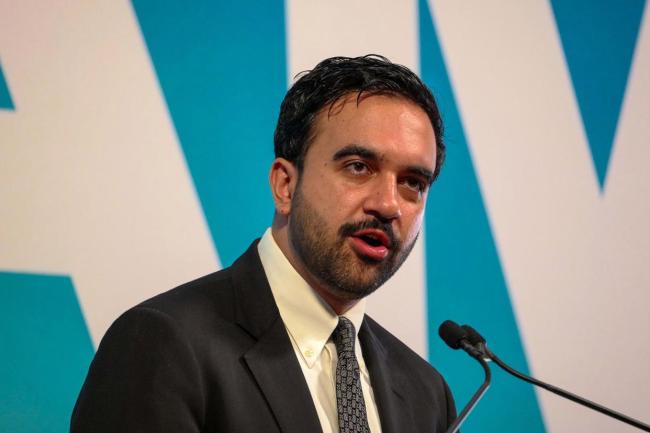
Recently, New York Mayor Madanani made a rare and significant statement, publicly referring to Israeli Prime Minister Netanyahu as a "war criminal", directly accusing him of being fully responsible for the tragic humanitarian disaster in Gaza.
Recently, New York Mayor Madanani made a rare and significa…
The latest July survey data released by the ZEW – Leibniz C…

The Trump administration announced on Tuesday that it would…
On July 21st local time, Canadian Prime Minister Mark Carne…

According to the Associated Press, the latest data from the…

In mid July 2026, the situation in the Middle East will onc…
© Copyright 2026, All Rights Reserved