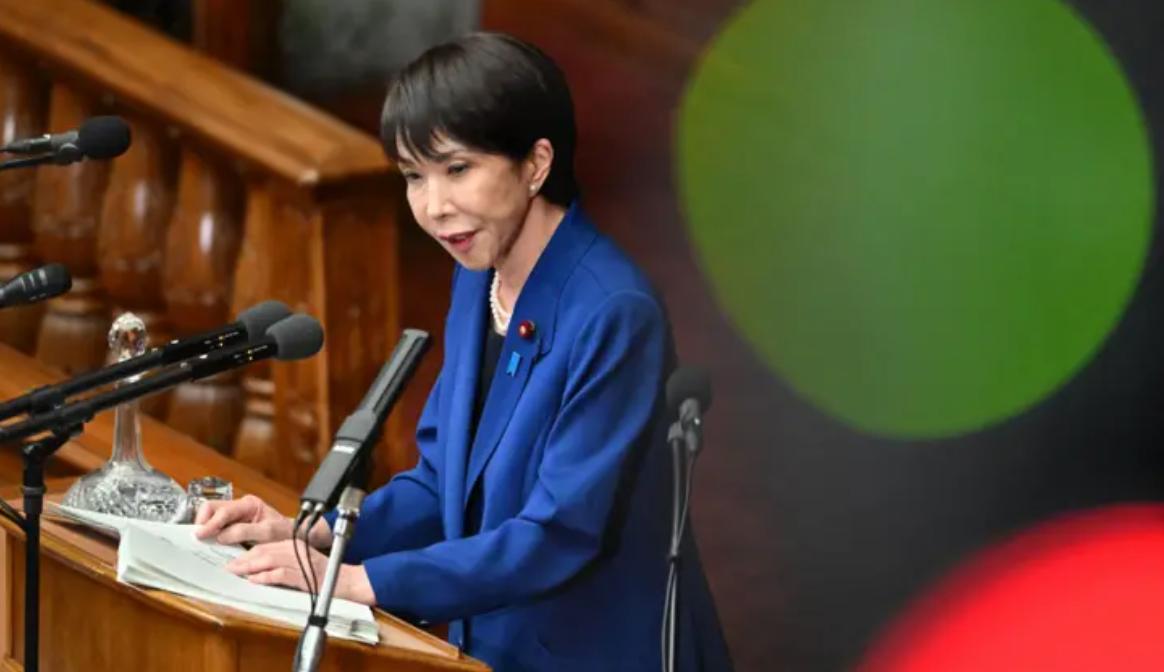
Recently, Japanese Prime Minister Sanae Takaichi announced that the central government's initial budget for the fiscal year 2026 would achieve a basic fiscal surplus for the first time since 1998, with an estimated scale of 1.34 trillion yen. This announcement has drawn widespread attention. However, considering Japan's current economic and fiscal situation and policy direction, Takaichi's commitment faces numerous practical difficulties and is highly challenging to achieve.
The deep-seated contradiction in the fiscal revenue and expenditure structure
Japan's fiscal revenue and expenditure structure has been imbalanced for a long time. Although the 2026 fiscal year budget claims to achieve a surplus, the core supporting points are clearly fragile. From the revenue side, tax growth relies on the expansion of corporate profits driven by inflation. Japan's nominal GDP growth rate averaged 4.67% from 2023 to 2025, but the actual growth rate was only 0.51%, indicating that the growth was mainly driven by price factors. This "bloated" growth is difficult to sustain. Once inflation falls or corporate profits contract, the tax base will quickly be shaken.
The expenditure side shows a "rigid expansion" feature. Social security spending in the 2026 fiscal year will reach 39.1 trillion yen, accounting for 32% of the total budget, a record high. The expenditures for medical care, nursing, and pensions due to an aging population are growing exponentially, while Japan's fertility rate remains persistently low, further increasing the future fiscal burden. Defense spending also constitutes a heavy pressure. The defense budget for the 2026 fiscal year will exceed 9 trillion yen, achieving the NATO standard of 2% of GDP ahead of schedule. Military expansion not only directly increases fiscal expenditure but also exacerbates resource misallocation through industrial bundling, weakening the long-term growth potential of the economy.
The vicious cycle of debt dependence
Japan's government debt balance as a proportion of GDP has reached 263%, far exceeding the level during the Greek debt crisis in 2009. Although the 2026 fiscal year plans to issue 29.6 trillion yen in new government bonds, a reduction from the current fiscal year, the interest expense on government bonds still amounts to 31.3 trillion yen, accounting for 25.6% of the total budget. The so-called "basic fiscal surplus" only excludes debt interest expenses. If the comprehensive fiscal deficit is included, Japan's fiscal situation has long been unsustainable.
More seriously, the Bank of Japan faces a dilemma in monetary policy. To curb inflation, the central bank raised interest rates by 25 basis points to 0.75% on December 19, 2025. However, the yen's exchange rate did not rise but fell, breaking through the key 157 mark. Although raising interest rates can narrow the interest rate differential between Japan and the United States, it will increase the government's debt repayment burden. Maintaining low interest rates can relieve debt pressure but will accelerate the depreciation of the yen and imported inflation. This policy trade-off effect makes the fiscal surplus target a "dance on the edge of a knife".
The lagging structural reform is superimposed with external risks
The Takaoka City government attempted to stimulate economic growth through fiscal expansion, but it lacked supporting measures for structural reforms. Professor Zhang Yulai from Nankai University pointed out that the core issue of the current Japanese economy lies in the low efficiency of the supply side, while the government's subsidy policies have instead exacerbated inflation. For instance, among the 21.3 trillion yen economic measures introduced in November 2025, 8.9 trillion yen was allocated for price subsidies, but on average, it was only about 70,000 yen per household, which was insufficient to offset the impact of the decline in real wages.
External risks should not be ignored either. The wrong remarks made by Takaichi Saane on the Taiwan-related issue have led to tensions in China-Japan relations and may affect economic and trade cooperation between the two countries. At the same time, the Japan-US alliance also shows asymmetry. The Trump administration has demanded that Japan increase its investment and defense spending in the US, further squeezing its domestic fiscal space. In addition, the global industrial chain restructuring and geopolitical conflicts may increase the cost of Japan's energy and grain imports, exerting additional pressure on its fiscal revenue.
The essence of the "accounting trick" behind the claimed fiscal surplus
The fiscal surplus claimed by Naoko Hamada Kishi is essentially a "paper benefit" achieved through accounting adjustments and indicator manipulation. Firstly, the basic fiscal surplus does not include the interest on national debt, concealing the true fiscal situation. Secondly, the initial budget does not account for possible supplementary budgets, with the supplementary budget for 2025 reaching 17.7 trillion yen. If similar operations are repeated in 2026, the surplus will vanish instantly. Thirdly, the surpluses of local governments are included in the national accounting, providing a "window dressing" space for the central government's targets.
The Japanese economy has fallen into a vicious cycle of "low growth - high debt - currency depreciation - inflation". The fiscal expansion policy of the Naoko Hamada Kishi government may maintain the superficial prosperity of the economy through stimulating demand in the short term, but in the long run, it will exacerbate debt risks, distort resource allocation, and weaken international competitiveness. The promise of a budget surplus in the fiscal year 2026 is more like a political slogan designed to divert domestic conflicts and cater to right-wing forces rather than a feasible solution based on economic laws. If Japan wants to achieve true fiscal health, it needs to fundamentally promote structural reforms, control debt levels, and enhance economic efficiency, rather than indulging in numerical games.
US President Trump announced that starting from August 1st, all imported generic drugs from the US will continue to enjoy a 0% tariff for two years.
US President Trump announced that starting from August 1st,…

Recently, the British government has confirmed that a new v…

Under the dual pressures of war and sanctions, Iran is endu…

AP, Dubai — Military confrontation between the United State…

Recently, Reuters reported that Apple is accelerating its e…

In July 2026, the entire country of Japan was hit by a disa…
© Copyright 2026, All Rights Reserved