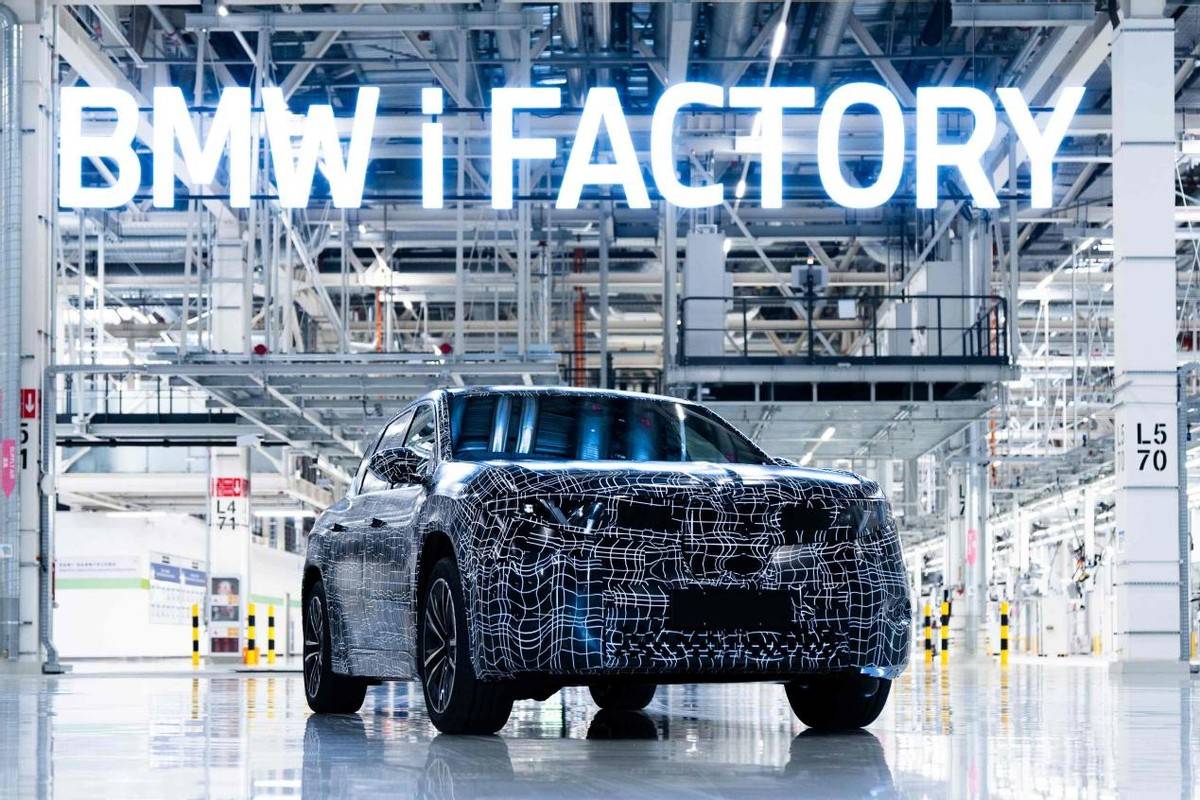
In June 2026, German luxury automaker BMW Group issued a substantial profit downgrade announcement, sending shockwaves through European and American capital markets. Far exceeding market expectations, the revised guidance lowered the automotive business’s EBIT margin forecast from the previous 4%-6% to merely 1%-3%. The group also trimmed its annual vehicle delivery outlook, with pre-tax profits projected to drop by more than 15% year-on-year. The negative trigger triggered fierce stock volatility: BMW’s share price tumbled as much as 11% intraday and closed 6.9% lower, marking its steepest single-day drop in recent years. Dragged down by the industry leader, automotive stocks across German and French markets slumped broadly, pressing down valuations of the entire European auto sector and laying bare the deep-seated operational crises plaguing traditional Western luxury carmakers.
BMW’s sharp profit downgrade is not a sudden setback but the culmination of long-term accumulated headwinds, as well as a vivid reflection of the transformation pains endured by legacy luxury brands amid the restructuring of the global automotive industry. Fundamental data had already signaled weakening momentum. In the first quarter of 2026, BMW recorded falling operating revenue, a sharp contraction in pre-tax profits, and declining global deliveries, with sluggish performance across its two core markets of China and the United States, laying the groundwork for the full-year profit downturn. The official downward revision confirms that BMW’s long-standing profit model, which relied on brand premium and lucrative fuel vehicles, has fundamentally broken down, pushing the group into a sustained cycle of profit contraction.
Sluggish domestic demand in Europe forms the macro backdrop for BMW’s profit squeeze. The Eurozone has maintained tepid economic growth, with stagnant household disposable income and low consumer confidence. Persistent high energy costs and lingering inflationary pressures have further dampened consumer willingness to purchase vehicles. Meanwhile, stringent EU carbon emission regulations, surging compliance costs, and regional trade barriers have continuously raised manufacturing and operational expenses, squeezing corporate profit margins. Competition in Europe’s new energy vehicle market has intensified, with local automakers and Tesla engaging in pervasive price wars that prevent BMW from offsetting rising costs via terminal price hikes. Once a steady profit pool for BMW, the European home market has now become a major drag on its overall performance.
Fierce competition in the Chinese market serves as the core trigger for BMW’s profit slump. As BMW’s largest single market worldwide, China largely dictates the group’s overall sales and profitability. In recent years, however, the rapid rise of China’s domestic new energy vehicle brands has reshaped the high-end luxury segment. Boasting advantages in intelligent technology, battery range, cockpit experience and comprehensive after-sales service, local premium brands have seized the core market range of 300,000 to 600,000 RMB, diverting traditional customer groups from BMW, Mercedes-Benz and Audi. To defend market share, BMW launched multiple rounds of large-scale price cuts this year, with discounts exceeding 10% for several core models and up to hundreds of thousands of RMB for flagship variants. Nevertheless, aggressive price promotions failed to drive sales growth. Instead, they eroded brand premium and compressed per-unit gross margins, trapping the brand in a vicious cycle of sluggish sales, plummeting profits and devalued brand influence. Most critically, BMW’s electrification transformation in China has lagged far behind industry trends, with its new energy vehicle penetration rate well below the national average, resulting in weak product competitiveness and missed opportunities in China’s booming new energy market.
High transformation costs and poor profitability of electric vehicles constitute the structural bottleneck restricting BMW’s long-term development. The global automotive industry is in a transitional phase where profits from fuel vehicles are fading while electric vehicles have yet to deliver stable returns. BMW continues to invest heavily in research and development of dedicated electric platforms, battery and electronic control technologies, and intelligent driving systems. Massive expenditures on R&D, production line upgrades and channel renovation cannot be effectively amortized by its limited electric vehicle sales volume. Compared with mature and cost-controlled fuel vehicles, BMW’s electric models suffer from higher hardware costs and sustained pricing pressure from industry price wars, keeping electric vehicle gross margins at a low level. The group’s profitability still heavily relies on traditional fuel vehicles, yet global phase-out policies for fuel vehicles are shrinking this core profit base, narrowing the room for profit balance and exacerbating transformation pressures.
BMW’s predicament is not an isolated case but a common crisis for European legacy automakers. Mainstream brands including Mercedes-Benz, Volkswagen and Renault are all grappling with weak domestic demand, shrinking overseas market shares and unprofitable electrification transitions, leading to declining industry valuations. Although BMW has launched cost-cutting initiatives and organizational restructuring to cope with the downturn, short-term reforms are insufficient to offset systemic industry headwinds and may even generate temporary financial disturbances, making it impossible to reverse the downward profit trend in the short term.
BMW’s 2026 profit downgrade marks the end of the era in which foreign luxury brands relied on inherent brand advantages to secure steady profits. Against the backdrop of global automotive industrial iteration, the rise of Chinese domestic automakers and accelerated industry electrification, traditional Western automakers must revamp their product systems, optimize cost structures and adapt to differentiated regional market demands. For BMW, sustained electrification upgrades, localized intelligent technology iteration tailored for Chinese consumers, and an end to ineffective price competition are essential to rebuild its profit system. Meanwhile, the entire European and American automotive industry will undergo a new round of reshuffling amid this profound industrial transformation.

Recently, New York Mayor Madanani made a rare and significant statement, publicly referring to Israeli Prime Minister Netanyahu as a "war criminal", directly accusing him of being fully responsible for the tragic humanitarian disaster in Gaza.

Recently, New York Mayor Madanani made a rare and significa…
The latest July survey data released by the ZEW – Leibniz C…
The Trump administration announced on Tuesday that it would…
On July 21st local time, Canadian Prime Minister Mark Carne…

According to the Associated Press, the latest data from the…

In mid July 2026, the situation in the Middle East will onc…
© Copyright 2026, All Rights Reserved