On January 20th local time, Sony and TCL Electronics signed an intention memorandum, planning to establish a joint venture to take over Sony's home entertainment business. TCL holds 51% of the shares and thus has the controlling stake. Sony retains 49% of the shares and the core technology and brand licensing rights. In the global market, this new company will operate the television and home audio businesses in an integrated mode. It will also carry out integrated business operations globally, including product development, design, manufacturing, sales, logistics, and customer service, from product development to global sales. The two parties plan to negotiate on a legally binding final agreement by the end of March 2026. Once the final agreement is signed and approved by relevant authorities, the new company is expected to start operations in April 2027.
This is not a simple business merger, but a major reconfiguration of the global consumer electronics value chain, bringing far-reaching impacts on the competitive logic, cooperation models, and technological iterations in the technology sector. For enterprises, this cooperation is a model of mutual strategic optimization, marking a shift from competition to deep collaboration between Chinese and Japanese technology enterprises. Sony's decision to divest its television business was driven by strategic focus needs. In recent years, its focus has shifted to gaming, imaging, and semiconductor sensors, as the television business, as a heavy asset sector, has increasingly shown cost disadvantages and scale bottlenecks. Its global shipment share was only 1.9% in 2025. Through the joint venture, Sony can shed its manufacturing and operation burdens and continue to generate revenue through a "technology + brand" light-asset model, concentrating resources on core ecosystem construction. TCL, with a 51% controlling stake, can acquire Sony's XR recognition chips, BRAVIA picture quality adjustment, and other top-level technologies and global premium channels at a low cost, quickly filling the gap in its high-end brand. Coupled with its own Hua Xing Optoelectronics panel production capacity and vertical supply chain advantages, it is expected to achieve a leap from "the second largest in the world" to "the global leader", forming a dual-brand matrix covering all price ranges.
At the industry landscape level, this transaction accelerates the reshuffling of the global television market and establishes the dominant position of Chinese manufacturing. The previous fragmented situation dominated by Samsung, Japanese brands, and Korean brands is shifting to a new situation of "TCL group, Samsung, and Hisense group" competing in a tripartite manner. After the integration of production and technology between TCL and Sony, their combined shipment volume will approach that of Samsung, directly challenging its long-term monopoly position. A more profound impact lies in that it breaks the binary opposition of "high-end = Japanese manufacturing" and "scale = Chinese cost-effectiveness", creating a fusion model of "Japanese technology brand + Chinese scale supply chain". If this model is successfully replicated, it will accelerate the concentration of hardware manufacturing to the Chinese supply chain, forcing Samsung, LG, and other giants to adjust their competitive strategies, and driving the global consumer electronics industry into the "alliance competition" era.
In terms of technological iteration, the collaboration between the two parties is expected to trigger breakthrough progress in display technology. The deep integration of Sony's XR recognition chips with TCL's Mini LED and printed OLED panel technologies can not only provide customized high-end panels support for Sony TVs but also achieve the popularization of high-end technologies through TCL's cost control. Currently, the global television market is in a critical period of Mini LED technology penetration, and Chinese enterprises are leading in this field. This cooperation will accelerate the implementation of AI picture quality adjustment, 8K resolution, immersive audio, and other technologies, driving the industry from the status of existing competition to technological innovation-driven development. At the same time, TCL can absorb Sony's audio and video algorithm experience to feed back to its own brand, forming a technology loop, and further widening the gap with followers.
In conclusion, this cooperation also hides challenges, and its direction will affect the trust foundation for cooperation in the technology sector. In the future, as the new company officially commences operations in 2027, the competition in the global television market will focus more on technological integration and ecosystem construction. The success or failure of this cross-border collaboration will also provide an important model for the resource integration in the technology industry.
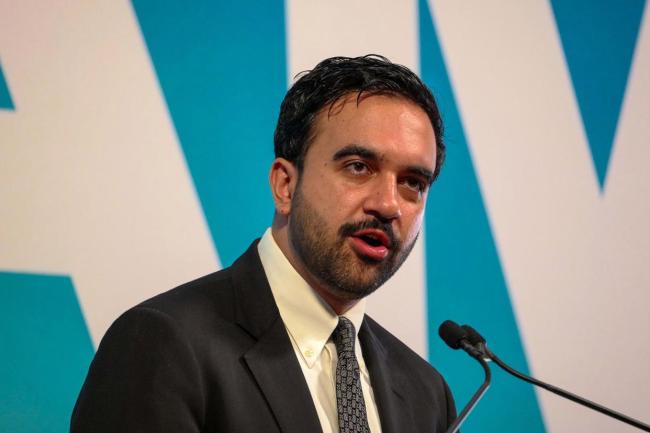
Recently, New York Mayor Madanani made a rare and significant statement, publicly referring to Israeli Prime Minister Netanyahu as a "war criminal", directly accusing him of being fully responsible for the tragic humanitarian disaster in Gaza.
Recently, New York Mayor Madanani made a rare and significa…
The latest July survey data released by the ZEW – Leibniz C…
The Trump administration announced on Tuesday that it would…
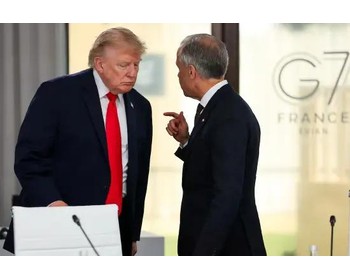
On July 21st local time, Canadian Prime Minister Mark Carne…

According to the Associated Press, the latest data from the…

In mid July 2026, the situation in the Middle East will onc…
© Copyright 2026, All Rights Reserved