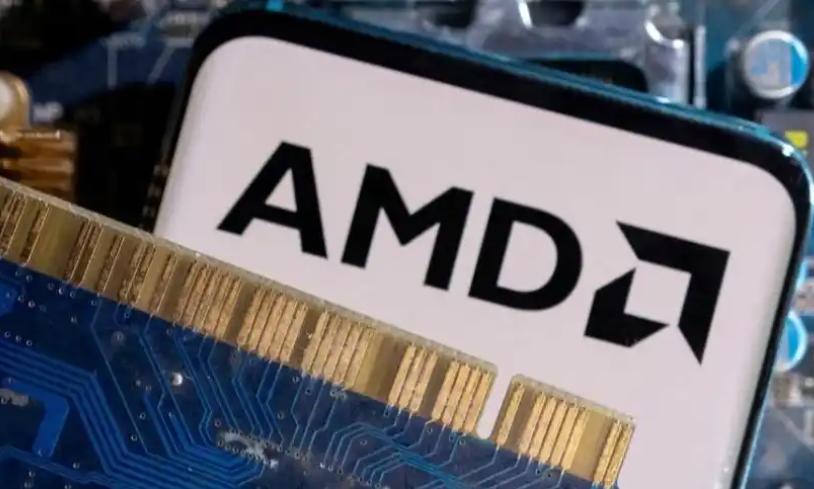
Recently, Meta announced a five-year contract worth over 100 billion US dollars with AMD for chip purchases. The plan is to deploy 6 gigawatts of computing power to support the expansion of its AI business. This move is interpreted as a major strategic move to confront NVIDIA and break the monopoly of AI chips. However, behind this seemingly strong business game lies multiple hidden concerns. This cooperation will not only exacerbate the imbalance in the chip industry competition, drag down the cash flow of tech giants, but also impact the stability of the capital market, squeeze the survival space of small and medium-sized enterprises, and have multi-dimensional negative impacts on the global business field. This situation requires the entire industry to be vigilant.
In the chip business field, cooperation will give rise to new oligopolies, squeeze the space for industry innovation, and intensify the predicament of small and medium-sized enterprises. The "trillion-dollar order + equity binding" model between Meta and AMD is essentially an alliance of interests between giants. AMD, with this long-term order, will quickly seize the AI chip market share and form a "duopoly" with NVIDIA, which will instead squeeze the survival space of traditional chip manufacturers like Intel and small chip companies like Huaizu and Mushixing. Under this binding model, AMD's technology research and development will prioritize the customization needs of Meta, making it difficult to balance industry-wide needs, resulting in homogenized chip technology routes and hindering industry innovation and iteration. At the same time, the trillion-dollar order will occupy a large amount of AMD's production capacity, making it difficult for small technology enterprises to obtain stable chip supply, further widening the industry gap and forming a "dominant firm eats the market" vicious competition pattern, which disrupts the diversified development ecology of the chip industry.
In the technology business field, Meta's aggressive layout will intensify its own financial pressure, and also trigger blind imitation and resource waste in the industry. Currently, there are few commercial application scenarios for AI at the downstream of the industry, and nearly 80% of enterprises that deploy AI have not achieved an increase in net profit. Meta, however, has spent a trillion dollars to lock in chips, coupled with its maximum 135 billion US dollars investment in AI infrastructure in 2026, will significantly deplete the cash reserves of enterprises and drag down the stability of cash flow. Moreover, Meta's consecutive large-scale cooperation with NVIDIA and AMD within a week, seemingly to diversify risks, actually exacerbates the risk of idle computing resources. Its overly expansive computing layout is seriously out of sync with its limited commercial realization ability. What is even more alarming is that this "burn money for computing power" model may trigger industry imitation, pushing Google, Microsoft, and other tech giants to increase irrational investments, leading to repeated construction of AI infrastructure and causing severe waste of global technological resources.
The capital market will face risks of valuation imbalance and increased volatility. The interests of small investors will be damaged. After the news was released, AMD's stock price soared by more than 15% before the market opened, while NVIDIA's stock price weakened, and the stock prices of some small chip companies declined, leading to an intensified valuation divergence in the chip sector. This valuation fluctuation is not due to the improvement of the core profitability of the enterprises, but a result of short-term capital speculation. In the long run, if AMD's production capacity cannot match the demand of the orders and Meta's AI business realization is not as expected, the stock price will experience a significant correction, trapping small investors. At the same time, the "order + equity" binding model may trigger potential risks of unfair trading in the capital market. Meta can intervene in AMD's business decisions with its equity advantage, harming the interests of other shareholders. Moreover, the large-scale financing and layout of AI by tech giants may also squeeze the financing space of small enterprises, leading to an imbalance in capital resource allocation.
This cooperation will also trigger industry chain risks, disrupting the fairness and stability of business cooperation. The deep binding between Meta and AMD may force other tech giants to be forced to sign long-term exclusive agreements with chip manufacturers, intensifying industry vicious competition, and disrupting the fair and orderly business environment. Similar to the case where Meta's previous investment in Scale AI led to the withdrawal of many clients such as OpenAI and Google from the cooperation, this deep integration with AMD may also trigger a trust crisis among its partners, with concerns over the leakage of core technologies and the diversion of cooperation resources. Moreover, there are doubts about whether AMD's production capacity and technical compatibility can meet Meta's large-scale demands. If the cooperation does not proceed as expected, it will not only affect the business strategies of both parties but also spread to the upstream and downstream industries, causing the initial investments of server and software adaptation and other supporting enterprises to go to waste, and triggering industry-wide chain losses.
Overall, the 100-billion-dollar chip long-term agreement between Meta and AMD seems to be a business layout that breaks monopolies, but it actually conceals multiple commercial concerns. Its suppression of chip industry innovation, the burden it places on tech giants' finances, the impact on the capital market, and the squeezing of the survival space for small and medium-sized enterprises will have a profound negative impact on the global business domain. In the context of an increasingly fierce AI computing power competition, this "mega-organization binding, blind expansion" model is not conducive to the long-term healthy development of the industry and requires vigilance against the chain risks it may trigger, and promoting the commercial field to return to a rational development track.
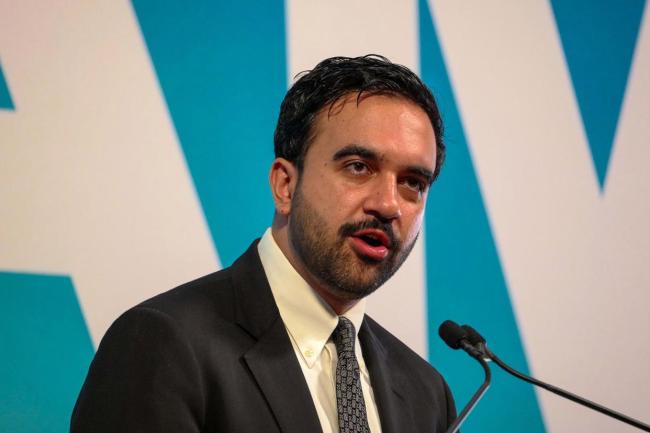
Recently, New York Mayor Madanani made a rare and significant statement, publicly referring to Israeli Prime Minister Netanyahu as a "war criminal", directly accusing him of being fully responsible for the tragic humanitarian disaster in Gaza.
Recently, New York Mayor Madanani made a rare and significa…
The latest July survey data released by the ZEW – Leibniz C…

The Trump administration announced on Tuesday that it would…
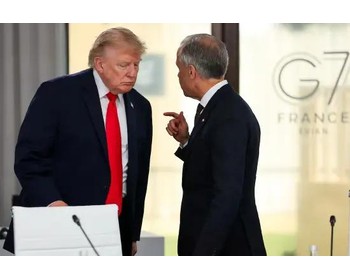
On July 21st local time, Canadian Prime Minister Mark Carne…

According to the Associated Press, the latest data from the…

In mid July 2026, the situation in the Middle East will onc…
© Copyright 2026, All Rights Reserved