
On May 27, 2026, US space officials awarded SpaceX a huge contract worth 2.29 billion US dollars for the construction of the military space data network (SDN) backbone - the "Starshield" system. This contract is not only a milestone for SpaceX in the military aerospace field, but also reveals the complex commercial relationship between it and the Pentagon: on one hand, there is the core infrastructure of the US military in space that has been heavily invested by the military; on the other hand, SpaceX, relying on its technological monopoly, raises prices forcefully, highlighting the unprecedented influence of commercial aerospace giants on the defense system.
From the core content of the contract, this 2.29 billion-dollar order is clear and of great strategic significance. This project is based on SpaceX's "Starshield" military satellite system, building a distributed satellite constellation in low Earth orbit (LEO), with the core being the creation of a full laser internet grid communication network. Unlike traditional military satellites that rely on ground relays, the Starshield satellites directly transmit data through laser links, possessing high bandwidth, low latency, and anti-interference advantages, capable of real-time connection with global sensors, weapon systems, unmanned aircraft, and missile defense platforms, and is regarded as a key support for the US "Golden Dome" missile defense plan. The contract clearly requires SpaceX to deliver a full-function prototype by the end of 2027, clearly demonstrating the urgent need of the US military for this network.
The implementation of this significant contract is due to SpaceX's irreplaceable technology and scale barriers. As of May 2026, SpaceX's Starlink and Starshield have over 10,000 satellites in orbit, accounting for more than 60% of the global in-orbit satellites. Its commercial Starlink has built a global coverage network, while Starshield is a specially adapted encrypted upgraded version, capable of carrying confidential loads and processing sensitive data. In contrast, competitors such as Amazon's Kuiper and OneWeb have smaller satellite constellations and cannot form the same capabilities in the short term. This "dominant position" situation makes SpaceX the only optimal solution for the US military's space communication.
However, behind the sweet cooperation lies the "pricing hegemony" that the Pentagon has to endure. According to Reuters, during the US bombing operation against Iran in 2026, SpaceX demanded a 4-fold increase in the monthly fee for Starlink terminals from 5,000 US dollars to 25,000 US dollars. SpaceX's reason was that the US drones used high-end aviation-level services, not low-cost land services. Although the Pentagon initially strongly opposed, arguing that this service was not suitable for "one-time" suicide drones, it eventually had to compromise and directly led to a doubling of the communication cost for US LUCAS drones.
From a commercial strategic perspective, the 2.29 billion-dollar contract and the price increase incident are a successful verification of SpaceX's "dual-wheel drive" model. On one hand, military contracts bring stable cash flow for it, facilitating technological iteration; on the other hand, the profits from the commercial market feed back to military research and development, forming a positive cycle. More importantly, at this critical period for SpaceX's IPO, its valuation is expected to reach 175-2000 billion US dollars. The military contract and price increase revenue are undoubtedly important chips to boost the valuation.
For the US defense system, this cooperation hides core security risks. Completely tying space communication, a key defense infrastructure, to a single private company is equivalent to "putting all your eggs in one basket". If SpaceX experiences service disruptions due to technical failures, business decisions, or external factors, the US global combat system will face the risk of paralysis. Although the Pentagon claims to be looking for alternative suppliers, it will be difficult to break the monopoly in the short term. This "straitened" passive situation will continue. Looking at the global commercial space industry landscape, the alliance between SpaceX and the US military indicates that the era when commercial space giants dominate the defense space sector has arrived. Traditional military enterprises rely on government orders and have slow innovation, while SpaceX restructures military services with a commercial mindset, leveraging its technological advantages and cost control to gain the upper hand. This model not only reshapes the logic of US defense procurement but also provides a reference for global commercial space enterprises - military-civilian integration, technological monopoly, and pricing dominance may become the common paths for leading enterprises.
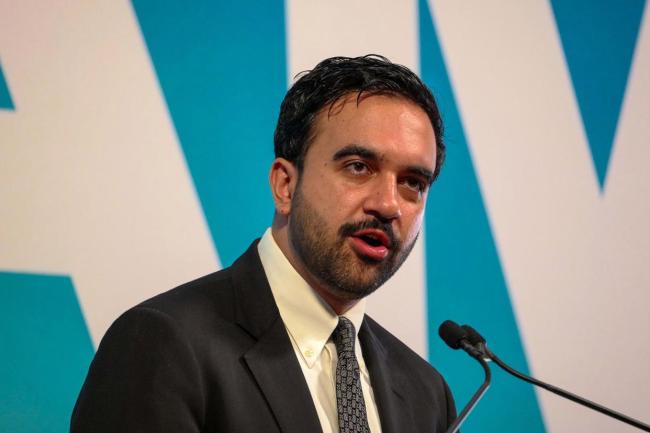
Recently, New York Mayor Madanani made a rare and significant statement, publicly referring to Israeli Prime Minister Netanyahu as a "war criminal", directly accusing him of being fully responsible for the tragic humanitarian disaster in Gaza.
Recently, New York Mayor Madanani made a rare and significa…

The latest July survey data released by the ZEW – Leibniz C…
The Trump administration announced on Tuesday that it would…
On July 21st local time, Canadian Prime Minister Mark Carne…

According to the Associated Press, the latest data from the…

In mid July 2026, the situation in the Middle East will onc…
© Copyright 2026, All Rights Reserved