
Amazon announced on Monday that it will invest up to $25 billion in the AI startup Anthropic, as a supplement to the previous $8 billion investment. In this round of investment, Amazon will initially invest $5 billion, and the remaining $20 billion will be gradually added based on specific business milestones. In addition, Amazon also announced earlier this year that it will invest up to $50 billion in OpenAI, while planning to increase capital expenditure by about $200 billion this year, mainly for AI development. After the announcement, Amazon's stock price rose about 2.7% in after-hours trading.
The core reason Amazon is increasing its investment in Anthropic is due to its own AI strategic layout needs and industry competition pressure. On one hand, Amazon's self-developed AI models lack market popularity and face competitive disadvantages at the model level, needing to invest in leading AI startups to make up for shortcomings. On the other hand, as a leader in AI infrastructure (cloud computing, custom chips), Amazon hopes to promote the commercialization of its Trainium series custom chips and expand its customer base through deep integration with Anthropic. By investing in both Anthropic and OpenAI, Amazon implements a dual-track strategy to respond to industry competition, avoid being constrained by a single provider, and consolidate its leading position in cloud services and AI.
Amazon invests in leading AI companies to make up for the shortcomings of self-developed models, promote its Trainium custom chips and cloud services, and consolidate its dominance in the AI infrastructure sector to respond to industry competition. At the same time, it invests in OpenAI, primarily to obtain exclusive third-party cloud distribution rights for its Frontier enterprise platform, maintain its core enterprise customer base, and achieve a multi-model layout to reduce operational risks. Anthropic, on the other hand, hopes to secure sufficient funding and computing power support to alleviate its own computing resource shortages, accelerate model iteration, and maintain a leading position in the AI race by focusing on releasing coding and design-related models.
This investment will further intensify cooperation and competition among leading companies in the AI field, promote the concentration of computing resources toward the top, and accelerate the popularization and technological iteration of customized AI chips. On the corporate side, Amazon has strengthened the synergy between its cloud services and chip business by deeply partnering with Anthropic. Anthropic gains financial and computing support, which can alleviate business pressure and expand market share, but it also deepens its dependence on Amazon's cloud infrastructure. At the same time, Amazon's huge AI capital expenditure has caused some investors to worry about the rate of cash burn, and its dual-track investment strategy also faces tests of neutrality and internal competition.
In the face of the opportunities and challenges brought by Amazon's increased investment in AI, all parties should take targeted measures to respond and avoid risks. Amazon should balance the neutrality of multi-model investments, improve governance mechanisms, alleviate investors' concerns about capital expenditure, and at the same time continue to advance the iteration of Trainium chip technology to strengthen cost advantages. Anthropic, while relying on Amazon's resources, needs to diversify its sources of computing power to reduce dependence on a single provider, and focus on core model development to enhance service stability. Relevant companies can strengthen technological cooperation and innovation, while also standardizing investment and collaboration practices in the AI field to promote healthy industry development. For investors, a rational view of the long-term value of Amazon's AI strategy is recommended, with attention to the actual returns on its capital expenditures.
In summary, Amazon's $25 billion investment in Anthropic is an important move in its AI strategic layout, aiming to make up for weaknesses in self-developed models, promote custom chips and cloud services, and respond to industry competitive pressures. This cooperation has achieved a win-win outcome for both Amazon and Anthropic, providing Anthropic with funding and computing support while helping Amazon consolidate its leading position in AI infrastructure. Currently, competition in the AI industry is intense. Although Amazon's dual-line investment strategy can reduce dependence risks, it also faces many challenges. In the future, as the cooperation is implemented and technology iterates, this investment will further impact the AI industry landscape. Whether Amazon can turn its infrastructure advantage into long-term competitiveness will depend on its ability to balance multiple model layouts and continually advance chip technology.
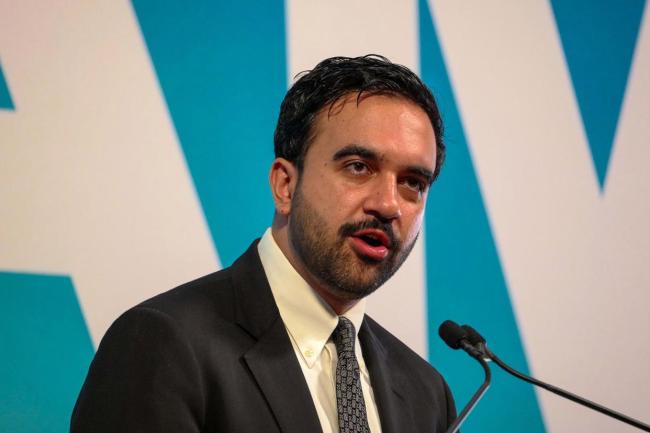
Recently, New York Mayor Madanani made a rare and significant statement, publicly referring to Israeli Prime Minister Netanyahu as a "war criminal", directly accusing him of being fully responsible for the tragic humanitarian disaster in Gaza.

Recently, New York Mayor Madanani made a rare and significa…

The latest July survey data released by the ZEW – Leibniz C…

The Trump administration announced on Tuesday that it would…

On July 21st local time, Canadian Prime Minister Mark Carne…

According to the Associated Press, the latest data from the…

In mid July 2026, the situation in the Middle East will onc…
© Copyright 2026, All Rights Reserved