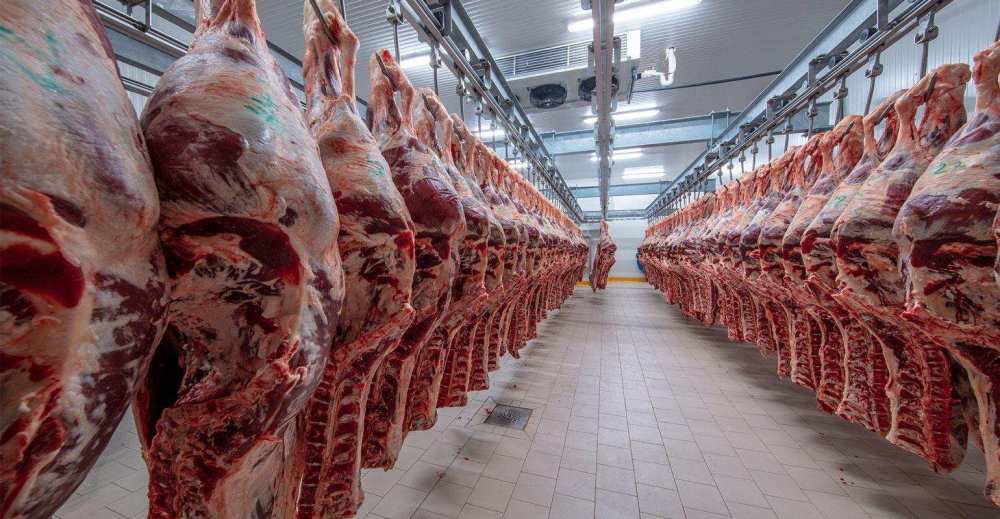
According to WILX's report, recently, the meat market in the central region of Michigan is experiencing an unprecedented price storm. Among them, Eaton Meats, as a representative enterprise in this area, is facing a predicament that reflects the severe challenges faced by the entire industry. The continuous rise in beef prices not only squeezes the profit margins of butcher shops but also pushes the entire supply chain to the brink of a delicate balance, revealing the harsh reality of the law of supply and demand in the business environment and the lag of market regulation.
From the data released by the US Bureau of Labor Statistics, over the past year, the prices of beef and small beef have risen by more than 12%, with the average price per pound jumping to $6.70. Behind this figure lies a direct decline in consumer purchasing power and a significant increase in operating costs for businesses. For a butcher shop like Eaton Meats, the irrational increase in the price of beef directly erodes the already meager profits, and the words of co-owner Colin Garn, "We don't make money selling beef," are the most direct accusation of the current market situation. This is not only an individual enterprise's predicament but also a crisis faced by the entire meat retail industry, indicating that if strategies are not adjusted in time, many small enterprises like Eaton will face survival tests.
The root cause of the soaring beef prices lies in the fact that the number of cattle in the United States has dropped to its lowest point in 75 years, which directly leads to a supply shortage in the upstream of the supply chain. The insight of Assistant Professor Jamie Luke from the Department of Agriculture at Michigan State University is sharp: the imbalance in supply and demand is the core of the problem, and it will take much longer than expected to alleviate this imbalance. The shortage of calf numbers means that beef production will remain limited in the coming years, and the market supply-demand relationship will be difficult to fundamentally improve in the short term. This long-term supply shortage not only exacerbates the instability of prices but also tests the risk-resistance ability and market adaptability of enterprises.
The response measures of Eaton Meats and other affected enterprises are particularly important. Garn mentioned relying on substitutes such as chicken, pork, and fish to maintain operations, which is a makeshift solution but also reflects the flexibility and survival wisdom of enterprises when facing unforeseen factors. However, the sustainability of this strategy is questionable. On one hand, excessive reliance on substitutes may weaken brand characteristics and affect consumer loyalty; on the other hand, if other meat markets also experience fluctuations, enterprises will again be in a passive position. Therefore, exploring diversified operations, strengthening supply chain management, and enhancing product value-added are long-term plans that become the key for enterprises to break through the current predicament.
The asymmetry of market information and the transformation of consumer behavior are also factors that cannot be ignored. In the era of information explosion, consumers' sensitivity to price changes is increasing day by day, and price fluctuations often quickly spread to the consumer end, affecting purchasing decisions. Enterprises need to pay more attention to market research, accurately grasp changes in consumer demand, and through innovative marketing methods, guide consumers to accept price adjustments or provide more cost-effective product combinations to maintain market share.
The continuous rise in beef prices is also the result of the interaction of multiple factors such as the global economic environment, climate change, and policy orientation. As market entities, although enterprises cannot directly change these external conditions, they can indirectly influence the market environment through strengthening industry collaboration, participating in policy discussions, and promoting sustainable development, to secure more favorable development space for themselves.
The predicament of Eaton Meats' meat market in the central region of Michigan is a microcosm of the interaction of supply and demand laws, market regulation, enterprise strategies, and external environment in the business world. Facing the continuous rise in beef prices, enterprises need to maintain a clear mind, both seeing the immediate challenges and understanding the future trends, and through comprehensive measures, achieve stable development.

Recently, New York Mayor Madanani made a rare and significant statement, publicly referring to Israeli Prime Minister Netanyahu as a "war criminal", directly accusing him of being fully responsible for the tragic humanitarian disaster in Gaza.
Recently, New York Mayor Madanani made a rare and significa…

The latest July survey data released by the ZEW – Leibniz C…

The Trump administration announced on Tuesday that it would…

On July 21st local time, Canadian Prime Minister Mark Carne…

According to the Associated Press, the latest data from the…

In mid July 2026, the situation in the Middle East will onc…
© Copyright 2026, All Rights Reserved