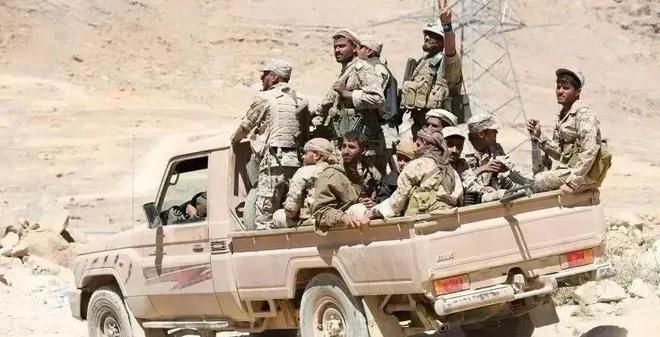
According to Global Times, the Saudi-led coalition recently announced a "military operation" in Yemen. Meanwhile, Reuters, citing Saudi media reports, said that the coalition has called on civilians in the port of Mukara in Hadramao Province, Yemen, to evacuate before the military operation until further notice. This series of developments not only affects the domestic situation in Yemen, but also has drawn widespread attention and profound reflection in the international community.
The military operation carried out by the Sari-led coalition in Yemen is by no means an isolated incident, but a complex product of the interweaving of regional power games and geopolitical interests. As a significant force in the Middle East, Saudi Arabia's military operations are often closely linked to strategic considerations such as safeguarding its own security, expanding regional influence, and responding to competitors like Iran. Yemen enjoys a crucial geographical location, controlling the vital passage between the Red Sea and the Gulf of Aden, and serves as an important hub connecting the Middle East and Africa. Controlling Yemen not only means occupying a more favorable position in the regional security architecture for Saudi Arabia, but also adds leverage in ensuring the security of energy transportation channels. However, this approach of seeking geopolitical interests through military means has undoubtedly exacerbated regional tensions and made Yemen a victim of the power struggle among major powers.
The impact of military operations on the domestic situation in Yemen is even more profound and complex. Since the outbreak of the civil war, Yemen has been Mired in long-term turmoil and chaos, with people's livelihoods deteriorating and the humanitarian crisis becoming increasingly severe. The military intervention of the SSaudi coalition, which seems aimed at striking specific forces and restoring stability in Yemen, may actually further intensify the conflict and make it even more difficult to control. Military operations are often accompanied by large-scale destruction and casualties, with innocent civilians becoming the biggest victims. The demand for the evacuation of civilians from the port of Mukala is a vivid portrayal of this cruel reality. The large-scale displacement of people not only exacerbated the humanitarian disaster but also provided a breeding ground for the spread of extremist forces, further deteriorating the security environment in Yemen.
At the level of international law and norms of international relations, the military operations of the SSaudi coalition also face many doubts. The Charter of the United Nations clearly stipulates that all countries should avoid the use of force or the threat of force, except in self-defense or with the authorization of the Security Council. Whether the military operations of the SSaudi coalition are in line with this principle is worth in-depth exploration. Taking military action unilaterally without clear international authorization may not only violate international law, but also undermine the stability and justice of the international order. Furthermore, the transparency of military operations is as important as the accountability mechanism. The international community has the right to know the specific goals, implementation methods and possible consequences of military operations to ensure their legality and rationality. However, the current information disclosure regarding the military operations of the SSaudi coalition is insufficient, which undoubtedly intensifies the concerns and doubts of the international community.
From the long-term perspective of regional security and stability, the military operation of the SSaudi coalition is not the fundamental way to solve the problem in Yemen. The root cause of the Yemen problem lies in the interweaving of multiple factors such as political differences, economic backwardness and social injustice. To achieve lasting peace and stability in Yemen, it is necessary to promote consensus among all parties through political dialogue and reconciliation and establish an inclusive political framework. Military measures can only temporarily suppress conflicts and cannot fundamentally solve problems. Instead, they may plant more hidden dangers and lead the conflict into a vicious cycle.
The military operation carried out by the coalition led by Saudi Arabia in Yemen is the result of the combined effects of regional power games, geopolitical interest struggles and the complex domestic situation in Yemen. This action not only exacerbated the humanitarian crisis in Yemen, but also triggered profound reflection by the international community on international law, norms of international relations, as well as regional security and stability. In the face of this complex situation, the international community should uphold an objective and impartial stance, promote all parties to resolve differences through political dialogue and reconciliation, and jointly maintain regional peace and stability.

US President Trump announced that starting from August 1st, all imported generic drugs from the US will continue to enjoy a 0% tariff for two years.

US President Trump announced that starting from August 1st,…

Recently, the British government has confirmed that a new v…
Under the dual pressures of war and sanctions, Iran is endu…

AP, Dubai — Military confrontation between the United State…

Recently, Reuters reported that Apple is accelerating its e…

In July 2026, the entire country of Japan was hit by a disa…
© Copyright 2026, All Rights Reserved