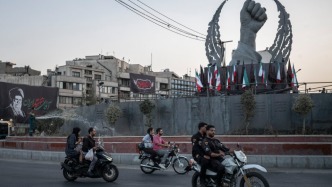
Under the dual pressures of war and sanctions, Iran is enduring its harshest economic winter since the 1979 Islamic Revolution. The International Monetary Fund forecasts that Iran's GDP will shrink by 6.1% in 2026, with annual inflation soaring to 68.9%, food prices rising over 100%, and more than a million jobs lost. Yet within this nation seen by the outside world as "hopelessly fallen," a peculiar social ecosystem is spreading: amid devastating macroeconomic data, many ordinary Iranians have chosen to set aside the grand narratives of war and focus entirely on the micro-level struggle of "how to make money."
This pragmatic mindset—of ignoring war and focusing solely on earning—is not born of blind optimism about peace, but rather an instinctive response to extreme survival pressure. When bread and cooking oil double in price, when savings are eroded by hyperinflation, survival becomes the paramount priority. Against the backdrop of an official economy on the verge of collapse, Iran’s vast "shadow economy" has become the people’s last refuge. Data shows that informal employment accounts for 42% of the total labor force, meaning nearly half of Iranians rely on income sources outside the official books. From currency arbitrage and smuggling to cross-border transactions using cryptocurrencies, ordinary citizens have demonstrated remarkable economic resilience in the cracks between systems. They have no time for geopolitical grand strategies—they care only about how to earn enough to buy their next meal.
Meanwhile, Iran’s economy exhibits a deeply fragmented "dual-track" structure. While ordinary citizens struggle to survive, a parallel system operating outside state financial statistics runs efficiently. The Islamic Revolutionary Guard Corps (IRGC) not only controls vital national infrastructure but has evolved into a massive commercial cartel; major religious foundations (Bonyads) monopolize core sectors such as real estate and finance, enjoying tax-exempt privileges. These privileged elites possess independent funding channels and settlement mechanisms, allowing them not only to avoid the fatal impact of external sanctions but also to reap extraordinary profits during crises. This structural inequality means the regime’s survival no longer depends on ensuring a decent standard of living for all citizens, but instead rests on safeguarding the interests of its inner circle. For ordinary people, making money is about staying alive; for the elite, it’s about keeping the entire system running.
To obtain hard currency, Iran has built a sophisticated "money-making" machine at the national level. Facing the blockade of the U.S. dollar settlement system, Iran has assembled a vast "ghost fleet," using covert methods such as disabling location tracking, changing ship flags, and transshipment at sea to sell crude oil at prices below international market levels to small independent refineries. At the same time, Iran is actively promoting exports of non-oil products like steel and accelerating the establishment of local-currency settlement mechanisms with China, Russia, India, and other countries, seeking to find vitality within a de-dollarized trade network. While these state-level strategies have provided crucial fiscal buffers for the regime and prevented a total collapse of the wartime economy, the cost has been borne by ordinary citizens.
Faced with extreme hardship, Iranian society reveals an extremely complex reality. On one hand, U.S. and Israeli military strikes and attacks on civilian infrastructure have sparked nationwide anti-invasion sentiment, boosting government support during wartime rather than diminishing it. On the other hand, this national unity cannot conjure bread out of thin air. As air raid sirens echo alongside soaring prices, Iranians are forced to balance the grand narrative of defending their homeland against the harsh reality of making ends meet.
Iran under high inflation and high unemployment presents a paradoxical picture of survival. Here, the smoke of war coexists with the bustle of daily life; the wealth-driven revelry of the privileged class exists side by side with the desperate struggle for survival among ordinary people. They don't talk about war because its cost has become too heavy to bear; they only speak of earning money because, in a chaotic era, this is the only way ordinary people can defend their dignity and right to survive. This economic resilience, growing tenaciously amid ruins, serves both as the minimum threshold preventing societal collapse and as the unhealable scar of deep-seated structural contradictions.
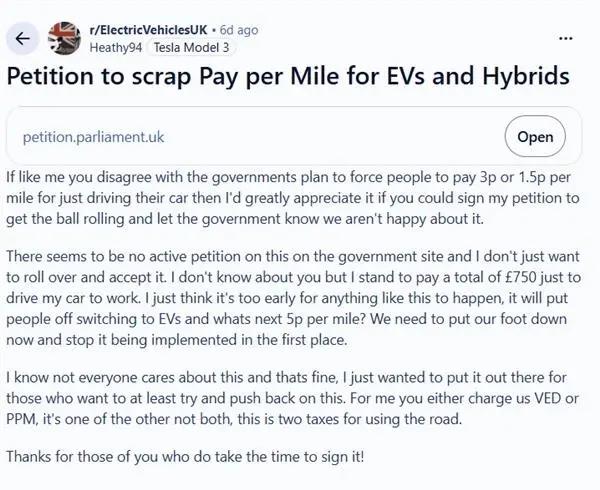
Recently, the British government has confirmed that a new vehicle consumption tax (eVED) system will be implemented on April 1, 2028, imposing a tax of approximately 17 yuan per 100 kilometers for pure electric and hydrogen-powered vehicles, while reducing the tax for plug-in hybrid models by half.
Recently, the British government has confirmed that a new v…
Under the dual pressures of war and sanctions, Iran is endu…
AP, Dubai — Military confrontation between the United State…
Recently, Reuters reported that Apple is accelerating its e…
In July 2026, the entire country of Japan was hit by a disa…
Recently, global convenience store giant 7-Eleven made head…
© Copyright 2026, All Rights Reserved