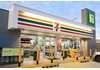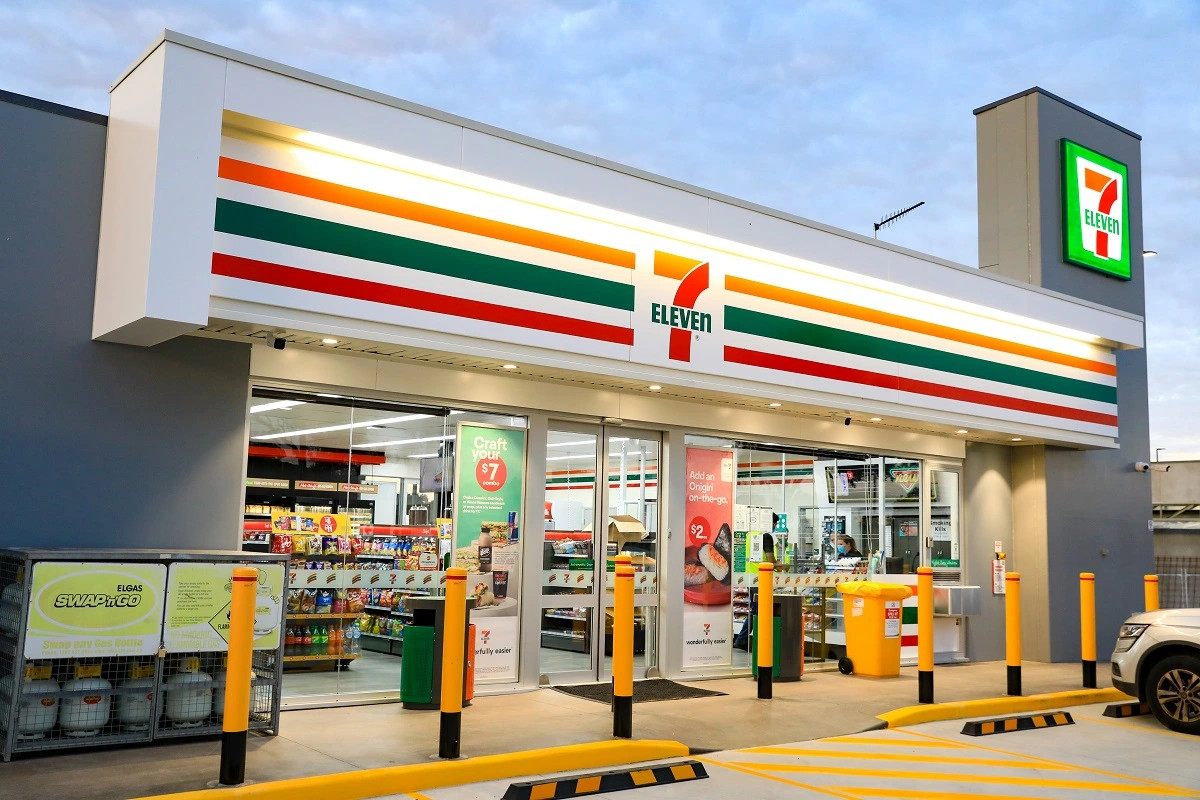
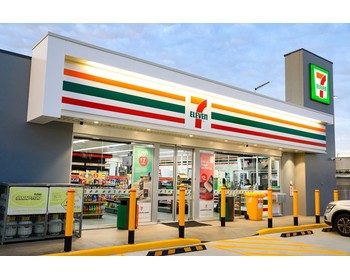
Recently, global convenience store giant 7-Eleven made headlines with shocking industry news. Its parent company, Japan’s Seven & i Holdings, officially announced a large-scale shrinkage plan for the U.S. market, confirming that a total of 645 stores will be closed or remodeled in North America by fiscal year 2026. As a benchmark brand for offline convenience retail worldwide, 7-Eleven’s large-scale store closures are not an isolated case but reflect the broader industry trend in the U.S., where high retail costs, weak consumer spending, and tighter liquidity are shaping a contraction cycle for physical retail.
According to the detailed adjustment plan disclosed by the company, these 645 store changes are not just simple closures but a strategic restructuring with multiple layers. Among them, 200 long-term loss-making stores with low foot traffic will be permanently closed within the year, completely exiting their regional markets; 350 stores will shed their direct retail operations and be converted into wholesale points for gas stations, reducing their daily goods retail presence; the remaining stores will ease operations through franchising transfers and streamlining business formats. Notably, the brand only plans to open 205 high-quality stores during the same period, resulting in a net reduction of over 400 stores in North America for the year, the largest contraction in nearly a decade.
The main driver behind this large-scale store reduction is the full-scale cost pressure brought on by the Federal Reserve’s interest rate hikes. Rising market rates have significantly increased 7-Eleven’s borrowing and lease renewal costs, compounded by rising local wages and property rents in the U.S., keeping the rigid operating costs for convenience stores high. Traditional convenience store items, such as snacks, daily necessities, and light meals, which are not strictly essential, are seeing sales decline due to inflation and reduced disposable income. As a result, store revenue growth can’t keep up with rising costs, leaving many community stores stuck in a loss-making situation where revenue rises but profits don’t, putting continued pressure on 7-Eleven’s North American business.
Besides macro financial pressures, evolving consumer habits and fierce industry competition have further squeezed 7-Eleven's space to operate. Nowadays, U.S. consumers are increasingly favoring emerging shopping channels like instant online retail, discount supermarkets, and community group-buying, weakening the convenience premium that traditional 24-hour convenience stores used to enjoy. Low-cost discount retailers attract a large number of essential shoppers with high value-for-money offerings, while online delivery platforms capture the instant consumption market, causing foot traffic at many neighborhood 7-Eleven stores to drop sharply. The round-the-clock operating model is no longer profitable, and the inefficiencies of outdated stores are fully exposed.
This brand strategy contraction is not only about the company itself but also has a strong impact on the U.S. retail real estate sector. A large number of store closures lead to a sharp rise in the vacancy rate of community commercial properties, making it harder to sublease idle shops, directly lowering the valuation of street-facing commercial properties in U.S. neighborhoods. The previously stable pricing logic for community retail real estate is disrupted, leaving small and medium landlords facing reduced rental income and stressed assets, causing ripple effects. The market is widely concerned that 7-Eleven's contraction could trigger a chain reaction in the industry, with big-box retailers like Walmart and Kroger potentially following suit in optimizing their store layouts, starting a new round of offline retail closures.
From an industry logic perspective, 7-Eleven's large-scale contraction in the U.S. is an inevitable transformation for physical retail in a high-interest-rate era. The retail model that relied on store expansion and location monopolies for growth over the past decades has completely failed in a market environment of high costs, weak consumption, and low mobility. Leading retail brands are shifting from 'scale expansion' to 'quality profitability,' closing inefficient assets, streamlining operations, and moving toward asset-light models – the mainstream trend in the industry.
7-Eleven's strategic adjustment serves as a wake-up call for global brick-and-mortar retail. Against the backdrop of sustained high interest rates by the Federal Reserve and weak global consumption recovery, the era of rough-and-ready offline retail expansion is over. The U.S. retail market will continue to be reshaped, inefficient stores will be cleared faster, and the core survival principles for physical retail will be lighter operations, refined management, and premium locations. The entire North American brick-and-mortar retail industry is set for a new round of structural transformation.
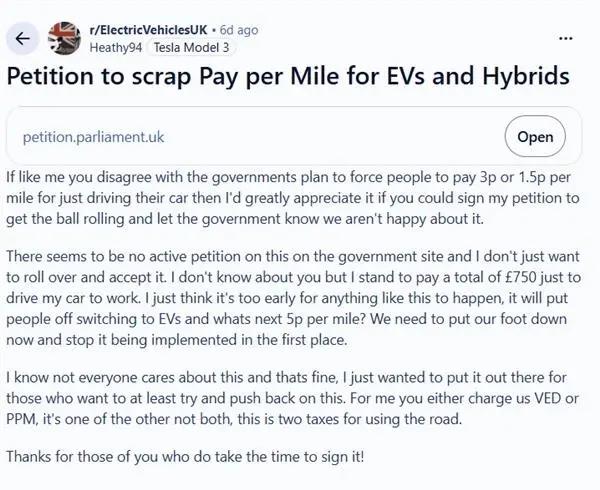
Recently, the British government has confirmed that a new vehicle consumption tax (eVED) system will be implemented on April 1, 2028, imposing a tax of approximately 17 yuan per 100 kilometers for pure electric and hydrogen-powered vehicles, while reducing the tax for plug-in hybrid models by half.
Recently, the British government has confirmed that a new v…

Under the dual pressures of war and sanctions, Iran is endu…

AP, Dubai — Military confrontation between the United State…

Recently, Reuters reported that Apple is accelerating its e…

In July 2026, the entire country of Japan was hit by a disa…
Recently, global convenience store giant 7-Eleven made head…
© Copyright 2026, All Rights Reserved