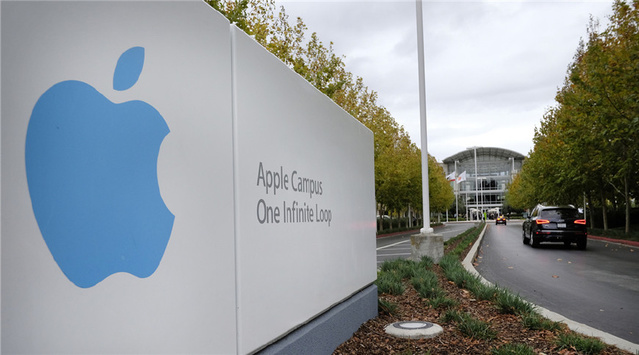
Recently, Reuters reported that Apple is accelerating its efforts in the AI chip sector and plans to advance the development of its own server chips through large-scale acquisitions of semiconductor companies. According to informed sources, this tech giant has been in contact with several banks and semiconductor startups to explore potential acquisition possibilities, even considering increasing the single transaction size to the tens of billions of dollars. Combining its recent $2 billion acquisition of Q.Ai and the signals released by its financial strategy adjustments regarding cash reserves, Apple's AI chip strategy is unfolding with an aggressive posture.
The core contradiction of Apple's strategic shift lies in the mismatch between its AI server performance bottleneck and its self-developed chip capabilities. Currently, Apple's AI services mainly rely on cloud inference, while existing server chips are insufficient in handling large-scale parallel computing, resulting in prominent issues of user experience delay and energy consumption. Theoretically, by acquiring semiconductor companies with advanced manufacturing processes or architectural designs, Apple can quickly obtain key technology patents and talent teams, shortening the self-developed cycle. However, the problem is that there is an essential difference in technical paths between server chips and consumer electronic chips: the former emphasizes high throughput and low latency distributed computing capabilities, while the latter focuses on energy efficiency and single-device performance optimization. If Apple simply transplants the mobile chip design experience to the server field, it may fall into the "technical path dependence" trap.
From the perspective of technical integration difficulty, large-scale acquisitions may not directly translate into technical advantages. For example, the $2 billion acquisition of Q.Ai, although setting a record for Apple's second-largest acquisition in history, Q.Ai's core technology is concentrated on quantum computing-assisted AI training, which has a scenario mismatch with Apple's current urgent need for server inference chips. More critically, the technical integration in the semiconductor industry requires long-term collaborative research and development, and Apple's past acquisition cases show that it is more inclined to integrate the target company's technology into its own ecosystem rather than maintaining the independence of the acquired company's technology. This "technology digestion" model is feasible in the consumer electronics field, but in the server chip field, which requires continuous iteration, it may lead to a technical gap due to a mismatch in research and development schedules.
The technical risks behind the financial strategy adjustment are also worthy of vigilance. Apple's Chief Financial Officer, Kai Mun Park, announced the abandonment of the "cash net-neutral strategy", meaning the company will use its cash reserves for large-scale acquisitions. However, there is a time mismatch between the technical iteration cycle of the semiconductor industry and Apple's financial return expectations: server chip research and development takes a 3-5 year cycle, while the capital market has rigid assessment requirements for Apple's quarterly financial reports. If the technology integration progress after the acquisition is lagging or the performance of the self-developed chips does not meet expectations, Apple may face the risk of "dual stagnation of technical investment and financial returns". Moreover, overly relying on acquisitions to obtain technology may weaken Apple's own basic research capabilities, leading to a vicious cycle of "acquisition-integration-reacquisition".
Apple's aggressive acquisition strategy may trigger a chain reaction in the industry. Currently, the global server chip market is dominated by NVIDIA, AMD, and Intel, and these three companies have built deep technical barriers through continuous R&D investment. If Apple quickly enters through acquisitions, it may force competitors to accelerate technological blockades or initiate patent lawsuits, further raising the industry's entry barriers. At the same time, when semiconductor startups are acquired by giants, their technological innovation often gives way to the parent company's strategic needs, leading to a decline in the overall innovation vitality of the industry. This "technical monopoly-innovation stagnation" cycle may ultimately harm the healthy development of the entire AI ecosystem.
Apple's strategic intention to intensify its AI chip development is clear, but the choice of technical path and execution pace still need to be carefully evaluated. From chip architecture design to server system optimization, from technical integration capabilities to financial return cycles, every aspect is full of uncertainties. In today's era of increasingly fierce competition in AI technology, it remains to be seen whether Apple can break free from the "consumer electronics giant" mindset and establish a truly differentiated technological advantage in the server chip sector. This will require time to determine.

Recently, the British government has confirmed that a new vehicle consumption tax (eVED) system will be implemented on April 1, 2028, imposing a tax of approximately 17 yuan per 100 kilometers for pure electric and hydrogen-powered vehicles, while reducing the tax for plug-in hybrid models by half.

Recently, the British government has confirmed that a new v…

Under the dual pressures of war and sanctions, Iran is endu…

AP, Dubai — Military confrontation between the United State…
Recently, Reuters reported that Apple is accelerating its e…

In July 2026, the entire country of Japan was hit by a disa…

Recently, global convenience store giant 7-Eleven made head…
© Copyright 2026, All Rights Reserved