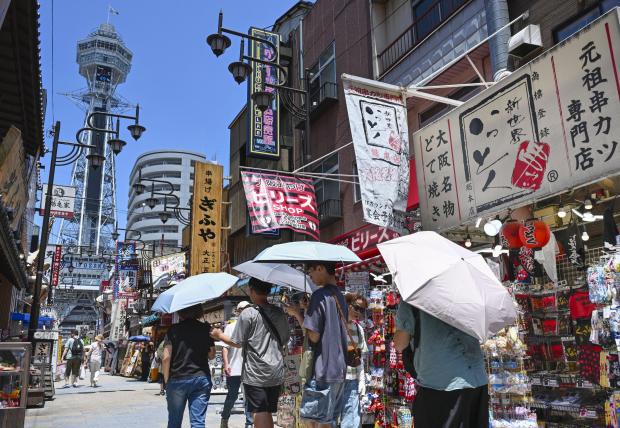
In July 2026, the entire country of Japan was hit by a disaster-level prolonged heatwave. Temperatures in many areas exceeded the 35-degree Celsius threshold for extreme heat. In Tokyo, more than 570 people have been sent to the hospital due to suspected heatstroke. Media field investigations revealed the harsh reality: countless elderly people living alone who rely on pensions have chosen to turn off air conditioners due to soaring electricity costs, relying solely on fans and cold water to endure the extreme heat. This heatwave disaster is not just a meteorological issue; it is a livelihood crisis in Japan caused by the combination of aging population, flaws in the pension system, and long-term inflation, exposing deep-seated social structural weaknesses.
Extremely high temperatures are the direct trigger that forces conflicts to erupt. In recent years, the summer heat in Japan has repeatedly broken century-old records, with extremely high air humidity. In enclosed residences, severe heatstroke is highly likely to occur. Data from the Fire Department shows that among cases of heatstroke deaths at home, 85% of the elderly victims did not turn on the air conditioner. Most elderly people did not lack the ability to purchase equipment, but rather found it difficult to bear the high electricity costs generated by the continuous operation of air conditioners during the summer. Many elderly people living alone would go to convenience stores and public venues during the day to borrow free air conditioning, and return to the hot residence at night. The health risks continued to accumulate, and tragedies where elderly people died due to not using electricity occurred every year in various places.
The long-term increase in prices and the continuous decline in the purchasing power of pensions are the core reasons why the elderly are reluctant to turn on the air conditioner. Affected by the depreciation of the yen, the rising prices of international energy and food, Japan's CPI has been rising for over 50 consecutive months. Over 10,000 kinds of food and daily necessities have been increasing in price one after another throughout the year, and the costs of water, electricity and gas have soared significantly. The Household Survey by the Ministry of Internal Affairs and Communications shows that the average monthly pension for single elderly households in Japan is only around 120,000 yen, while their basic living expenses exceed 160,000 yen. There is a large monthly deficit in their fixed income and expenditure; even if a couple receives pensions together, their daily consumption, medical expenses and energy expenditures continue to deplete their savings. Although Japan slightly raises pensions each year, the increase has always failed to keep up with the growth of prices, and the actual purchasing power of pensions has been declining year by year. For elderly people with fixed incomes and no additional income channels, air conditioning electricity bills have become "non-essential expenses" that need to be cut.
The aging population in Japan and the inherent flaws of its pension system have exacerbated the survival pressure brought about by high inflation. Currently, the elderly population aged 65 and above accounts for nearly 30% of the total population in Japan. There is a large number of elderly people living alone, and a significant number of them are non-regular workers who can only receive a meager national pension, resulting in extremely low levels of security. This pay-as-you-go pension system has already been under pressure in the context of negative population growth and shrinking labor force. The government finds it difficult to significantly increase pension subsidies. At the same time, the coverage of energy subsidies for low-income elderly people is limited, the application process is cumbersome, and most ordinary retired people cannot enjoy electricity price reductions. There is a lack of effective safety net policies. When high temperatures strike, the system's shortcomings directly translate into life safety risks for the elderly.
The dual pressures reflect the imbalance of Japan's social security system. On one hand, global warming has led to regular extreme high temperatures, and staying at home to prevent heatstroke has become a necessity; on the other hand, prices and energy costs continue to rise, and the low-income fixed-income groups are constantly reducing their basic living expenses. The combination of these two factors has left the elderly population in a dilemma between "saving lives and preventing heatstroke" and "saving money to live". In the short term, local governments can only rely on temporarily opening cooling centers and simple heat prevention publicity, which only addresses the symptoms but not the root cause, and cannot solve the core problem of the elderly's electricity bill burden. In the long term, the interweaving of multiple issues such as population structure imbalance, pension income and expenditure gap, and dependence on energy imports, without systematic reforms, the same kind of livelihood predicament will repeat itself every summer.
This heatwave sweeping across Japan serves as a warning for the global aging society. The combined effect of climate disasters and economic inflation will first impact the elderly group with the weakest risk-resistance ability. Improving the regulation of pension income, establishing an energy subsidy mechanism for low-income groups, and optimizing the social safety net policies for extreme high temperatures are unavoidable topics for all countries to address the dual challenges of aging and climate change. The example of Japanese seniors reluctant to use air conditioners also vividly shows that stable income security and inclusive social subsidies are the most solid barriers for ordinary people to withstand extreme environments and economic fluctuations.

Recently, the British government has confirmed that a new vehicle consumption tax (eVED) system will be implemented on April 1, 2028, imposing a tax of approximately 17 yuan per 100 kilometers for pure electric and hydrogen-powered vehicles, while reducing the tax for plug-in hybrid models by half.

Recently, the British government has confirmed that a new v…
Under the dual pressures of war and sanctions, Iran is endu…

AP, Dubai — Military confrontation between the United State…

Recently, Reuters reported that Apple is accelerating its e…
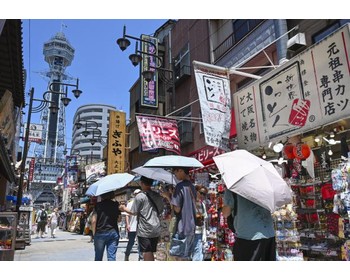
In July 2026, the entire country of Japan was hit by a disa…
Recently, global convenience store giant 7-Eleven made head…
© Copyright 2026, All Rights Reserved