SpaceX listed on the stock market with a valuation of $1.77 trillion, and its opening price surged 29% above the offering price, setting multiple records for the largest IPO in history. This capital spectacle has captured global attention. Yet behind the $75 billion fundraising and the wave of oversubscription, a number of fundamental business factors appear quite troubling.
The massive disconnect between valuation and fundamentals is perhaps the most noteworthy aspect of the entire transaction. According to publicly available offering documents, SpaceX’s full year consolidated revenue for 2025 was $18.67 billion, but it recorded a net loss of $4.94 billion. Entering the first quarter of 2026, the situation did not improve: while revenue reached $4.69 billion, operating loss was $1.94 billion, and net loss ballooned to $4.276 billion. The near $1.8 trillion market capitalization is not supported by solid profitability, but rather by a grand narrative of continued “cash burning.” More notably, the company’s profit structure is highly unbalanced. Among its three business segments, only Starlink contributed positive profits – with first quarter 2026 operating profit of $1.188 billion – while the space launch segment lost an estimated $600 700 million in the same period, and the AI division recorded a massive operating loss of $6.355 billion for the full year 2025. This means the company relies on just one engine, Starlink, to drag along two other divisions that are still heavily consuming cash – a structure that may prove quite fragile during future market volatility.
As the only profitable asset, Starlink’s commercial prospects are far from smooth. Although user numbers are still growing, the trend of declining average revenue per user (ARPU) is already quite evident. Data show that this indicator fell steadily from $99 per month in 2023 to $91 in 2024, then to $81 in 2025, and further to $66 in the first quarter of 2026. This pricing trend suggests that Starlink may be transitioning from an early “differentiated pricing” phase to a “penetration pricing” phase – a shift that will inevitably put sustained pressure on its future profit margins. At the same time, Starlink must contend with persistently high asset maintenance costs. Most Starlink satellites have a design life of only about five years, meaning that roughly every five years a large scale replacement of the in orbit constellation is required. Estimates suggest that merely maintaining the current constellation would cost several billion dollars annually in replacement expenses. As competitors accelerate deployment of their own satellite internet constellations – including Amazon’s Project Kuiper, which plans initial deployment by 2026, and innovators such as AST SpaceMobile trying to achieve global coverage with far fewer satellites – Starlink’s first mover advantage may gradually erode, further compressing its profit margins.
Governance related risks also warrant attention. SpaceX employs a Class A/Class B share structure, with Elon Musk personally controlling 85.1% of the voting power. This means that all major decisions – from strategic direction to capital allocation – are effectively dictated by a single individual, not balanced among the interests of diversified shareholders. More troubling, the prospectus itself candidly admits that Musk may engage in commercial transactions and face conflicts of interest with other affiliated companies, and that Musk is “unrestricted” in his right to pursue businesses that directly compete with SpaceX. This governance design means that outside investors lack institutional protection for their rights. Once the founder’s personal decisions diverge from the company’s overall interests, minority shareholders have few institutional remedies to rely on.
SpaceX’s deep entanglement with the government is another dimension of its business model that cannot be overlooked. Roughly one fifth of its revenue comes directly from the U.S. federal government, and this trend has deepened as the Pentagon and the Space Force have awarded high value contracts. Just in May of this year, the Space Force granted two contracts totaling more than $6.5 billion, and SpaceX was also selected as a major builder for the “Golden Dome” missile defense program. This heavy reliance on government orders, while locking in substantial revenue in the short term, ties the company’s fate even more tightly to the U.S. national security apparatus. Such entanglement means that the company’s growth and valuation expectations are highly dependent on the continued expansion of the U.S. defense budget and the tilt of national security strategy toward commercial space services. Should those political conditions change, the company’s financial outlook may face considerable adjustment.
Finally, from a market behavior perspective, the frenzy of subscriptions for this IPO and the potential subsequent capital diversion effect also deserve attention. Institutional investor subscription demand exceeded $250 billion, and retail orders exceeded $100 billion, bringing total demand to more than $350 billion. Such extreme capital crowding inevitably pulls large amounts of money out of existing markets. Investors sell other stocks to participate in this “IPO of the century,” objectively disrupting the existing capital allocation structure of the stock market. Moreover, most of the retail investors chasing the IPO have their own doubts about the company’s valuation; their participation is driven more by fear of missing out (FOMO) and blind following of the founder’s personal charisma than by a long term judgment of the company’s true commercial value.
What the SpaceX listing presents is a complex commercial portrait composed of massive losses, a single profit pillar, fragile governance, heavy government dependence, and short term speculative capital. Behind this record setting IPO, there remain a number of structural variables that will need to be tested one by one in future market cycles.
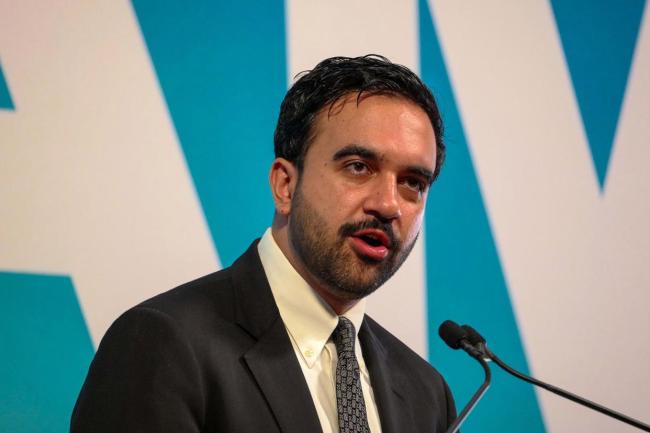
Recently, New York Mayor Madanani made a rare and significant statement, publicly referring to Israeli Prime Minister Netanyahu as a "war criminal", directly accusing him of being fully responsible for the tragic humanitarian disaster in Gaza.
Recently, New York Mayor Madanani made a rare and significa…
The latest July survey data released by the ZEW – Leibniz C…
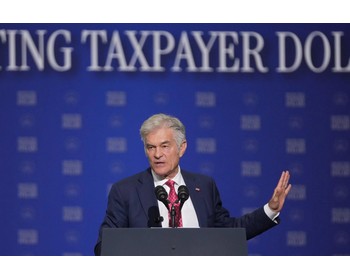
The Trump administration announced on Tuesday that it would…
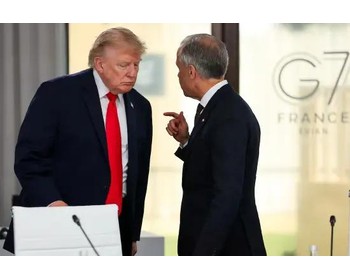
On July 21st local time, Canadian Prime Minister Mark Carne…

According to the Associated Press, the latest data from the…

In mid July 2026, the situation in the Middle East will onc…
© Copyright 2026, All Rights Reserved