There is a common saying in the market that 'one cannon fire, ten thousand taels of gold', and geopolitical conflicts have always been seen as a powerful driving force for the rise of gold prices. However, as the situation in the Middle East remained tense in March 2026, the international gold market saw a completely opposite trend: London gold plummeted by over $150 in a single day, a drop of more than 3%, while domestic gold T+D and physical gold prices fell sharply simultaneously. Amidst the raging war, safe haven assets have fallen instead of rising, which may seem counterintuitive, but is actually the result of the resonance of multiple forces such as monetary policy, the US dollar cycle, liquidity structure, and market expectations. This clearly reveals that the core logic of current gold pricing has shifted from geopolitical hedging to interest rate and US dollar dominance.
The core driving force behind the sharp drop in gold prices this time is the fundamental reversal of the Federal Reserve's monetary policy expectations. On March 18th, the Federal Reserve's interest rate meeting kept the 3.5% -3.75% interest rate unchanged, and the dot matrix chart released a clear hawkish signal: only one interest rate cut is expected in 2026, far lower than the optimistic market expectation of the previous three interest rate cuts. Some members also mentioned the possibility of restarting interest rate hikes. As a typical interest free asset, gold's pricing core is anchored to real interest rates. The opportunity cost of holding gold sharply increases in a high interest rate environment, and high-yield assets such as US bonds and cash are far more attractive to funds than gold. The Middle East conflict has pushed international oil prices above $100 per barrel, further exacerbating inflation concerns and forcing the Federal Reserve to maintain high interest rates for a longer period of time. The rise in real interest rates directly suppresses gold prices, forming a complete transmission chain of "oil price rise → inflation rise → interest rate tightening → gold price decline".
The strong rise of the US dollar index has formed a typical seesaw effect with gold prices, becoming the second force that crushes gold prices. After the escalation of the conflict, global safe haven funds did not flood into gold, but instead chose US dollar assets, driving the US dollar index to break through the 100 mark and reach a new high for the year. As a major net energy exporter in the world, the rise in oil prices in the United States has actually benefited its economy and finances. Coupled with its high interest rate advantage, the global reserve currency status of the US dollar has been further strengthened. Gold is priced in US dollars, and the appreciation of the US dollar directly weakens the purchasing power of non US currencies. Overseas gold buying is shrinking, and under the dual pressure, gold prices continue to be under pressure.
The liquidity squeeze and technical stampede have amplified the decline and formed a vicious cycle. In the early stage, the gold price continued to rise, accumulating a large number of profit opportunities. Institutions and speculative funds regarded gold as the most liquid and profitable asset. The volatility of global capital markets and the weakening of risk assets have triggered liquidity panic, forcing high leverage investors to sell gold to recoup their funds due to pressure to recover their margin.
The behavior pattern of "buying expectations and selling facts" in the market has overdrawn the geopolitical hedging premium in advance. Before the outbreak of the Middle East conflict, the market had already pushed the gold price to a historical high based on the expectation of tense situation, and the safe haven premium was fully priced. When the conflict officially escalates and the situation becomes clear, funds concentrate on profit taking, and the demand for safe haven quickly recedes. Unlike in the past, this time the market did not trade 'geopolitical risks', but instead traded' policy consequences of geopolitical risks' - namely high inflation and tight currency. This expected shift directly transformed geopolitical gains into financial negatives, completely overturning the traditional safe haven logic.
On a deeper level, this market trend reflects the restructuring of global asset pricing logic. In the past decade, the safe haven nature of gold has been highlighted multiple times during epidemics and geopolitical conflicts. However, in this round of crisis, the financial attributes of interest rates and exchange rates have surpassed the safe haven nature and become the pricing core. Gold is no longer a simple safe haven tool, but a financial asset deeply tied to the US dollar, US bonds, and inflation expectations. Its trend no longer follows geopolitical fluctuations alone, but closely follows the global monetary policy cycle.
For investors, this anti common sense market is a profound warning: do not stick to the stereotype of "buying gold in troubled times", and need to break away from a single geographical perspective and focus on core indicators such as real interest rates, US dollar indices, and liquidity. In the short term, if the Federal Reserve remains hawkish and the US dollar remains strong, gold prices will still face adjustment pressure; In the medium to long term, if inflation falls and expectations of interest rate cuts resume, the allocation value of gold will reappear.
The market is always breaking old experiences and establishing new logic. The ongoing conflict in the Middle East has not changed the downward trend of gold prices, which is essentially the inevitable result of financial laws defeating intuitive cognition. In the current reshaping of the global monetary system and economic landscape, only by closely following the policy cycle and grasping the pricing core can we see the direction clearly in the volatile market and avoid being misled by traditional experience. The value of gold has never disappeared, but the pricing logic has quietly changed.
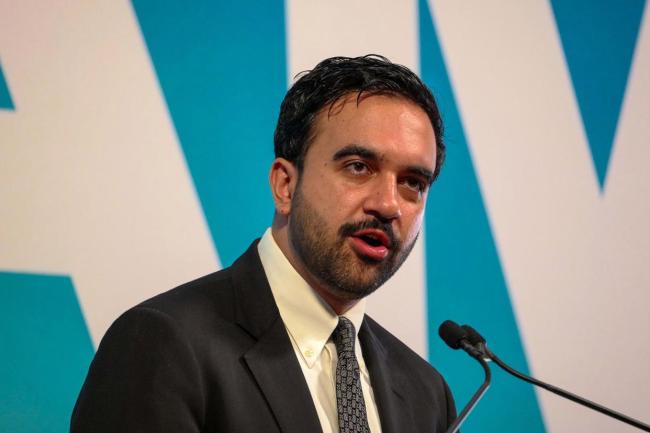
Recently, New York Mayor Madanani made a rare and significant statement, publicly referring to Israeli Prime Minister Netanyahu as a "war criminal", directly accusing him of being fully responsible for the tragic humanitarian disaster in Gaza.
Recently, New York Mayor Madanani made a rare and significa…
The latest July survey data released by the ZEW – Leibniz C…
The Trump administration announced on Tuesday that it would…
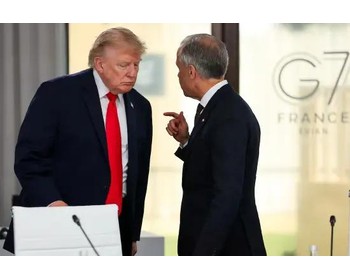
On July 21st local time, Canadian Prime Minister Mark Carne…

According to the Associated Press, the latest data from the…

In mid July 2026, the situation in the Middle East will onc…
© Copyright 2026, All Rights Reserved