
The Washington State House of Representatives recently passed a highly anticipated "millionaire tax," marking the state's first attempt in decades to levy personal income tax on high-income residents. After more than 24 hours of heated debate, the tax measure, named Senate Bill 6346 (SB 6346), passed the House with 51 votes in favor and 46 against, and is now awaiting a final vote in the Senate. It is expected to be sent to the governor for signature soon.
According to the bill, individuals with annual incomes exceeding $1 million will be subject to a 9.9% income tax. Washington State is one of the nine states in the U.S. without a personal income tax, thus this change has sparked widespread attention and controversy on both economic and political levels. Supporters argue that this tax measure will make the long-standing regressive tax system, which relies on sales tax, property tax, and business tax, fairer, while providing tax breaks for low-income families and small businesses, easing their burden. According to projections, the tax measure, starting in 2029, is expected to generate approximately $3.5 billion or more in revenue annually for the state government, providing stable funding for public services and helping to close the current $2 billion budget shortfall.
Governor Bob Ferguson stated that the bill will only affect about 0.5% of the state's high-income residents, but will improve the lives of millions. He looks forward to signing the bill as soon as possible. While the fiscal analysis report has not yet been released, state leaders generally believe that the additional revenue will be used for livelihood projects such as education, healthcare, and infrastructure.
However, this policy has also raised considerable concerns, particularly among high-income groups in the technology and business sectors. Some entrepreneurs and investors believe that imposing personal income tax could weaken Washington's attractiveness as a business- and startup-friendly state. Former Starbucks CEO and billionaire Howard Schultz recently announced that he and his wife have moved to Florida. He explained that the move was primarily to be closer to his family on the East Coast, but emphasized his desire for Washington to continue its business vitality. Schultz's relocation is seen as a symbol of the potential impact of the new tax law, indicating that high-income earners may relocate as a result.
Chris Johnson, president of the Washington State Business Association, also pointed out that the bill represents a "huge change" to the state's tax structure, warning that imposing a state income tax could weaken the state's attractiveness to businesses and high-income residents, thus affecting entrepreneurship and investment decisions. He noted that the cost of living in Washington is already high, and the new tax could further increase the burden on businesses and families.
Beyond the criticism, there were also some constructive suggestions. Rachel Smith, president of the Washington Roundtable, a nonprofit organization representing large employers, stated that the bill repeals last year's measures to expand the service sales tax and reduce the estate tax, representing a positive attempt at state tax reform. She emphasized that this is only the starting point for Washington's tax structure reform, and more measures are needed in the future to enhance the state's economic competitiveness and long-term fiscal sustainability.
From a political perspective, the vote in the House of Representatives showed clear partisan divisions: no Republicans voted in favor, while eight Democrats voted against, and one representative was absent due to other reasons. This also reflects some controversy within the party regarding the bill. Now, the bill will return to the Senate for a final vote, and then be submitted to the governor for signature. This legislative session is expected to conclude soon.
Overall, Washington state's "millionaire tax" not only represents a major shift in tax policy but has also sparked widespread debate regarding the balance between fairness and economic vitality. Supporters argue that it will make the tax system fairer, fund public services, and alleviate the burden on low-income families; opponents worry that high-income residents and businesses may relocate, impacting the state's economic competitiveness. As the bill's final signing approaches, Washington state's tax landscape, business development, and residents' lives are likely to undergo significant changes.
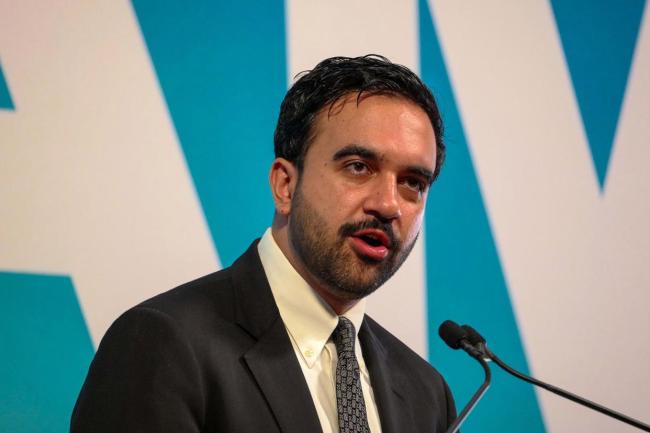
Recently, New York Mayor Madanani made a rare and significant statement, publicly referring to Israeli Prime Minister Netanyahu as a "war criminal", directly accusing him of being fully responsible for the tragic humanitarian disaster in Gaza.

Recently, New York Mayor Madanani made a rare and significa…

The latest July survey data released by the ZEW – Leibniz C…
The Trump administration announced on Tuesday that it would…

On July 21st local time, Canadian Prime Minister Mark Carne…

According to the Associated Press, the latest data from the…

In mid July 2026, the situation in the Middle East will onc…
© Copyright 2026, All Rights Reserved