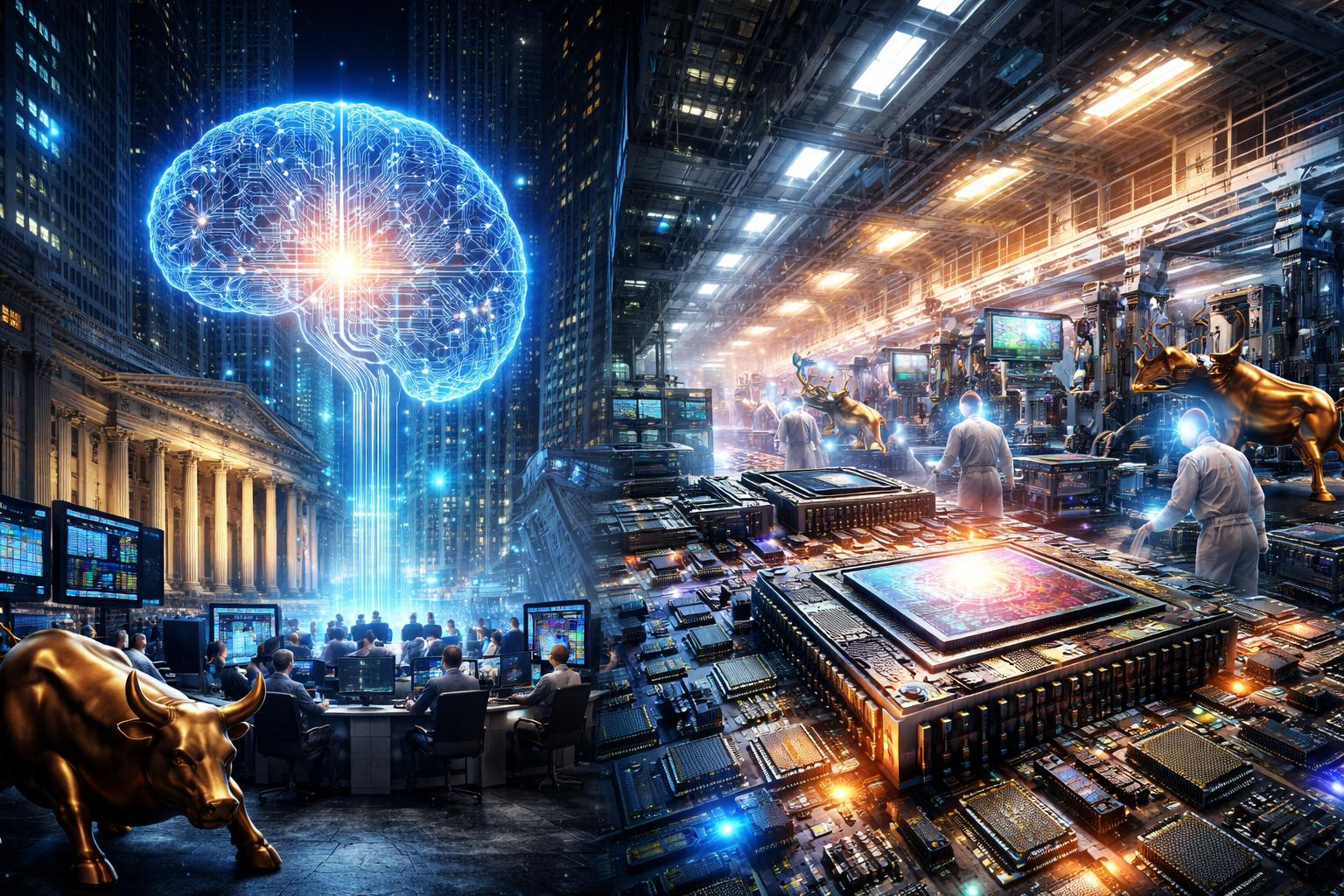
The shift in global capital flows often reflects deep structural contradictions within the market. When Wall Street's computing power anxiety transforms into a capital feast for Asian hardware companies, this seemingly prosperous capital migration actually conceals a deep-seated game between technological revolution and financial capital. Examined from the logic of commerce, the current capital frenzy in Asia's hardware sector is, in essence, an irrational exuberance jointly fueled by imbalanced technological development and financial speculative behavior.
The capital misallocation triggered by the AI technological revolution is exacerbating distortions in the global industrial chain. The computing power required for training large models is experiencing exponential growth. This technical characteristic forces capital to flow unidirectionally towards hardware infrastructure. The frenzy of South Korean investors snapping up Chinese semiconductor ETFs is, at its core, a transfer of the long-term risks of technological development into short-term financial speculation. When the MSCI Asia Pacific Index and the Nasdaq Index form a spread, this reversal in capital flow stems not from a genuine enhancement in the competitiveness of Asian hardware companies, but rather from global capital's risk-averse choice in the face of technological uncertainty. This irrational capital allocation is creating new industrial bubbles. A clear divergence has already emerged between the soaring valuations of Asian chip manufacturers and their actual capacity utilization rates.
Wall Street's anxiety reveals a fundamental flaw in its own business model. The US technology industry, dominated by software services, enjoyed two decades of high-profit margins, only to suddenly find itself trapped in a prisoner's dilemma of a "computing power arms race." The billions of dollars in annual computing power expenditures by companies like OpenAI essentially represent an attempt to mask the stagnation in algorithmic innovation with financial capital. The unsustainability of this development model is forcing international capital to reassess the true drivers of the technological revolution. However, the capital feast for Asian hardware companies is equally fraught with risk. As global semiconductor production capacity expands blindly under the impetus of capital, it may well repeat the chip surplus crisis seen after 2020, leaving Asian companies to bear the brunt of the overcapacity fallout alone.
The short-termism of financial markets is distorting the true value of the real economy. The net buying of Chinese large model leaders by South Korean retail investors reflects a cognitive bias among ordinary investors regarding technological trends. They channel capital towards hardware manufacturers while overlooking that the core of the AI revolution lies in algorithmic innovation, not hardware stacking. This misalignment in investment logic essentially misinterprets the laws of technological development. When capital becomes overly focused on computing power infrastructure, it actually stifles the innovative vitality of the software ecosystem, ultimately creating a distorted industrial structure characterized by "hardware surplus, software scarcity." The contrast between the decline of the Nasdaq and the rise of the Asia Pacific Index precisely confirms the systemic risks brought about by this capital misallocation.
The capitalization process of the technological revolution exposes the failure of global industrial governance. The current development path of the AI industry is essentially a capital-driven technological race, rather than demand-oriented innovative activity. Wall Street's anxiety stems from its inability to continue maintaining excess profits for software companies through financial engineering, while Asia's capital frenzy is built upon a one-sided interpretation of technological trends. This dual misjudgment traps global capital in a prisoner's dilemma within the AI field: neither daring to completely withdraw from the hardware sector, nor truly able to support fundamental algorithmic research. When the gains of the MSCI Asia Pacific Index in 2026 are built on a foundation of sand, this illusory prosperity will eventually burst once the technological maturity cycle arrives.
Observed through the long lens of business history, the current capital frenzy in Asia's hardware sector is merely another bubble episode within the cycle of technological revolution. Wall Street's computing power anxiety and Asia's capital feast together constitute an absurd tableau of the era of techno-capitalism. As financial capital continues to vacillate between hardware and software, and as the real economy continues to pay the price for the speculative actions of virtual capital, the deep-seated contradictions within the global industrial landscape will only grow sharper. Perhaps only when capital truly returns to the essence of technological innovation, and when industrial policy can balance short-term interests with long-term development, can humanity emerge from this capital maze triggered by computing power anxiety. Until then, all seemingly prosperous capital migrations are but mirages on the bubble of the technological revolution.
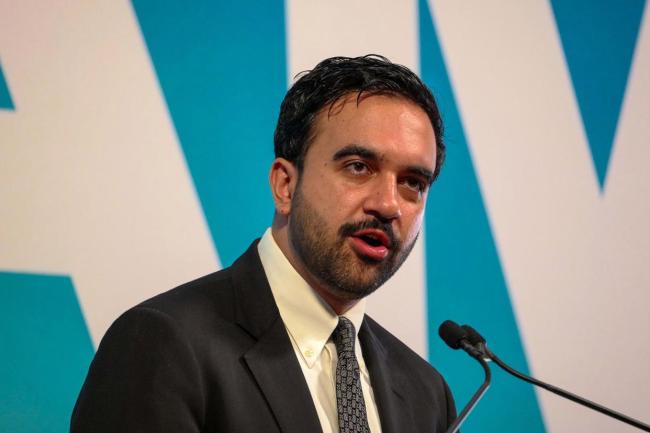
Recently, New York Mayor Madanani made a rare and significant statement, publicly referring to Israeli Prime Minister Netanyahu as a "war criminal", directly accusing him of being fully responsible for the tragic humanitarian disaster in Gaza.
Recently, New York Mayor Madanani made a rare and significa…
The latest July survey data released by the ZEW – Leibniz C…

The Trump administration announced on Tuesday that it would…
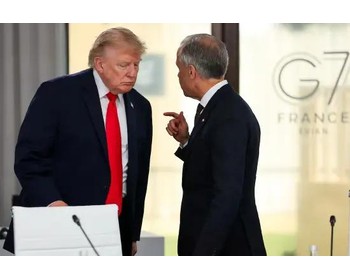
On July 21st local time, Canadian Prime Minister Mark Carne…
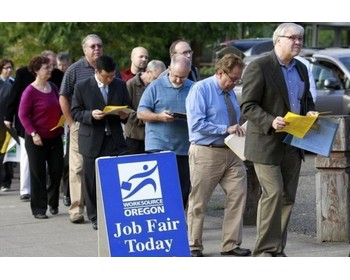
According to the Associated Press, the latest data from the…

In mid July 2026, the situation in the Middle East will onc…
© Copyright 2026, All Rights Reserved