On December 30, 2025, tech giant Meta officially announced the acquisition of AI agent startup Manus for billions of dollars in cash. This deal became Meta's third-largest acquisition since its establishment. Second only to the $19 billion acquisition of WhatsApp in 2014 and the $4 billion acquisition of Scale AI in 2023, it marks that the competition in the global technology industry for the AI Agent track has entered a white-hot stage.
According to Meta's official disclosure, this acquisition will fully incorporate Manus' core technical team and patent assets. The founder of Manus will serve as the head of Meta's AI agent business and report directly to Chief Technology Officer Andrew Bosworth. After the transaction is completed, Manus' AI Agent technology will be deeply integrated with Meta's Llama large model, Quest VR headsets and social ecosystem to build a full-chain AI Agent solution from underlying technology to terminal applications.
AI Agents, as intelligent programs capable of independently perceiving, planning and executing tasks, are widely regarded by the industry as the core track of the "first year of AI popularization in 2026". Its core architecture is composed of a "three-piece set of large model brain + memory - planning - tools", which can achieve a leap from "passive response" to "active handling". The market size is expected to exceed 130 billion US dollars by 2033, with a compound annual growth rate of 44%. Manus has become a star enterprise in the field by leveraging its technological advantages in agent interaction design and scene implementation. The multi-agent collaboration system it has developed has been commercially verified in areas such as enterprise services and content creation.
Meta's strategic intention behind this acquisition is extremely clear. First, it is necessary to position in the core track, respond to the industry's prediction of the popularization of AI Agents, and seize the entry points of technology and scenarios. The current AI industry is shifting from the competition of large models to the competition at the application layer. As a key carrier connecting technology and users, AI Agents have become a must-win territory for giants. Secondly, it is about making up for the shortcomings in capabilities. Manus' agent technology will complement Meta's Llama large model - Llama offers powerful language understanding and reasoning capabilities, while Manus excels in task decomposition, tool invocation, and multi-scenario adaptation. The combination of the two will accelerate the penetration of AI from the technical layer to the application layer.
What is more crucial is the value of ecological integration. Meta plans to use AI Agents as a hub to connect its diverse businesses: in the VR field, it will provide immersive AI companions and scenario-based assistants for Quest headset users, enabling intelligent interaction and task execution within 3D Spaces. In the social field, we create personalized intelligent assistants for Facebook and Instagram users, covering scenarios such as content creation and social management. In the enterprise service sector, we have launched an automated intelligent agent tool for office scenarios, competing with Microsoft's Copilot ecosystem. This closed-loop layout of "large models + agents + hardware + scenarios" will reshape Meta's core competitiveness.
This transaction also reflects the evolution of the M&A logic in Silicon Valley. Unlike the traditional asset integration model of acquisitions, Meta places more emphasis on the core talent and technological accumulation of Manus. This "talent + technology" acquisition model has become the mainstream in the AI field - previously, Google divested the core team of Windsurf for 380 million US dollars, which was only 12% of the cost of a traditional acquisition. Analysts point out that as the turnover rate of AI talents has climbed to a ten-year high, it has become the most efficient way for giants to secure top teams through acquisitions.
The impact on the industry was immediate. After the announcement, the share prices of competitors such as Google and OpenAI experienced slight fluctuations, and the market expected it to trigger a new round of mergers and acquisitions in the AI Agent sector. The current market has formed a four-category player landscape. Meta has directly entered the first echelon through acquisitions, forming a tripartite confrontation with Microsoft, which relies on Copilot, and OpenAI, which focuses on developer tools. The more profound impact lies in the reconstruction of the industrial chain. The division of labor in the AI industry will become clear as "underlying large models - middle-level intelligent agent technology - upper-level vertical scene applications", further compressing the survival space for small and medium-sized enterprises.
For Meta, this acquisition is also a key move to reverse its competitive disadvantage in AI. In the field of large models, although Meta's Llama series has captured market share thanks to its open-source advantages, it lags behind the GPT series in terms of commercial application. The layout of AI Agents is expected to enable it to achieve a leapfrog development. According to insiders, Meta plans to launch its first consumer-grade AI Agent product integrating Manus technology in the first quarter of 2026, taking the lead in VR and social scenarios.
It is worth noting that the rapid development of AI Agents has also brought new industry challenges. Issues such as data security and algorithm transparency have drawn regulatory attention. Recently, OpenAI has launched a special recruitment drive to address AI security risks. In the acquisition announcement, Meta particularly emphasized that it will establish an AI Agent ethics committee to ensure that technological development complies with compliance requirements.
As the first year of AI Agent popularization in 2026 approaches, this acquisition battle initiated by Meta not only reshapes the competitive landscape of the technology industry but also accelerates the arrival of the intelligent era. As AI evolves from a "question-answering tool" to an "autonomous assistant", the way humans interact with the digital world will undergo a fundamental transformation. Meta's strategic move undoubtedly lays an important foundation for it to seize the technological discourse power in the next decade.
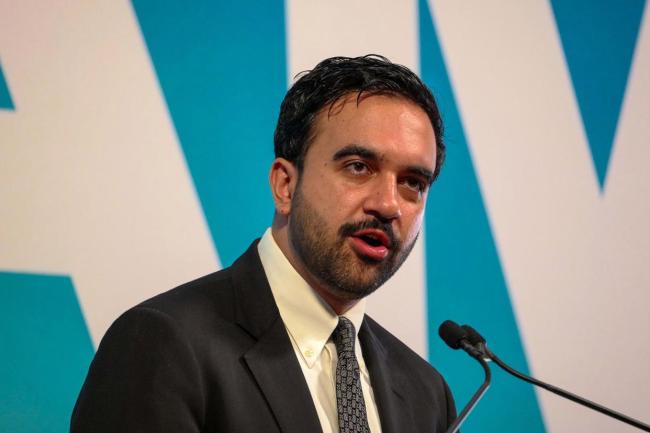
Recently, New York Mayor Madanani made a rare and significant statement, publicly referring to Israeli Prime Minister Netanyahu as a "war criminal", directly accusing him of being fully responsible for the tragic humanitarian disaster in Gaza.
Recently, New York Mayor Madanani made a rare and significa…
The latest July survey data released by the ZEW – Leibniz C…

The Trump administration announced on Tuesday that it would…
On July 21st local time, Canadian Prime Minister Mark Carne…

According to the Associated Press, the latest data from the…

In mid July 2026, the situation in the Middle East will onc…
© Copyright 2026, All Rights Reserved