Missouri is currently facing a tax reform proposal aimed at replacing the state's income tax with a sales tax. This proposal seeks to fulfill one of Governor Mike Kehoe’s key priorities; it has already passed the State House of Representatives and cleared the Senate Economic and Workforce Development Committee via a party-line vote. However, the measure has met with fierce opposition from Missouri’s business community—particularly from industry groups such as the Missouri Association of Manufacturers and the Missouri Association of REALTORS—who argue that this reform could pose economic risks and adversely impact corporate tax burdens.
The core objective of this reform is to substitute the existing income tax with a sales tax, aiming to boost Missouri’s economic competitiveness and attract greater corporate investment by lowering income tax rates. Under the proposal, the income tax would be phased out entirely by 2032, while the replacement sales tax would be expanded to cover a broader range of goods and services—including auto repair, healthcare, and tax preparation and accounting services. The bill further stipulates that if tax revenues exceed a baseline threshold by $20 million in any given year, the income tax rate will automatically decrease; once the top income tax rate falls below 1.4%, the income tax will be eliminated altogether.
Proponents of the bill argue that abolishing the income tax would enhance Missouri’s economic appeal and further stimulate statewide economic growth. However, the business community’s primary objection centers on the concern that the transition to an expanded sales tax system could jeopardize the state government’s ability to meet its budgetary obligations and result in unstable tax revenues.
Ray McCarty, Executive Director of the Missouri Association of Manufacturers, stated that his organization’s opposition to the reform focuses primarily on the following points:
Uncertainty Regarding Budgetary Revenue: McCarty noted that fluctuations in sales tax receipts could introduce significant uncertainty into the state budget, making it difficult to guarantee the revenue levels necessary to fully replace the income tax. He cited a capital gains tax cut enacted last year; while initially projected to cost the state government $111 million in lost revenue, current estimates for this year place the fiscal impact at a staggering $500 million. This wide discrepancy in revenue projections has raised serious concerns regarding the predictability of revenue generated by the proposed new sales tax. Missouri’s Existing Competitiveness: The Missouri Association of Manufacturers contends that Missouri is already a business-friendly state. According to a report by the association, Missouri’s corporate tax rate is lower than that of most states that do not levy an income tax; furthermore, in 2024 and 2025, the number of new businesses established in Missouri exceeded that of almost every state without an income tax. Based on these factors, McCarty argues that eliminating the income tax would not significantly enhance the state's competitiveness. Impact on Manufacturers: McCarty also specifically noted that manufacturers seek to safeguard their existing sales tax exemptions and avoid having taxes levied on raw materials used in production. Additionally, manufacturers are concerned that the proposal might introduce other forms of business taxation—such as a gross receipts tax—which could drive up the cost of goods and, in turn, undermine their price competitiveness in the market. Scope of Sales Tax Expansion: The new proposal expands the scope of the sales tax to cover a broader range of goods and services; McCarty stated that this expansion could have adverse effects on certain sectors, particularly the real estate transaction and service industries. The Association of Realtors has expressed strong opposition to this measure, warning that if the proposal is enacted, it could have a negative impact on the real estate market.
Currently, Missouri’s primary sources of state revenue are income taxes and general sales taxes. According to state government estimates, Missouri is projected to collect $9.2 billion in income taxes in fiscal year 2024; after accounting for refunds, approximately 85% of this revenue flows into the state treasury. Sales tax revenue, meanwhile, stands at approximately $3.2 billion. McCarty estimates that, in order to replace the income tax with a sales tax, the state government would require an additional $7.75 billion in revenue; however, it remains impossible to predict at this stage whether the revenue generated by this new tax policy would be sufficient to offset the shortfall resulting from the elimination of the income tax.
Missouri’s proposed tax reform faces numerous challenges and voices of opposition. Although the state government aims to boost economic attractiveness by eliminating the income tax, the business community remains concerned about the resulting revenue uncertainty and potential budgetary risks. Furthermore, the tax reform could have detrimental effects on specific sectors, particularly manufacturing and the real estate market. Nevertheless, lawmakers continue to view this initiative as a reform project aligned with the expectations of their constituents, and they remain committed to finding a suitable solution that balances the interests of all stakeholders to ensure the successful implementation of the reform.
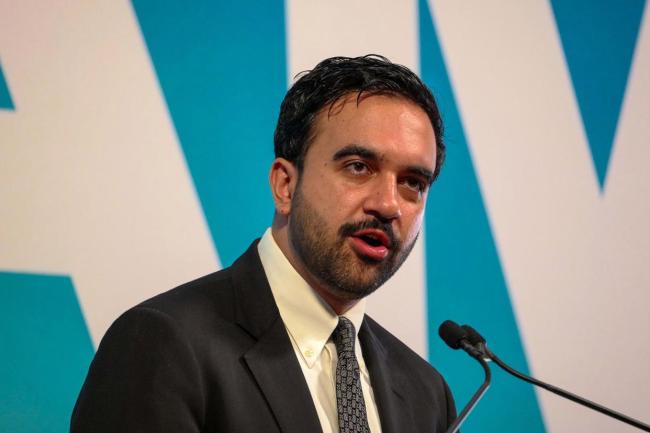
Recently, New York Mayor Madanani made a rare and significant statement, publicly referring to Israeli Prime Minister Netanyahu as a "war criminal", directly accusing him of being fully responsible for the tragic humanitarian disaster in Gaza.
Recently, New York Mayor Madanani made a rare and significa…
The latest July survey data released by the ZEW – Leibniz C…
The Trump administration announced on Tuesday that it would…
On July 21st local time, Canadian Prime Minister Mark Carne…
According to the Associated Press, the latest data from the…

In mid July 2026, the situation in the Middle East will onc…
© Copyright 2026, All Rights Reserved