Recently, the financial report for the second quarter of 2026 released by Coherent, a giant in optical modules, has attracted market attention. The data shows that the company's operating revenue for the quarter reached $1.686 billion, representing a year-on-year increase of 17.49%; net profit attributable to shareholders was $147 million, with a year-on-year growth of up to 41.91%. Coupled with the market performance of the company's stock price surging by over 11% previously, many investors believe that it has overcome its previous operational difficulties. However, after a deep analysis of the financial fluctuation trajectory, industry competition situation, and technological transformation challenges, it is not difficult to find that it is too early to say that Coherent's crisis has been resolved, and there is still a significant gap between short-term performance rebound and long-term development resilience.
From the financial data, Coherent's performance recovery exhibits a clear "V-shaped rebound" characteristic, but its stability remains questionable. Reviewing its performance over the past five quarters, the company's operating conditions have experienced significant fluctuations: in the third quarter of 2025, the net profit attributable to shareholders was only $16 million, and in the fourth quarter, it even fell into a trough of a $96 million loss, only to achieve a profit rebound of $226 million in the first quarter of 2026. Such sharp fluctuations are not uncommon. According to its 2025 annual report, the net profit attributable to shareholders for the whole year was only $30.057 million, and the basic earnings per share were -$0.52, reflecting the fragility of its previous operating foundation. Despite the impressive latest quarterly data, it should be noted that the current profit growth largely benefits from the boom in the optical module industry driven by the global explosion in demand for artificial intelligence hardware.
The intensifying competition in the industry has further squeezed Coherent's profit margins, posing a potential risk to its long-term development. Currently, the optical module industry is experiencing a competitive landscape characterized by "concentration at the top and the rise of newcomers". This includes not only the existing competition among traditional giants but also the cross-sector challenges posed by emerging enterprises. In the domestic market, leading companies such as BOE A and TCL Technology dominate the market due to their scale advantages. Meanwhile, companies specializing in niche segments, such as Tengjing Technology and Dongtian Micro, are also rapidly emerging, with some achieving market valuations exceeding ten billion yuan. More notably, the commercialization of silicon photonics technology is reshaping the industry's competitive rules. The market generally anticipates 2026 as the "first year of commercialization of silicon photonics", with giants like NVIDIA incorporating silicon photonics and CPO into their technological roadmaps. However, Coherent's layout in the silicon photonics chip field lags behind. Industry experts point out that in the next 2-3 years, silicon photonics solutions will become the mainstream choice in the high-end market for 1.6T and above, and industry competition will shift to a comprehensive contest of "positioning in technology roadmaps + ecosystem collaboration". If Coherent fails to make rapid breakthroughs in the field of silicon photonics technology, its share in the high-end market may gradually erode, leading it to fall into the dilemma of "diseconomies of scale".
The hidden risks in the financial structure also cast a shadow over Coherent's recovery. As of the end of the first quarter of 2026, the company's total assets amounted to $14.699 billion, while its total liabilities reached $6.011 billion, with an asset-liability ratio exceeding 40%. Although the current current ratio and quick ratio are maintained at relatively safe levels of 2.67 and 1.64, the net cash flow from financing activities has been negative for several consecutive quarters, reaching -$421 million in the first quarter of 2026, reflecting that the company may face certain liquidity pressures. Against the backdrop of continuous investment in technology research and development, Coherent requires sufficient financial support to meet the challenges of researching and developing emerging technologies such as silicon photonics. If the industry's prosperity declines in the future or the financing environment tightens, its financial stability will face severe challenges.
Of course, as an industry giant, Coherent still possesses competitive advantages that cannot be ignored. Its technical accumulation in the field of optical module core components, global customer resource layout, and large-scale production capacity are difficult for emerging companies to match in the short term. At the same time, the company actively seizes the industry boom cycle and achieves performance rebound by leveraging the growth of AI hardware demand, which also demonstrates its improved market responsiveness. However, whether these advantages can be transformed into long-term development momentum hinges on whether it can break through technological bottlenecks and optimize its financial structure.
In summary, Coherent's short-term performance rebound is commendable, but this is more of a temporary achievement brought about by the improvement in industry prosperity, rather than a final signal indicating the lifting of the crisis. The history of financial fluctuations, intensified industry competition, challenges posed by technological changes, and hidden financial risks collectively constitute "stumbling blocks" on its path to recovery. For investors, they should not be misled by short-term data and stock price increases, but should focus on the company's substantive progress in silicon photonics technology research and development, profitability stability, and financial structure optimization. Only when these core issues are effectively resolved can Coherent truly emerge from the crisis and return to a stable development track. Currently, this battle for recovery has just begun.
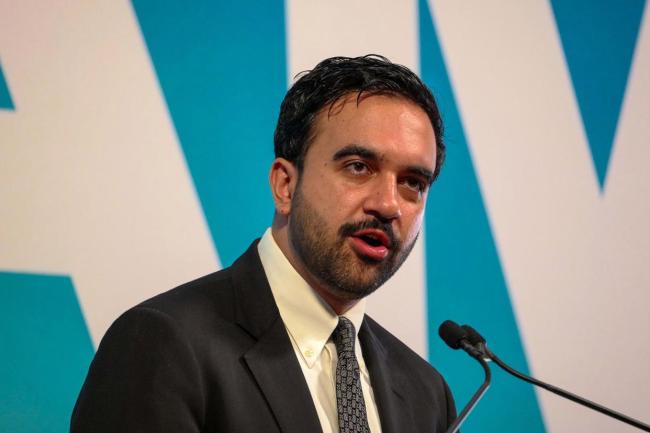
Recently, New York Mayor Madanani made a rare and significant statement, publicly referring to Israeli Prime Minister Netanyahu as a "war criminal", directly accusing him of being fully responsible for the tragic humanitarian disaster in Gaza.
Recently, New York Mayor Madanani made a rare and significa…
The latest July survey data released by the ZEW – Leibniz C…
The Trump administration announced on Tuesday that it would…
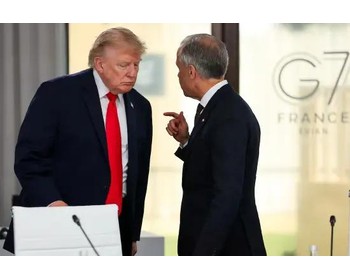
On July 21st local time, Canadian Prime Minister Mark Carne…

According to the Associated Press, the latest data from the…

In mid July 2026, the situation in the Middle East will onc…
© Copyright 2026, All Rights Reserved