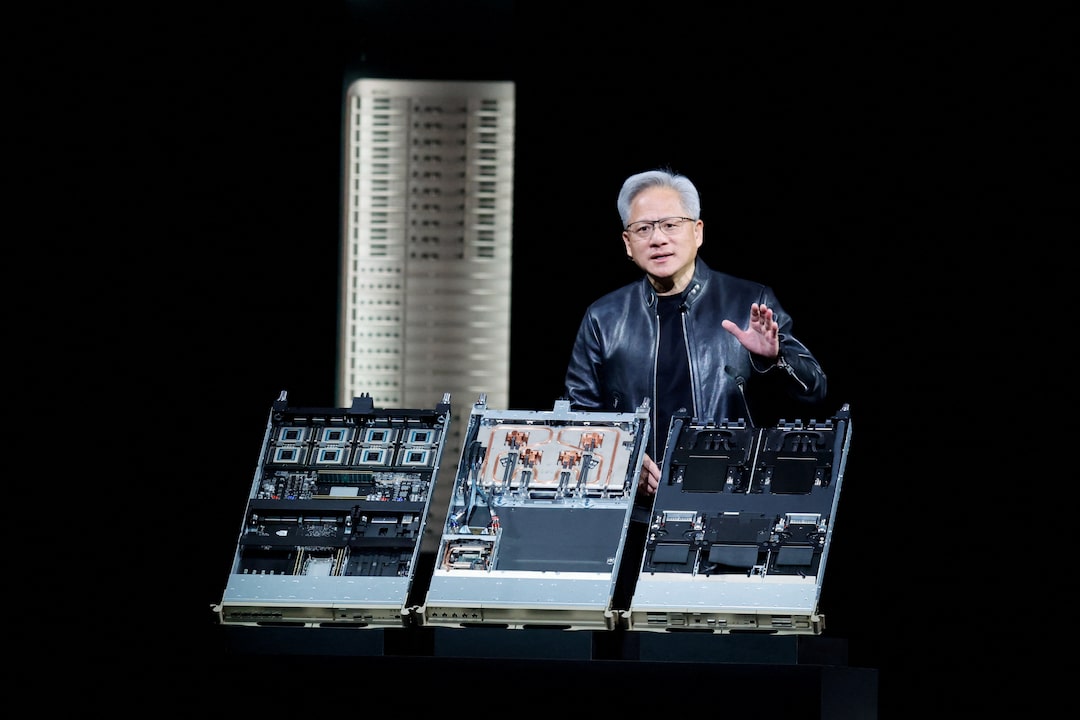
On March 16, NVIDIA held its annual GTC developer conference, where CEO Jensen Huang announced major strategies and new products, significantly raising AI chip revenue expectations and further expanding its presence in the inference computing field. According to the latest information, Huang announced on-site that NVIDIA's AI chip revenue opportunities could reach at least $1 trillion by 2027, far exceeding the previous expectation of $500 billion by 2026, directly alleviating market concerns about the company's slowing growth. During the conference, NVIDIA launched new CPUs and AI systems based on Groq technology, released the Vera Rubin chip to clarify the two-stage layout of AI inference, unveiled the roadmap for the Feynman chip architecture, and introduced NemoClaw to develop the autonomous AI agent market.
NVIDIA is strategically distributing tasks through the Vera Rubin chip and Groq’s new chip, covering the entire AI inference process of 'pre-filling' and 'decoding,' strongly entering the AI inference computing field, breaking the previous competitive limitations of GPUs in the inference sector, seizing the dominant position in the inference market, and filling the growth gap after the training market has plateaued. Additionally, through the expectation of $1 trillion in revenue, it conveys long-term growth confidence to the capital market, dispels investors' doubts about the company’s slowing growth, stabilizes stock price and market value, while highlighting the long-term resilience of AI infrastructure demand. At the same time, by fully advancing from chips and systems to autonomous AI agent platforms, and launching long-term roadmaps such as the Feynman architecture, it builds technological barriers to resist competitive pressures from Intel, Google, and other competitors, continuously consolidating its absolute leadership position in the global AI chip market.
This strategic upgrade by NVIDIA has had a profound impact on the company itself, the industry landscape, and the capital market. For NVIDIA, it has successfully alleviated concerns about market growth, leading to a rise in its stock price, clarified the business growth path for the coming years, with its independent CPU business reaching a scale of several billion dollars, and its full-stack layout further expanding profit boundaries. For the AI chip industry, it accelerates the industry's shift from training to inference, promotes inference computing as a new growth point, while intensifying market competition, forcing competitors to speed up technology iterations, and reshaping the competitive landscape of the AI chip industry. For the capital market, the $1 trillion expectation boosts confidence across the entire AI sector, highlights the long-term value of AI infrastructure investment, guides capital to continue flowing into the AI computing power field, and also sets a higher growth benchmark for industry development. Additionally, NVIDIA's deployment of autonomous AI agents also pushes AI technology from basic computing power toward practical application scenarios, accelerating the commercialization of AI.
In response to NVIDIA's strategic upgrade, different industry players need to take targeted measures to seize industry opportunities and avoid competitive risks. For NVIDIA itself, it is necessary to accelerate the implementation of Groq technology and the mass production progress of new chips, ensure the production capacity supply of Blackwell and Rubin chips, and fulfill the trillion-dollar revenue expectation. For competing manufacturers, Intel, Google, and others need to accelerate the iteration of custom chips and CPU technology, focus on differentiated advantages in the inference market, expand their customer base, capture market share in niche segments, and narrow the gap with NVIDIA. For AI companies and downstream clients, they can leverage NVIDIA's new chips and systems to accelerate inference model deployment, reduce computing costs, and reasonably diversify computing power suppliers to avoid the risk of dependence on a single supplier.
In summary, NVIDIA's trillion-dollar revenue blueprint and full-stack product upgrades announced at the GTC conference are key measures for the company to align with the AI industry transformation trend, respond to market competition, and consolidate its leading position. These actions not only alleviate its own growth pressure but also provide direction for the development of the global AI industry. The proposal of a $1 trillion revenue expectation fully demonstrates the enormous potential of the AI inference market, dispelling market doubts about the peak of AI computing power growth. In the future, as AI inference deployment continues to scale, if NVIDIA can smoothly advance the mass production of new chips and the implementation of technology, it is expected to achieve long-term growth goals and lead the global AI computing power industry toward development and continuous innovation upgrades.

Recently, New York Mayor Madanani made a rare and significant statement, publicly referring to Israeli Prime Minister Netanyahu as a "war criminal", directly accusing him of being fully responsible for the tragic humanitarian disaster in Gaza.

Recently, New York Mayor Madanani made a rare and significa…

The latest July survey data released by the ZEW – Leibniz C…

The Trump administration announced on Tuesday that it would…

On July 21st local time, Canadian Prime Minister Mark Carne…

According to the Associated Press, the latest data from the…

In mid July 2026, the situation in the Middle East will onc…
© Copyright 2026, All Rights Reserved