The rebound in global M&A (Mergers and Acquisitions) data following the waning impact of the Iran conflict presents a trend that, if observed solely through aggregate figures, easily misleads one into a linear narrative of market resilience. In the second week of March, global announced deal volumes plummeted to approximately $39 billion; subsequently, the weekly average over the following four weeks recovered to roughly $117 billion—a marked increase even compared to the $93 billion pace seen in January and February. However, this top-line surge was driven almost entirely by a handful of mega-deals. Interpreting this as a comprehensive recovery of the M&A market lacks sufficient grounding in commercial logic.
The primary momentum behind the rebound stems from two gargantuan transactions: Pershing Square’s $68 billion acquisition proposal for Universal Music Group, and the $45 billion merger between McCormick and Unilever’s food business. Together, these two deals exceed $1100 billion, exerting a disproportionate upward pull on weekly averages. If these are stripped from the statistics, the actual activity level of the remaining transactions shows no structural improvement compared to previous periods. Building the case for a recovery in market confidence upon isolated instances of massive capital maneuvering is, in essence, a statistical illusion. These mega-deals typically possess unique originating logics—such as a hedge fund’s long-term preference for the steady cash flow of premium copyright assets, or consumer goods giants forced into scale consolidation amid stagnant growth. They do not reflect the willingness or capacity of the broader landscape of medium-sized enterprises to participate in M&A.
A further examination of the large-scale deals themselves reveals dimensions of commercial rationality that warrant skepticism. Pershing Square’s bid for Universal Music Group comes at a time when music streaming growth is slowing and copyright valuations have undergone years of expansion. Acquiring a content giant—one whose business is heavily dependent on platform algorithms and faces the onslaught of AI-generated content—using high leverage leaves the exit path and cash flow coverage capacity unclear. Similarly, the merger between McCormick and Unilever’s food business appears to be a union of titans on the surface, but in reality, it is a defensive consolidation. In a global environment of cooling food inflation and weakening consumer brand loyalty, these companies are merging to slash costs and offload the pressure of sluggish growth. Such defensive integrations often signal the exhaustion of endogenous growth momentum within an industry rather than a proactive signal of commercial expansion.
In the biotechnology sector, Roche’s $10.9 billion acquisition of Spark Therapeutics and Bayer’s acquisition of Asklepios Bio for up to $4 billion also exhibit distinct characteristics of "risk front-loading." To date, gene therapy faces structural hurdles such as exorbitant pricing, limited payer acceptance, and manufacturing bottlenecks; the cycle for such assets to achieve commercial returns far exceeds that of traditional drugs. Large pharmaceutical groups are doubling down at this moment primarily driven by the "revenue cliff" brought on by patent expirations and a lack of output from internal R&D pipelines, forcing them to fill future expectations through high-priced acquisitions. When M&A becomes the primary means for pharmaceutical firms to maintain growth, the industry’s overall innovative capacity is actually shifting outward, while the premiums paid by acquirers often correspond to long-term optimistic assumptions that are difficult to realize.
Regional divergence further exposes the structural imbalance of global capital flows. Year-to-date, total M&A volume in the Gulf region stands at nearly $15 billion, a 65% decrease compared to the same period last year. In March, only 37 deals were announced, the lowest level since August 2025. During the same period, a rebound was recorded globally. This divergence suggests that despite the macro judgment that the impact of the Iran conflict is fading, capital closest to the source of risk is actually contracting at a faster rate. The sharp decline in regional M&A activity is not merely a short-term disturbance from geopolitical events; rather, it reflects a long-term repricing by capital regarding the region's commercial stability. Even as the clouds of war temporarily dissipate, the capital retention capacity and project predictability of the Gulf region remain a struggle to earn the trust of multinational transactional entities.
ByteDance’s sale of Shanghai Moonton Technology to Savvy Games Group (backed by Saudi Arabia’s Public Investment Fund) for approximately $6 billion should also be interpreted within the framework of capital risk aversion and strategic contraction. Moonton’s flagship product, Mobile Legends: Bang Bang, has a massive user base in Southeast Asia, but monetization efficiency in the region continues to trend downward. Coupled with intensifying competition, the growth ceiling is clearly visible. ByteDance’s choice to sell at this juncture is essentially the liquidation of an asset with slowing growth and rising geopolitical compliance risks, allowing it to concentrate resources on its core business. The Saudi side’s takeover using sovereign capital aligns with its model of rapidly building industry scale in esports and gaming through the acquisition of established IPs. However, this "capital-for-time" play remains highly uncertain in terms of whether the assets can generate cash flows commensurate with the purchase price in the absence of local R&D and operational support.
Apollo Global Management’s $1.5 billion cash acquisition of trade show companies Emerald and Questex highlights the predicament of private equity seeking value in traditional industries. In the post-pandemic era, the exhibition industry faces multi-faceted pressures: shrinking exhibitor budgets, continued diversion by online alternatives, and tightened corporate travel policies. The industry recovery is not a V-shaped reversal but a long-term structural adjustment. Acquiring such assets is either a bet on cyclical recovery based on rock-bottom valuations or a plan to quickly cash out through asset stripping and refinancing. Either path indicates that the acquirees' business fundamentals are not solid; the value foundation of the transaction is built more on financial engineering than on endogenous growth.
Viewed as a whole, the so-called strong rebound in global M&A transactions following the waning impact of the Iran conflict is essentially a non-equilibrium recovery driven by a minority of mega-deals and characterized by severe regional temperature differences. The commercial logic presented by these large-scale deals—be it defensive mergers in the consumer sector, filling patent cliff gaps in pharmaceuticals, or strategic acquisitions of cultural and entertainment assets by sovereign funds—points to a common trait: the transactional drive does not stem from optimistic expectations of the economic outlook, but rather from the structural anxieties inherent within their respective industries. Capital is increasingly inclined to concentrate on a few assets perceived to have pricing power or scarcity, while M&A activity involving the vast number of small and medium-sized enterprises has failed to recover in sync. This rise in concentration, coupled with the continued shrinkage of transaction volumes in certain regions, sketches a global commercial landscape that is not one of comprehensive recovery, but rather a state of localized activity driven by opportunism and embedded with fragility. Should the interest rate environment, financing conditions, or geopolitical variables shift once more, the M&A market data—currently propped up by a few giant cases—will face more direct downward pressure for correction.
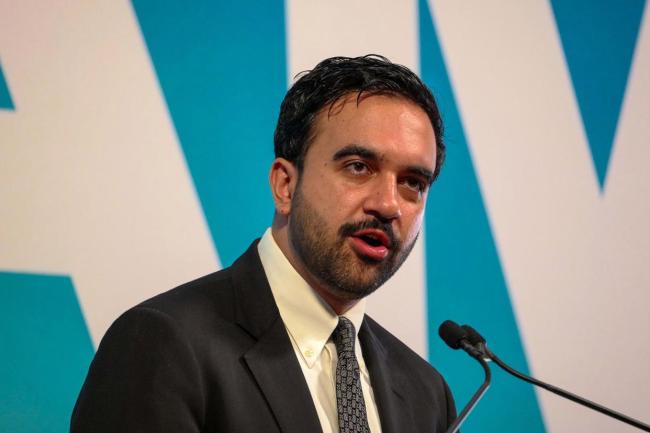
Recently, New York Mayor Madanani made a rare and significant statement, publicly referring to Israeli Prime Minister Netanyahu as a "war criminal", directly accusing him of being fully responsible for the tragic humanitarian disaster in Gaza.
Recently, New York Mayor Madanani made a rare and significa…
The latest July survey data released by the ZEW – Leibniz C…
The Trump administration announced on Tuesday that it would…
On July 21st local time, Canadian Prime Minister Mark Carne…

According to the Associated Press, the latest data from the…

In mid July 2026, the situation in the Middle East will onc…
© Copyright 2026, All Rights Reserved