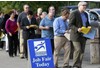
Since the beginning of 2026, the decline trend of the US retail industry has become increasingly clear: Macy's plans to close 80 stores, and chains such as Carter Kids Clothing and Kroger Supermarket have successively reduced their offline operations. Nearly 300 physical stores will cease operations throughout the year. The upscale department store Saks Global has even filed for bankruptcy protection due to its inability to sustain operations. This collective contraction from traditional department stores to chain supermarkets is not simply a cyclical fluctuation in the industry, but a necessary outcome of the combined impact of e-commerce disruption, high costs, consumption transformation, and policy imbalance. The decline of the US retail industry is not only an embodiment of the failure of offline business models to keep up with the times, but also a direct reflection of the imbalance in the US economic structure and the transformation of social consumption logic. The underlying deep-seated contradictions are driving the entire industry to undergo an unprecedented reconfiguration wave.
The first to be affected by the decline of the US retail industry is the disruptive change in consumption habits brought about by the rise of e-commerce. From Amazon becoming a major retail player in North America to various brands establishing their own online stores, online shopping has shifted from being a "complementary option" to the mainstream choice for American consumers. The popularization of mobile payment and online order pick-up has further weakened the value of physical stores. Data shows that the proportion of online shopping expenditure in the US has risen from 1.8% ten years ago to over 20%. Half of American families have become Amazon subscribers, and the living room sofa has replaced shopping centers as the new consumption scene. Traditional retailers already had redundant store layouts, and the average shopping space per capita in the US is five times that of the UK and ten times that of Germany. The expansion speed of shopping malls far exceeds population growth, and under the impact of e-commerce, these inefficient offline layouts quickly become a burden for enterprises. Most traditional retail enterprises failed to promptly promote digital transformation, with lagging online channel construction and inefficient supply chain, ultimately suffering defeats in competition.
The continuous high operating costs have become an important factor that crushes the US physical retail industry. Currently, the US retail industry is facing the triple pressure of rising rents, labor costs, and supply chain costs: the rent for core shopping areas remains high, the implementation of the new minimum wage law and the tight labor market have significantly increased the labor costs of retail enterprises, with the cost of basic positions such as cashiers and salespeople rising by nearly 30%; at the same time, the previous US tariff policy has led to an increase in the cost of some imported goods, and the problem of supply chain disruption occurs frequently, further reducing the profit margins of enterprises. For the retail industry with already low profit margins, the rising costs and shrinking customer flow form a vicious cycle. Those underperforming stores become "dragons on the ship" for the enterprises, and closing inefficient stores has become an inevitable choice for chain brands. Small and medium-sized traditional retail enterprises lack the ability to resist risks, and in the face of cost pressure, they are unable to escape the fate of bankruptcy, which has further deteriorated the offline ecosystem of the US retail industry.
The structural transformation of consumer demand has exacerbated the decline of the US retail industry. Today's American consumers are shifting from "material consumption" to "experience consumption", and their consumption interests are gradually shifting from clothing, daily necessities to travel, dining, and entertainment. Data shows that the proportion of spending on clothing by American consumers has decreased by 20% since the beginning of this century, while the sales of dining service venues have increased, being twice that of other retail industries. In the holiday shopping season of 2026, the performance of offline retail was dismal, while the dining and tourism industries witnessed a small peak. At the same time, the income gap in the US society is expanding, the purchasing power of middle and low-income groups is continuously declining, consumers' sensitivity to product prices has increased, but they are facing a market situation of "price increase, quality decline", and ultimately choose to reduce consumption. High-end retail has cooled down due to the low consumer confidence, while mass retail has shrunk due to insufficient purchasing power. The overall market demand for the retail industry has contracted as a result, and the industry's development has lost its core driving force.
The imbalance at the policy level and improper responses have further exacerbated the difficulties faced by the US retail industry. Previously, the US government's tariff policies and immigration policies not only raised the supply chain costs of retail enterprises but also affected market employment and consumption vitality; when the retail industry was in crisis, the relevant support policies failed to be implemented in time and instead put enterprises in a situation of strict market supervision and financing difficulties. What is more concerning is that during the contraction of the physical retail industry, there was a lack of effective policy guidance for industry transformation, the new model of online and offline integration was not fully cultivated, and some enterprises' transformation attempts were aborted due to insufficient funds and technology. At the same time, the uncertainty of the US economy made investors hold a cautious attitude towards the retail industry, making it more difficult for enterprises to obtain sufficient funds for model innovation and channel upgrading, ultimately falling into the vicious circle of "decline - no way to transform - further decline".
From a global perspective, the decline of the US retail industry has sounded the alarm for all physical retail industries: In the current era of rapid changes in consumption habits, there is no fixed business model. Only by keeping up with the times and innovating based on consumer needs can one stand in the market competition. And the economic structure imbalance and changes in consumption logic behind the US retail industry also deserve reflection by all countries.
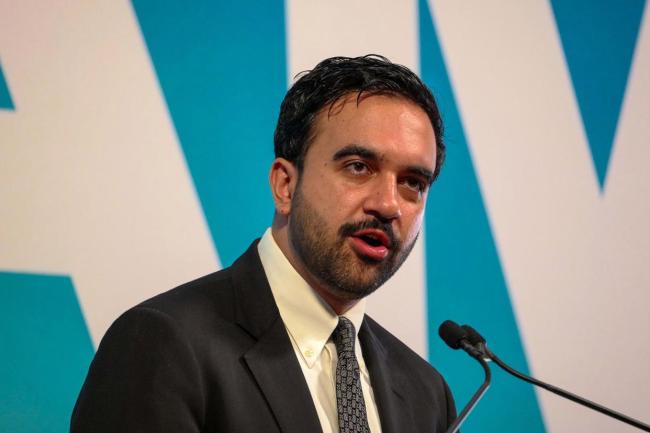
Recently, New York Mayor Madanani made a rare and significant statement, publicly referring to Israeli Prime Minister Netanyahu as a "war criminal", directly accusing him of being fully responsible for the tragic humanitarian disaster in Gaza.
Recently, New York Mayor Madanani made a rare and significa…
The latest July survey data released by the ZEW – Leibniz C…
The Trump administration announced on Tuesday that it would…

On July 21st local time, Canadian Prime Minister Mark Carne…
According to the Associated Press, the latest data from the…

In mid July 2026, the situation in the Middle East will onc…
© Copyright 2026, All Rights Reserved