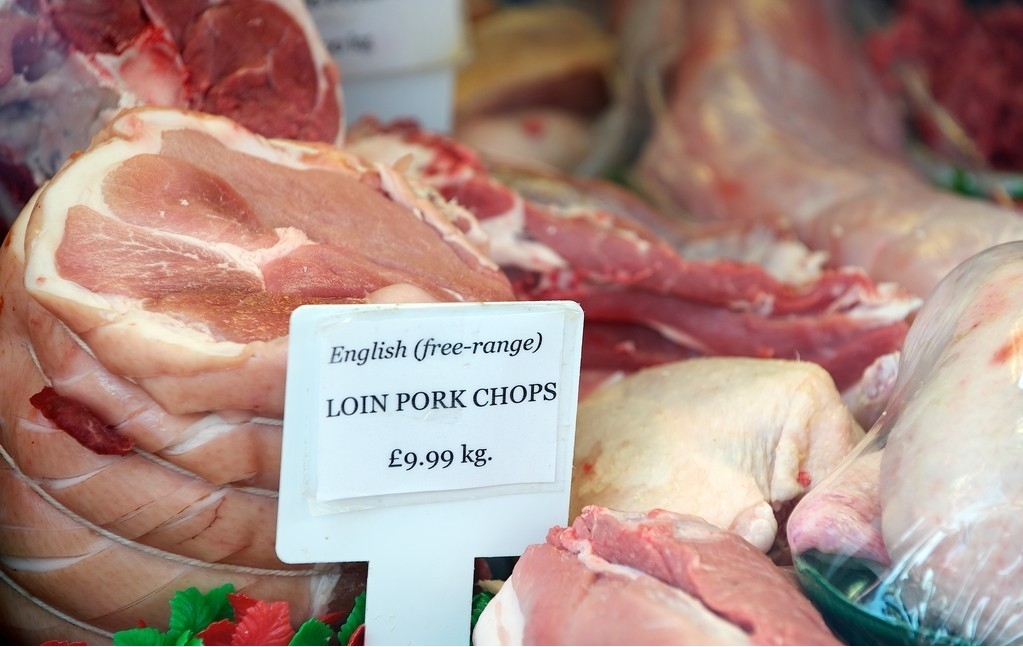
According to the report released by FarmingUK, the British pork market has recently attracted significant attention. The report states that despite the multiple pressures faced by pig farmers, such as falling prices, rising input costs, and contract losses, the demand for pork in the UK has shown an upward trend. However, this seemingly contradictory phenomenon actually conceals complex business logic and market challenges.
From the basic principles of supply and demand, the current pressures endured by pig farmers are essentially a direct reflection of market supply-demand imbalance. The continuous decline in pig prices is, on one hand, due to the price linkage effect in the EU pig market, with fluctuations in international market prices quickly transmitted to the UK domestic market; on the other hand, the relative overcapacity of domestic pig production has intensified market competition, further compressing profit margins. This state of supply-demand imbalance not only affects the profitability of pig farmers but also poses a threat to the stability of the entire pig production chain.
The British National Pig Farmers Association and the Scottish Farmers' Union jointly called on catering service enterprises to increase the use of British pork and improve the transparency of their purchasing sources. This appeal reveals the shortcomings in the supply chain management of the current British pork market. Catering service enterprises, as important channels for pork consumption, are often influenced by multiple factors such as cost, quality, and supply chain stability in their purchasing decisions. In the face of more competitive imported pork prices, catering enterprises choose imported products to reduce costs, which is a natural choice under commercial logic. However, this choice ignores the survival predicament of local pig farmers and the potential risks of supply chain security from long-term reliance on imports.
Retailers' support for British pork is relatively stable, while catering service enterprises tend to prefer imported products. This difference reflects different strategies in supply chain management for different consumption channels. Retailers usually focus on product traceability and quality assurance to meet consumers' pursuit of food safety and quality; while catering service enterprises focus more on cost control and efficiency improvement to maintain competitiveness in the fierce market competition. This difference leads catering service enterprises to prefer to choose cheaper and more stable imported products for pork procurement, thereby exacerbating the market pressure on local pig farmers.
From a perspective of business ethics and sustainable development, the procurement strategy of catering service enterprises is not without flaws. Long-term reliance on imported pork not only may lead to the shrinkage of the local pig industry, affecting agricultural employment and rural economy, but also may face risks of supply chain disruption due to international market fluctuations. Moreover, the lack of transparency in purchasing sources also fails to meet consumers' growing demands for food safety and traceability. Therefore, catering service enterprises, while pursuing cost-effectiveness, should also assume corresponding social responsibilities by supporting local pig farmers and improving the transparency of purchasing sources, thereby promoting the healthy development of the pork market.
The increase in the use of British pork by catering service enterprises does not mean sacrificing cost-effectiveness. Through optimizing supply chain management, improving procurement efficiency, and strengthening cooperation with pig farmers, catering enterprises can increase their purchase of domestic pork while ensuring quality and reducing costs. Additionally, the government and industry associations should play a positive role by providing policy support, strengthening market supervision, and promoting industrial upgrading to help pig farmers improve production efficiency, reduce costs, and enhance market competitiveness.
In conclusion, the current predicament of the British pork market is the result of multiple factors such as supply-demand imbalance, supply chain management shortcomings, and conflicts between business ethics and sustainable development. To solve this problem, it requires the joint efforts of pig farmers, catering service enterprises, the government and industry associations, etc. By optimizing supply chain management, enhancing procurement transparency, strengthening policy support and market supervision, etc., the healthy and sustainable development of the pork market can be promoted.

Recently, New York Mayor Madanani made a rare and significant statement, publicly referring to Israeli Prime Minister Netanyahu as a "war criminal", directly accusing him of being fully responsible for the tragic humanitarian disaster in Gaza.

Recently, New York Mayor Madanani made a rare and significa…

The latest July survey data released by the ZEW – Leibniz C…

The Trump administration announced on Tuesday that it would…

On July 21st local time, Canadian Prime Minister Mark Carne…

According to the Associated Press, the latest data from the…

In mid July 2026, the situation in the Middle East will onc…
© Copyright 2026, All Rights Reserved