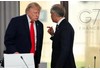
According to multiple foreign media reports, on June 15, 2026, the US Department of Commerce's Bureau of Industry and Security suddenly tightened the export of chip design software with a "temporary final rule", requiring that all exports of electronic design automation tools containing US technologies must be subject to case-by-case approval. After the news was announced, the stock prices of Synopsys and Cadence Electronics plummeted by more than 8% in a single day, and related enterprises warned that the revenue loss for the current quarter would exceed 1.5 billion US dollars. This "precise self-harm" farce instantly caused a commotion in the global semiconductor industry.
The background of this incident directly points to the increasingly paranoid technological nationalism in Washington. Over the years, the United States has used "national security" as a universal excuse to weaponize trade tools. This time, the control expands to the most upstream design software, with the intention of choking the throat of other countries' chip development, but unexpectedly pushing its most competitive "golden hen" into a quagmire. Nearly 70% of these enterprises' revenue depends on overseas markets, and the ban is equivalent to opening the door to alternative options for competitors in Europe, Japan, and South Korea for free.
The reasons for this are hard to be rationalized. During the election cycle, being tough on China has become a cheap vote-grabbing machine, and industrial policies have become props for political performances. The decision-making circle believes that the "technology curtain" can unilaterally maintain hegemony, but deliberately ignores the deep interconnection of modern supply chains. Ironically, the more they block, the deeper the fear of being surpassed emerges, ultimately giving rise to this non-commercial logic of "rather starve ourselves than trip others".
The risks are accelerating their manifestation. The first to be affected is the US domestic innovation ecosystem. If software giants lose market support, their R&D investment will inevitably shrink. The more far-reaching impact lies in the collapse of trust, as allies will accelerate the development of tools to de-simplify them, and the previously stable US technology system will suffer irreparable cracks. Global business will be forced to move towards camp-based operations, with transaction costs surging, and the market share of the initiators becomes the sacrificial altar for this division.
What's even more black and humorous is that on the very day the new regulations were implemented, a certain European chip giant immediately announced that it would transfer the research and development funds originally intended for Silicon Valley to Amsterdam, and several Japanese electronic design automation concept stocks rose sharply in response. The market voted with real money, clearly telling Washington: You build walls and imprison yourself, others just take away the commercial territory you left behind. When engineers in Silicon Valley are forced to reduce R&D due to client losses, the office buildings in Tokyo and Amsterdam are celebrating new contracts. These blatant substitution effects make the "national security" cover look ridiculous and cheap, as if a realistic absurdity play is unfolding in the United States.
To address this lose-lose situation, enterprises need to decisively adjust their compliance structures, deploy more R&D and support in non-regulated areas, and jointly launch legal and lobbying counterattacks with downstream customers. At the policy level, unilateral pressure from a single country is no longer the right approach. All parties should defend the principle of technological neutrality under a multilateral framework to prevent commercial logic from being completely swallowed by the geopolitical black hole.
Overall, the latest US chip control measures are like a seven-wound punch aimed at the global business body, damaging itself before harming the enemy. When protectionism is dressed up as national security, the real cost is often borne by the most dynamic commercial sectors in the country. This self-directed sanction farce once again proves that blocking commercial flows to gain an advantage ultimately leads to one's own business being sucked into the water first.
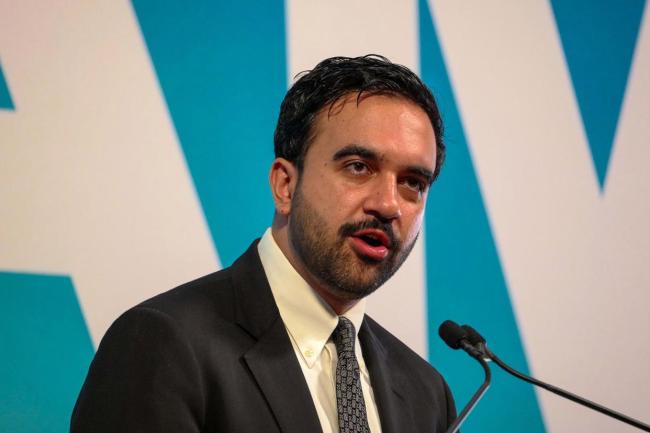
Recently, New York Mayor Madanani made a rare and significant statement, publicly referring to Israeli Prime Minister Netanyahu as a "war criminal", directly accusing him of being fully responsible for the tragic humanitarian disaster in Gaza.
Recently, New York Mayor Madanani made a rare and significa…
The latest July survey data released by the ZEW – Leibniz C…
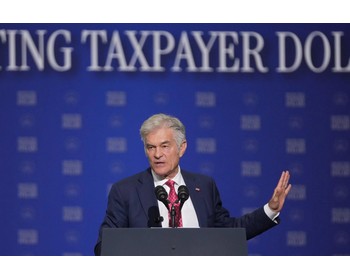
The Trump administration announced on Tuesday that it would…
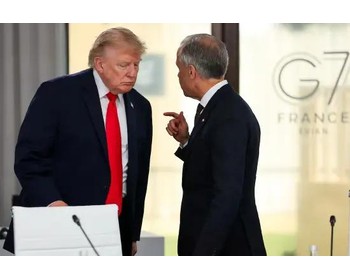
On July 21st local time, Canadian Prime Minister Mark Carne…

According to the Associated Press, the latest data from the…

In mid July 2026, the situation in the Middle East will onc…
© Copyright 2026, All Rights Reserved