According to Reuters, recently, when planning their 2026 planting plans, American farmers, despite facing a persistent decline in profit margins, still chose to maintain the high level of corn planting area, with only a slight reduction. This decision reflects the complex situation and deep contradictions of American agriculture in the context of globalized trade. The logic behind this decision and its market impact merit in-depth analysis.
From the perspective of supply and demand fundamentals, the conservative adjustment of corn planting area by American farmers stems from their precise judgment of market demand structure. Currently, the demand for corn in the United States shows a "dual strength both domestically and internationally" feature: domestic ethanol producers, due to policy subsidies and energy transition demands, continue to expand their corn purchases; the export market, although facing competition from Brazil, still maintains a rigid growth in demand for feed corn in emerging markets. This demand resilience makes farmers believe that "reducing the planting area may lead to market shortages, thereby pushing up prices". However, this judgment implies risks - global corn inventories have risen for three consecutive years, and the fluctuation space of international market prices is limited. Farmers' expectations for demand growth may be overly optimistic.
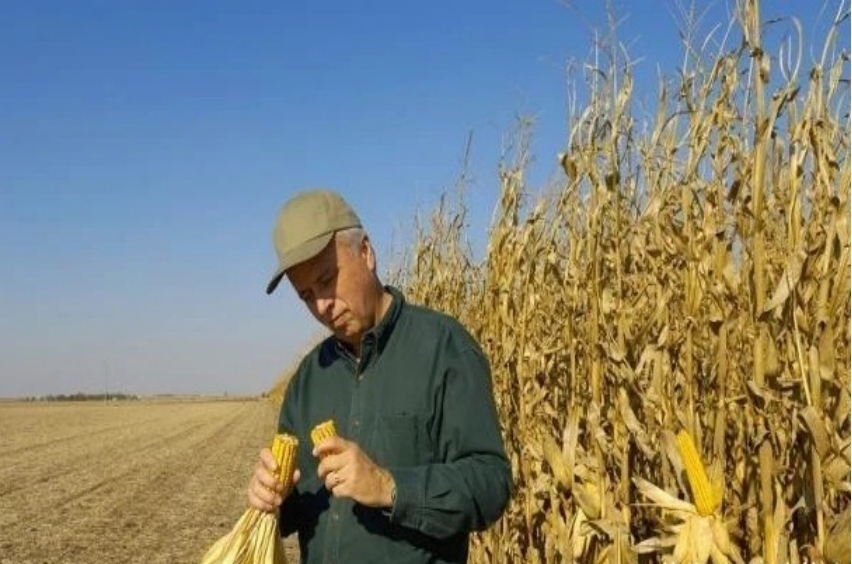
Cost pressure and planting choices expose the structural dilemmas of American agriculture. Although the yield per acre of corn is three times that of soybeans, the proportion of input costs (seeds, fertilizers, agricultural machinery, etc.) in total revenue continues to rise. The case of Tim Greggerson, a farmer from Nebraska, is representative: he compressed costs by stopping the purchase of new agricultural machinery, reducing the amount of fertilizer used, and considering reducing the use of herbicides, but these measures were all at the cost of sacrificing long-term soil health. What is more noteworthy is that farmers' decision to allocate resources to corn is essentially a "bet on a single crop" gambling behavior. Phil Walker, a farmer from North Dakota, plans to increase the corn planting area by 15%, but skips the fine processes such as promoting growth with soybean seeds, which is a short-term behavior that may weaken the crop's resilience to risks and exacerbate future yield fluctuations.
The uncertainty of trade policies further amplifies the commercial risks of American agriculture. Brazilian farmers have begun to harvest a record-breaking corn harvest and are expected to dominate global corn trade. In contrast, although the corn market is less affected by politics, data such as the revision by the US Department of Agriculture of the previous season's corn harvest area, and the estimated values for 2025 corn production and inventory levels higher than expectations, have led to a price decline. This "policy black swan" and "market grey rhino" dual shock has left farmers' decisions in a dilemma: reducing corn planting may miss the opportunity for demand growth, while maintaining the area faces the double pressure of price decline and cost increase.
The decision-making of American farmers reflects the reconfiguration trend of the global agricultural supply chain. Brazil, with its low-cost production and stable trade policies, is gradually replacing the United States as the global center of soybean supply; while American corn, although still maintaining export advantages, has a continuously narrowing profit margin, forcing farmers to maintain income by expanding the scale. This "relying on quantity to compensate for price" strategy is essentially an inevitable choice in the process of agricultural capital deepening, but it also exposes the shortcomings of the United States' agriculture, which overly relies on scale and lacks differentiated competitiveness. More seriously, farmers' behavior of reducing investment to cut costs may trigger a vicious cycle of "increased yield - price decline - increased cost - reduced investment", ultimately damaging the long-term sustainability of American agriculture.
The planting decisions of American farmers in 2026 are the result of the combined effect of market demand, cost pressure, and trade policies. From a business perspective, this decision not only reflects farmers' passive response to short-term market signals but also exposes the deep contradictions of American agriculture in global competition. In the future, if the United States fails to reduce production costs through technological innovation, stabilize export markets through trade negotiations, and optimize planting structures through policy guidance, its agricultural commercial advantages may further weaken. Against the backdrop of the accelerated restructuring of the global agricultural landscape, the "conservative adjustment" adopted by American farmers might well be a warning sign of the decline in their agricultural competitiveness.

Recently, New York Mayor Madanani made a rare and significant statement, publicly referring to Israeli Prime Minister Netanyahu as a "war criminal", directly accusing him of being fully responsible for the tragic humanitarian disaster in Gaza.

Recently, New York Mayor Madanani made a rare and significa…

The latest July survey data released by the ZEW – Leibniz C…

The Trump administration announced on Tuesday that it would…

On July 21st local time, Canadian Prime Minister Mark Carne…

According to the Associated Press, the latest data from the…

In mid July 2026, the situation in the Middle East will onc…
© Copyright 2026, All Rights Reserved