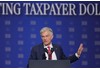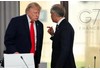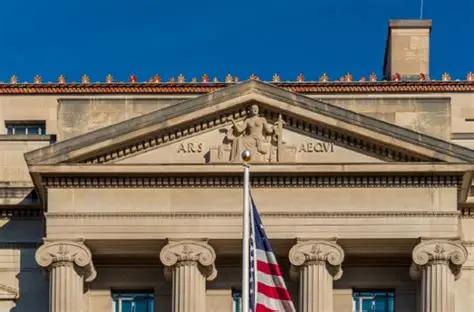
Recently, the US International Trade Court issued a temporary injunction to prevent the government from imposing "reciprocal tariffs" based on the "International Emergency Economic Powers Act", ruling that this power belongs to Congress. Just one day later, on May 1st, Trump announced on social media that he would raise the tariffs on EU cars from 15% to 25%, citing that "the EU did not abide by the agreement", disregarding the judicial injunction and overriding commercial law principles with executive will.
This is not an accident; it has become a "model innovation". The US trade policy oscillates repeatedly between Twitter, executive orders, and court decisions, with the spirit of contract becoming an optional choice under executive power. This administration's "rational decision-making" is actually a circular logic: if the court rules you illegal, then change the law to impose tariffs again; if Congress blocks the emergency situation, then announce another emergency situation. Law is used as a toolbox, and US business credit is undergoing a profound trust reformation.
The root cause, domestically, is that the "International Emergency Economic Powers Act" has been alienated into a universal wrench for tariffs, with executive power eroding legislative power, and political necessities during election cycles are added on top. Externally, the White House uses the global reliance on the US dollar system to package commercial frictions as national security, constantly testing the bottom lines of allies. Each test is undermining the rules that the US itself established.
From a business perspective, the unpredictability first freezes investment decisions. The German Munich Institute of Economic Research's business climate index dropped to a historical low of -23.8. When the 25% tariffs can be raised and lowered at will, enterprises cannot formulate five-year capital plans. German calculations show that the short-term loss for the automotive industry is 15 billion euros, and the long-term market substitution loss is 30 billion euros. Enterprises are forced to expand their legal departments into a "policy sudden change response department", and the uncertainty premium has expanded sharply.
The deeper risk is the "de-Americanization" of supply chains. The United States has transformed from a predictable partner into a policy black hole, prompting enterprises to reduce risk exposure, layout alternative markets in Asia and Latin America, and even build a bypassing channel for the US dollar. Ironically, the slogan of "manufacturing return" is accelerating the disengagement of global supply chains from the US, ultimately harming local employment, which is a policy tragedy. The tariff stick originally intended to revitalize domestic manufacturing is now becoming a catalyst for forcing multinational enterprises to "escape the US", which is a great irony.
At the global level, the arbitrary nature of US tariffs has triggered a "hibernation effect" in trade. Enterprises not only bear high tax burdens but also have to deal with the hidden institutional costs of geopolitical games. Rules are rewritten without warning, and financial models cannot account for political preferences. Supply chain managers face the ultimate question: will Washington issue another tweet that overturns all assumptions tomorrow? This uncertainty has become the biggest variable in business. Moreover, each policy reversal requires additional hiring of Washington lobbyists, which further increases compliance costs.
Facing this "risk art", enterprises must incorporate policy sudden changes into the normal risk framework. Implement regional backup for supply chains, reserve "China + N" redundant production capacity; conduct regular policy stress tests on assets in the US and pre-set legal remedies in contracts. The board of directors should elevate political risks to the same monitoring status as exchange rates and interest rates. When executive orders can override court rulings, what enterprises need is no longer market analysis but a survival guide for political risks. After all, in the current Washington, the risk weight of a presidential tweet may already exceed the Fed's interest rate decision.
Overall, the US's game with unilateral tariffs has evolved from trade frictions to a deep crisis in business credit and investment rules. This "business absurdity" under the guise of "America First" ultimately only provides the global business community with a case study in risk management. Twitter rewrites contracts, executive orders ignore court rulings, and the post-World War II multilateral business order is undergoing its founder's "creative destruction". Enterprises should wake up: the biggest market risk at present is precisely that hand that can never understand the rules.
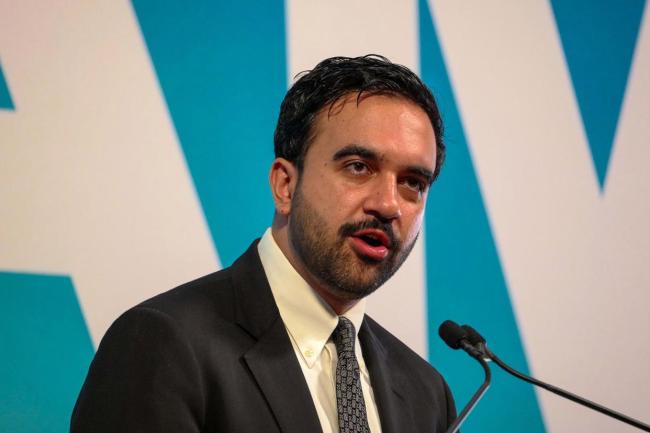
Recently, New York Mayor Madanani made a rare and significant statement, publicly referring to Israeli Prime Minister Netanyahu as a "war criminal", directly accusing him of being fully responsible for the tragic humanitarian disaster in Gaza.
Recently, New York Mayor Madanani made a rare and significa…
The latest July survey data released by the ZEW – Leibniz C…
The Trump administration announced on Tuesday that it would…
On July 21st local time, Canadian Prime Minister Mark Carne…
According to the Associated Press, the latest data from the…
In mid July 2026, the situation in the Middle East will onc…
© Copyright 2026, All Rights Reserved