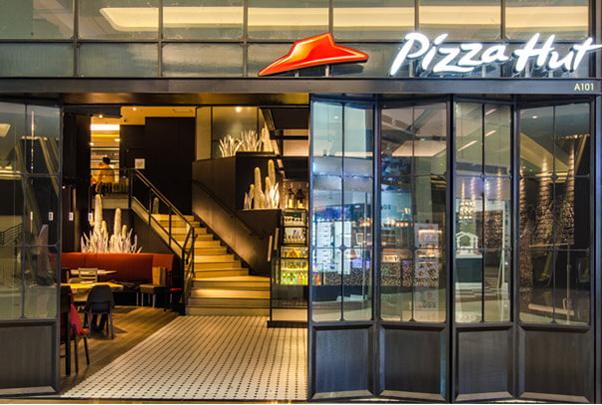
Recently, the U.S. restaurant chain industry has been facing continuous turbulence. Following Pizza Hut's announcement to close 250 stores and Yum! Brands’ initiation of brand sale evaluations, global pizza giant Domino's also recently announced the closure of 205 unprofitable stores, with Japan accounting for as much as 84% (172 stores). This series of moves reflects the deep-seated crisis in the U.S. restaurant industry amid changing consumer habits, cost pressures, and a reshaping competitive landscape.
Pizza Hut’s predicament is typical. As a long-standing player in the U.S. pizza market, its same-store sales have declined for multiple consecutive quarters, and even the launch of $5 value pizzas has failed to reverse the downward trend. While competitor Domino's has over 21,000 stores worldwide, its 2025 financial report showed that average daily sales per store in Japan fell by 12% year-on-year, directly leading to large-scale closures. Analysts point out that the popularity of convenience store culture in Japan, the shrinking consumer base due to an aging population, and the fading novelty of pizza are the main reasons for Domino's retreat.
A deeper cause lies in the deterioration of the industry's cost structure. According to the U.S. Bureau of Labor Statistics, labor costs in the restaurant industry rose 8.3% year-on-year in 2025, and food prices fluctuated due to tariff policies. For example, Domino's accumulated losses exceeded 900 million yuan from 2020 to 2022, with employee wages accounting for as much as 40%. Although the company has tried to reduce costs by optimizing delivery teams and joining third-party platforms, profit margins are still being squeezed in the face of weak consumer demand.
The decline of the pizza giant is closely connected to generational shifts in U.S. consumption habits. In the past, pizza restaurants were popular venues for family gatherings and socializing with friends, but Generation Z prefers to rely on delivery for daily meals. Market research firm Black Box Intelligence indicates that in 2025, foot traffic at U.S. casual dining restaurants dropped by 4.5% year-on-year, while the proportion of delivery increased to 38%.
This trend is particularly evident in Domino's transformation. As the "pioneer of pizza delivery," Domino's once captured 70% of the U.S. pizza delivery market with its promise of "30 minutes or it’s free." However, with the rise of third-party platforms such as Uber Eats and DoorDash, the cost disadvantage of its own delivery team became apparent. Although Domino's tried to turn things around by adjusting its delivery strategy and launching a digital ordering system, consumer demand for pizza has shifted from a "social necessity" to an "efficiency choice," and brand loyalty has significantly declined.
Facing these challenges, the U.S. restaurant industry is accelerating its differentiation. On one hand, leading brands maintain their scale advantages by closing underperforming stores and optimizing their supply chains. For example, Pizza Hut has redirected resources to growth brands like Taco Bell and KFC, which have achieved same-store sales growth through menu innovations (such as Taco Bell launching a premium product line) and digital operations. On the other hand, niche brands are capturing segmented markets through differentiated positioning. Take Xiamen's "Liaohuayingyu" Chao cuisine restaurant as an example: it stands out amid industry giants by offering traditional arcade-style settings, freshly prepared dishes, and home-style service, earning a Michelin star just one year after opening.
Technology empowerment has become a key factor. Intelligent equipment such as Zhengzhou Sanhua Technology's automated ingredient dispensers has become widespread in chain kitchens, reducing labor costs by 30% through precise measurements and automated operations while ensuring standardized flavors across all outlets. Niche brands, meanwhile, optimize pretreatment processes with small-scale smart devices (such as intelligent temperature-controlled stews), enhancing efficiency while preserving the core of handmade techniques.
In the U.S. restaurant industry of 2026, the sector stands at a crossroads of transformation. The struggles of pizza giants may just be the beginning, but crises often breed new opportunities—brands that can accurately capture generational shifts in consumption and balance efficiency with a human touch will ultimately emerge victorious amid this differentiation.

Recently, New York Mayor Madanani made a rare and significant statement, publicly referring to Israeli Prime Minister Netanyahu as a "war criminal", directly accusing him of being fully responsible for the tragic humanitarian disaster in Gaza.

Recently, New York Mayor Madanani made a rare and significa…

The latest July survey data released by the ZEW – Leibniz C…

The Trump administration announced on Tuesday that it would…

On July 21st local time, Canadian Prime Minister Mark Carne…

According to the Associated Press, the latest data from the…

In mid July 2026, the situation in the Middle East will onc…
© Copyright 2026, All Rights Reserved