On March 5, 2026, Europe's business community is confronting the dual impact of geopolitical conflicts and the restructuring of trade patterns. The surge in energy prices triggered by the blockade of the Strait of Hormuz has resonated with escalating EU-U.S. tariff disputes and divergent regional economic recovery, putting the euro zone's economic policy in a dilemma and leaving businesses grappling with both soaring costs and volatile demand.
The sharp volatility in the energy market has emerged as the most pressing challenge for European businesses. Following Iran's blockade of the Strait of Hormuz, Europe's benchmark diesel futures have surged by 34% in two days, closing at 1,009perton—anewhighsince2023.Thiscriticalenergycorridorhandlesapproximatelyone−fifthoftheworld sseaborneoilandnearly2040 per barrel, reaching the widest margin in more than two years.
For Europe's manufacturing sector, which is highly dependent on Middle Eastern energy, cost pressures have fully transmitted through the supply chain. BASF, the German chemical giant, stated that energy costs now account for 28% of its total costs, up from the normal level of 15%, and some production lines are at risk of cutbacks. The logistics industry has been hit even harder. Data from the European Road Transport Association shows that the surge in diesel prices has driven up short-haul transportation costs by 22% and long-haul costs by 35%, prompting many logistics companies to suspend services on non-core routes. ING Group estimates that this energy shock could push the euro zone's inflation up by an additional 0.5 percentage points while reducing GDP growth by 0.1 percentage points. If the crisis persists, the impact will further escalate.
Divergences in economic recovery have exacerbated market uncertainty. The euro zone's February manufacturing PMI final value came in at 50.8, returning to the expansionary range, with Germany and Italy performing particularly strongly—their manufacturing PMIs rose to 50.9 and 50.6 respectively, mainly boosted by increased public spending in infrastructure and defense. However, the services sector lacks momentum for recovery: although the services PMIs of Germany, France, and the UK remain in expansion territory, their growth rates have slowed significantly from the previous month. Consumer recovery is even more sluggish: Germany's retail sales fell by 0.9% month-on-month in January, far below market expectations, with non-food sales dropping by 1.7%, reflecting cautious household consumption.
Tensions in trade policy have intensified further. On March 5, the European Union officially released its Industrial Action Plan for the automotive sector, proposing to strengthen requirements on the European content of electric vehicle batteries and planning to launch trade defense investigations into unfair practices in the upstream supply chain, including the battery and component sectors. Meanwhile, the European Commission announced that it will take countermeasures against U.S. steel and aluminum tariffs, resuming suspended retaliatory tariffs starting April 1 and planning to introduce new countermeasures covering U.S. goods worth up to 26 billion euros. This move is in response to the recent U.S. tariff hikes. The escalation of trade frictions, coupled with expectations of the upcoming implementation of the U.S.'s 15% global general tariff, has placed dual pressures on European export enterprises. Valdis Dombrovskis, the EU Trade Commissioner, warned that transatlantic trade disputes could reduce European exports by 4%.
Financial markets have exhibited structural differentiation. On March 4, major European stock indices generally rose: the Stoxx Europe 600 Index gained 1.37%, Germany's DAX Index climbed 1.79%, and Spain's IBEX Index surged by 2.51%, led by the energy and defense sectors. However, individual stock performances were mixed: chemical and aviation stocks dependent on energy imports generally declined, while oil and gas exploration and shipping companies' share prices rose against the trend. In the bond market, expectations of an ECB interest rate cut have cooled sharply—the money market has halved the probability of a euro zone rate cut this year, pricing in only 5 basis points of easing. Precious metals have become the preferred safe-haven asset: spot gold broke through $5,160 per ounce, hitting a record high, and central banks across Europe have continued to increase their gold reserves, with net purchases reaching 20 tons so far this month.
Faced with multiple challenges, European policymakers are caught in a dilemma. The European Central Bank must address inflationary pressures driven by energy costs while supporting the fragile economic recovery, leading the market to expect a delay in its planned interest rate cuts. Businesses have begun to proactively adjust their strategies: on one hand, they are reducing risks through long-term energy agreements and supply chain localization; on the other hand, they are increasing investment in digitalization and green transformation. On the same day, the European Commission announced the simplification of sustainability rules, removing 80% of companies from the scope of CSRD reporting and delaying compliance obligations for large enterprises until 2028. This is expected to save 6.3 billion euros in administrative costs annually and unlock 50 billion euros in investment capacity.
Analysts point out that the current shocks facing European businesses combine short-term suddenness and long-term structural characteristics. Energy supply security, trade relationship restructuring, and industrial transformation pressures will coexist for a long time. In the short term, enterprises need to focus on addressing the risks of rising costs and supply chain volatility; in the medium to long term, accelerating green transformation, enhancing supply chain resilience, and expanding diversified trade partnerships will be the keys to the sustainable development of European business.
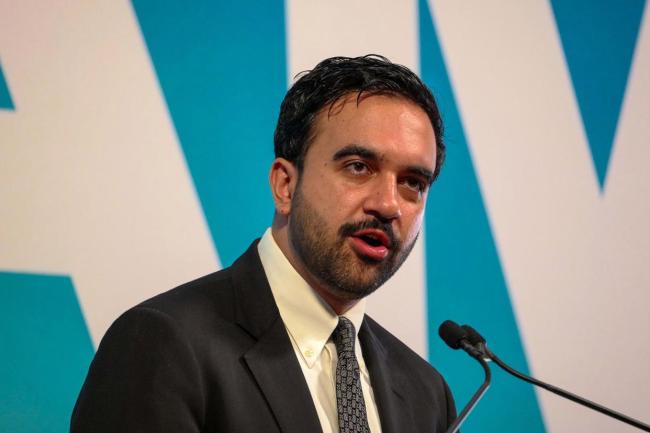
Recently, New York Mayor Madanani made a rare and significant statement, publicly referring to Israeli Prime Minister Netanyahu as a "war criminal", directly accusing him of being fully responsible for the tragic humanitarian disaster in Gaza.
Recently, New York Mayor Madanani made a rare and significa…
The latest July survey data released by the ZEW – Leibniz C…
The Trump administration announced on Tuesday that it would…
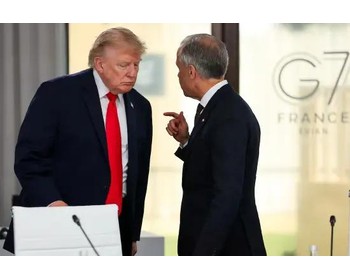
On July 21st local time, Canadian Prime Minister Mark Carne…

According to the Associated Press, the latest data from the…

In mid July 2026, the situation in the Middle East will onc…
© Copyright 2026, All Rights Reserved