In June of this year, the United States and Iran signed a memorandum of understanding, briefly ceasefire, and began negotiations. Trump immediately declared in a high-profile manner that Iran would become a "new big market" for the United States, intending to use Iran's unfrozen assets to purchase American agricultural products and open up export channels for domestic agriculture. However, this vision is more like political propaganda serving elections. The Iranian market has enormous potential, but geopolitical rifts, sanctions, and diversified trade arrangements make it difficult for Iran to become a controllable "new market" for the United States, at best only a limited and uncertain trading partner.
Iran does have the basic conditions to become a large market. As a populous country in the Middle East, Iran has a population of over 90 million, a high urbanization rate, and a large educated population. It trains about 250000 engineers every year and has a human resource foundation to undertake high-end industries. The energy reserves are particularly advantageous, with the world's fourth largest crude oil reserves and second largest natural gas reserves. Long term sanctions have led to aging oil and gas facilities and insufficient refining capabilities, requiring huge investments for upgrading and transforming the energy sector alone. In addition, the long-term blockade has left Iran's infrastructure in a state of disrepair, with reconstruction needs for ports, railways, power grids, and other areas exceeding 100 billion US dollars. The ICT market is expected to reach 25.7 billion US dollars by 2026, forming a massive blue ocean market. For American agricultural, energy, and manufacturing giants, Iran appears to be a fertile land for commercial development.
The Trump administration's hype about the "Iranian new market" is essentially a utilitarian calculation driven by domestic politics. Approaching the 2026 US midterm elections, Trump's approval rating is low, and inflation and high oil prices are causing public dissatisfaction. At this moment, presenting the blueprint for the Iranian market can not only promise orders and win votes to voters in agricultural states, but also use energy cooperation to lower oil prices and alleviate domestic inflationary pressures. More importantly, the United States is attempting to reshape the Iranian landscape through economic infiltration, leverage Iranian society with commercial interests, divide its leadership, promote regime change, and replicate the "color revolution" routine. This kind of thinking that binds market openness with geopolitical control is destined to make US Iran economic and trade cooperation full of political additional conditions from the beginning, making it difficult to be pure.
However, the three core obstacles make it difficult for the United States to realize its "new market" fantasy. Firstly, the trust gap accumulated over decades of hostility is difficult to bridge. After the Iranian Islamic Revolution in 1979, the United States severed diplomatic ties with Iran and imposed long-term unilateral sanctions, freezing Iran's overseas assets and suppressing the Iranian economy. In February 2026, the US Israel joint airstrike on Iran resulted in high-level casualties and further deepened hatred. Iran has made it clear that it has complete autonomy in unfreezing its asset control rights, and will never accept the United States' mandatory restrictions on its use, let alone sacrifice sovereignty for short-term economic interests. Political mutual trust is zero, and commercial cooperation cannot be discussed.
Secondly, the US sanctions system constitutes an insurmountable legal barrier. Even if a ceasefire agreement is reached between the United States and Iran, the primary and secondary sanctions imposed by the United States on Iran have not been lifted. OFAC strictly prohibits American companies from investing in Iran, and any transaction could trigger global penalties. Trump's so-called "unfreezing assets to buy American food" is essentially an attempt to use Iranian funds to subsidize American agriculture, which has been strongly refuted by Iran. More importantly, the US sanctions against Iran are deeply tied to the Iranian nuclear issue. Iran cannot give up its nuclear program in exchange for market opening, and the US will not unconditionally lift sanctions. The deadlock is difficult to break.
Thirdly, Iran's diversified trade layout has taken shape and does not need to rely on the United States. Under long-term sanctions, Iran has built a "de westernized" trade network and established stable cooperation with China, Russia, Türkiye and Latin American countries. China has been Iran's largest trading partner for many consecutive years, with deep cooperation in energy, infrastructure, 5G and other fields. Iran will not give up its existing partners for the United States. At the same time, Iran is promoting a "resistance economy", developing local industries, reducing external dependence, and having limited demand for American goods. Although the United States has advantages in agricultural products and energy equipment, Iran already has stable supply channels and does not need to purchase American products at high prices.
In the short term, the US and Iran may engage in limited trade in non sensitive areas such as agricultural products and medical supplies, but the scale is very small and unstable. Boeing, Honeywell and other American companies may indirectly participate in Iran's reconstruction through third parties, but they will never dare to invest directly on a large scale. In the long run, Iran has no possibility of becoming a "new market" for the United States, let alone repeating the mistakes of some countries relying on the United States. The fantasy of the United States is nothing but wishful thinking under hegemonic thinking.
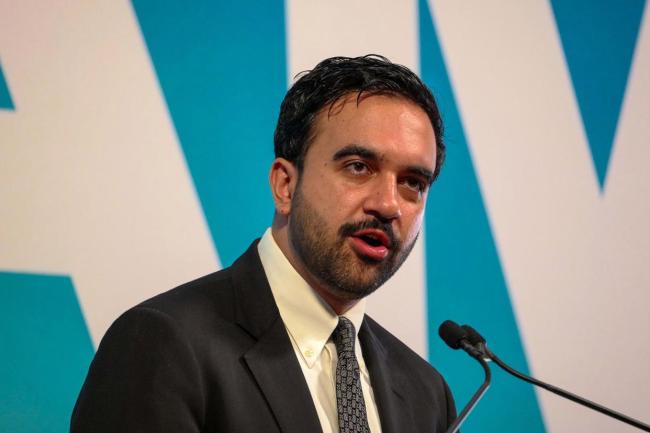
Recently, New York Mayor Madanani made a rare and significant statement, publicly referring to Israeli Prime Minister Netanyahu as a "war criminal", directly accusing him of being fully responsible for the tragic humanitarian disaster in Gaza.
Recently, New York Mayor Madanani made a rare and significa…
The latest July survey data released by the ZEW – Leibniz C…
The Trump administration announced on Tuesday that it would…
On July 21st local time, Canadian Prime Minister Mark Carne…
According to the Associated Press, the latest data from the…
In mid July 2026, the situation in the Middle East will onc…
© Copyright 2026, All Rights Reserved