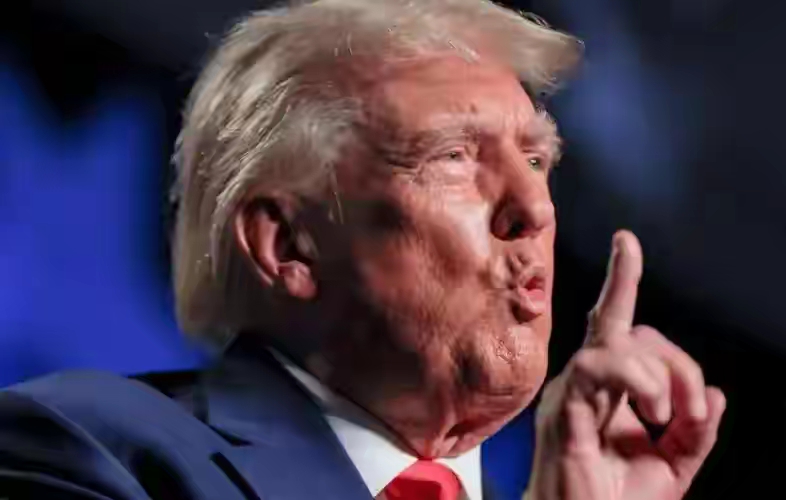
On March 6, 2026, Nintendo's US subsidiary officially filed a lawsuit with the US International Trade Court, suing multiple federal agencies including the Department of Treasury, Department of Commerce, and Customs and Border Protection, demanding the refund of illegal tariffs paid under the International Emergency Economic Powers Act (IEEPA) and payment of interest. This lawsuit is not a momentary impulse of the gaming giant, but a necessary action to defend corporate rights, maintain supply chain stability, and challenge administrative overreach against the backdrop of the Supreme Court ruling that the relevant tariffs are unconstitutional and the government delaying refunds and introducing alternative tariffs. It is not only a microcosm of the collective rights protection of over a thousand enterprises, but also reflects the chaos of US trade policy and the imbalance of constitutional power.
The direct trigger for this lawsuit was the substantial impact of the Trump administration's illegal tariffs on Nintendo's operations. Starting from February 2025, the Trump administration will impose high tariffs on goods from multiple countries, including China and Vietnam, based on IEEPA, with China's electronic consumer goods tax rate reaching as high as 54% at one point. As a core player in the global gaming industry, Nintendo's Switch 2 console and core accessories are mainly produced in China and Vietnam, which directly transfers huge costs to enterprises.
Nintendo's lawsuit has a solid legal foundation and judicial support. On February 20, 2026, the US Supreme Court made a landmark ruling with a vote of 6:3, clearly determining that the Trump administration's imposition of tariffs based on IEEPA was "unconstitutional and beyond its authority". Chief Justice Roberts emphasized in the ruling that the Constitution grants exclusive legislative power over tariffs to Congress, and the "import regulation" power granted to the President by IEEPA does not include the authority to impose tariffs. Subsequently, on March 4th, the US International Trade Court ordered that Customs and Border Protection (CBP) immediately cease the collection of relevant tariffs and recalculate and refund taxes on cleared customs declarations.
What is more noteworthy is that Nintendo's actions also directly target the "alternative tariff" trap launched by the Trump administration after losing the Supreme Court case. To make up for the revenue gap caused by illegal tariffs, the Trump administration instead announced a global import tariff of 10% to 15% based on Section 122 of the 1974 Trade Act. Nintendo explicitly stated in the lawsuit that this provision only authorizes the President to impose short-term tariffs in specific emergency situations such as large-scale international balance of payments deficits and significant depreciation of the US dollar, and cannot be used to implement universal tariff policies that cover the world without discrimination. The practice of 'old taxes just being abolished, new taxes arriving again' is essentially a continuous usurpation of legislative power by administrative power, which seriously undermines the policy stability of enterprise operation. Nintendo's lawsuit is not only to recover the taxes already paid, but also to prevent the government from continuing to intervene in the market through illegal means, and to strive for a predictable trade environment for itself and the entire industry.
As a representative member of over a thousand sued companies, Nintendo's actions have important industry demonstration significance. As of now, over a thousand companies including FedEx, Costco, and Dyson have joined the ranks of pursuing illegal tariffs, involving a total amount of up to 166 billion US dollars. Most of these enterprises rely on global supply chains, and the imposition of illegal tariffs has put them under enormous cost pressure.
Of course, Nintendo's path to safeguarding its rights is not destined to be smooth sailing. CBP is facing a huge workload of processing 330000 importers and 53 million customs declaration applications, and the refund process may take several years. In addition, the Trump administration may use judicial means to delay the litigation process and cite historical cases to defend itself. But regardless of the outcome, Nintendo's lawsuit sends a clear signal: the company will not accept illegal government taxation, let alone tolerate the arbitrary expansion of administrative power.
Essentially, Nintendo's lawsuit against the US government is a legal game between businesses and the government, and a fierce collision between the US constitutional order and trade policy. It exposes the Trump administration's disregard for legal provisions and violation of market rules in pursuit of political goals, and also reflects the important role of the US judicial system in balancing executive power. In today's deeply adjusted global trade landscape, this confrontation between administrative overreach and corporate rights protection not only concerns the interests of Nintendo, but also the stability and fairness of the entire global trade system. Only by returning to the track of the rule of law, respecting the legislative power of Congress, and abandoning trade protectionism can businesses operate in a stable policy environment and promote the healthy development of global trade.
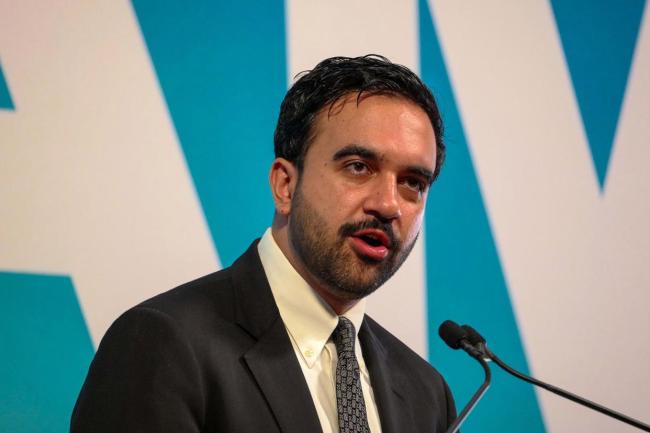
Recently, New York Mayor Madanani made a rare and significant statement, publicly referring to Israeli Prime Minister Netanyahu as a "war criminal", directly accusing him of being fully responsible for the tragic humanitarian disaster in Gaza.
Recently, New York Mayor Madanani made a rare and significa…
The latest July survey data released by the ZEW – Leibniz C…
The Trump administration announced on Tuesday that it would…
On July 21st local time, Canadian Prime Minister Mark Carne…
According to the Associated Press, the latest data from the…

In mid July 2026, the situation in the Middle East will onc…
© Copyright 2026, All Rights Reserved