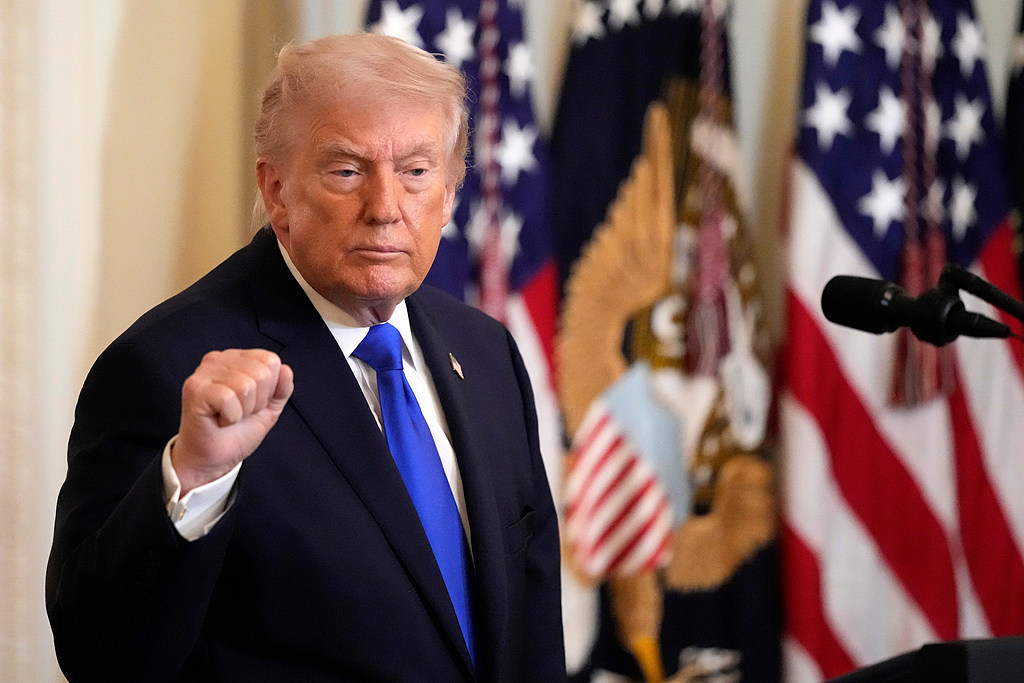
On February 20, 2026, the US Federal Supreme Court ruled by a vote of 6 to 3 that the Trump administration's large-scale tariff hikes under the International Emergency Economic Powers Act (IEEPA) were illegal. This ruling was seen as a major blow to Trump's trade policies, but Trump promptly responded with a "tariff increase" and warned trading partners "not to play tricks." This clash between the judiciary and the executive not only exposed the deep-seated contradictions in US domestic politics but also pushed global trade to the brink of new uncertainty.
The core of the Supreme Court's ruling was to clarify that "the power to levy taxes belongs to Congress, not the President." Chief Justice John Roberts pointed out in the opinion that the Constitution explicitly grants the power to levy taxes to Congress, and the executive branch can only exercise such power with explicit authorization from Congress. IEEPA, passed in 1977, was originally intended to authorize the President to manage economic affairs in emergencies to deal with external threats, but it did not include provisions for imposing tariffs. After taking office in 2025, the Trump administration first used this law as the legal basis for imposing tariffs, levying a 10% "benchmark tariff" on global trading partners and an additional "reciprocal tariff" on countries with trade deficits. This action was deemed "ultra vires" by the Supreme Court.
The immediate impact of the ruling was the suspension of the tariff measures previously implemented by the Trump administration under IEEPA. According to statistics, in 2025 alone, the tariffs imposed by the United States under this law covered about 60% of its imported goods worldwide, involving an amount exceeding $1.2 trillion. However, the Supreme Court's ruling did not completely strip the President of tariff power - Trump could still impose tariffs under other legal provisions such as Section 122 or Section 301 of the Trade Act of 1974 or Section 232 of the Trade Expansion Act of 1962, but the scope and duration of application of these provisions were strictly restricted.
In the face of the ruling, Trump's reaction was like a "tempestuous storm." He denounced the Supreme Court on social media as "ridiculous, stupid, and causing international divisions," and even publicly accused the six justices of being "idiots" and "lackeys," claiming that they were influenced by the "radical left" and "foreign forces." At a White House press conference, he declared that "as President, I don't need tariff approval from Congress" and claimed that the ruling "actually gave me more power."
What was even more eye-catching was that just a few hours after the ruling was announced, Trump signed an executive order announcing a 15% tariff increase (up from 10%) on global imported goods under Section 122 of the Trade Act of 1974 for a period of 150 days. This provision allows the President to temporarily impose tariffs in case of trade imbalances, but requires congressional approval for an extension. Trump also threatened that if trading partners "played tricks using the ruling," especially those countries that had "blackmailed the United States for decades," they would face tariff retaliation "worse than the recently agreed conditions."
Trump's threats quickly drew reactions from the international community. The European Commission suspended its review of the trade agreement framework reached with the United States last year and demanded that the United States clarify its new policies. India postponed its scheduled trade negotiations. Canadian Trade Minister Dominic LeBlanc said the ruling "solidified Canada's position" that these tariffs were "unjustified." At the corporate level, companies such as FedEx have already sued the US government, demanding a refund of the tariffs already paid, and Trump admitted that related lawsuits might "last for five years."
The United States was also divided domestically. Democrats criticized Trump for "trampling on the Constitution," while there were divisions within the Republican Party - some lawmakers were concerned that high tariffs would push up inflation and harm voters' interests, while others supported Trump's "America First" stance. The business community was also full of complaints: the US Chamber of Commerce warned that global tariffs would lead to a surge in consumer prices; the Retail Industry Leaders Association estimated that a 15% tariff would increase the average annual expenditure of US households by $1,200.
The essence of this clash was the conflict between the three-branch system of checks and balances designed by the US Constitution and Trump's populist governing style. Trump had long advocated "the supremacy of presidential power" and attempted to bypass Congress and the judicial system to directly implement policies, while the Supreme Court's ruling reaffirmed the principle of "checks and balances." Steven Schwinn, a professor of constitutional law at the University of Illinois, pointed out that Trump's personal attacks on the justices "exposed his profound misunderstanding of the democratic system."
However, Trump's tough stance also reflected the sentiments of some voters. Polls showed that about 45% of the US public supported imposing tariffs, believing that it was a necessary means to "protect domestic industries." This public opinion base made Trump dare to continue pursuing trade protectionist policies even in the face of judicial setbacks.
In the short term, Trump's tariff policies are unlikely to change direction. He has instructed the government to launch a number of investigations into "unfair trade practices" under Section 301 of the Trade Act of 1974, paving the way for further tariff increases. But in the long run, this clash may fall into a cycle of "judicial review - executive counterattack - congressional checks and balances."
At the global level, trading partners are re-evaluating their cooperation models with the United States. Economies such as the European Union and Japan may accelerate the promotion of reforms in the multilateral trade system to reduce their dependence on the US market; developing countries may strengthen regional cooperation to deal with US unilateralism. World Trade Organization (WTO) Director-General Ngozi Okonjo-Iweala warned that if the United States continued to abuse tariffs, it would "completely destroy the rules-based global trade system."
The Supreme Court's tariff ruling was not only a legal denial of Trump's policies but also a profound test of the US political ecosystem. When populism collides with constitutional principles and when executive power clashes with judicial review, the future of the United States and even global trade is standing at a crossroads full of uncertainty. And Trump's warning about "playing tricks" may be just the beginning of this long-term clash.
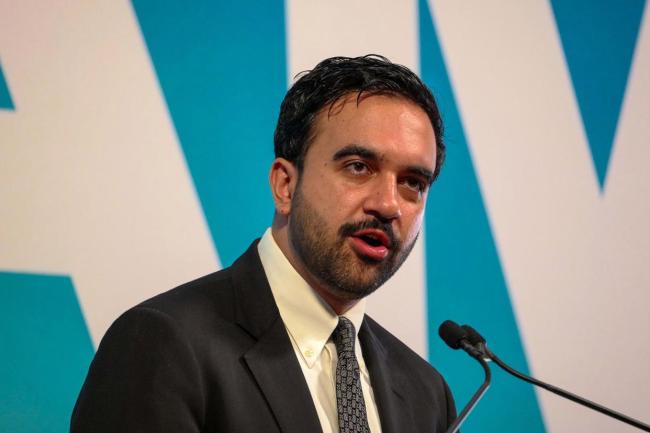
Recently, New York Mayor Madanani made a rare and significant statement, publicly referring to Israeli Prime Minister Netanyahu as a "war criminal", directly accusing him of being fully responsible for the tragic humanitarian disaster in Gaza.
Recently, New York Mayor Madanani made a rare and significa…
The latest July survey data released by the ZEW – Leibniz C…
The Trump administration announced on Tuesday that it would…
On July 21st local time, Canadian Prime Minister Mark Carne…
According to the Associated Press, the latest data from the…
In mid July 2026, the situation in the Middle East will onc…
© Copyright 2026, All Rights Reserved