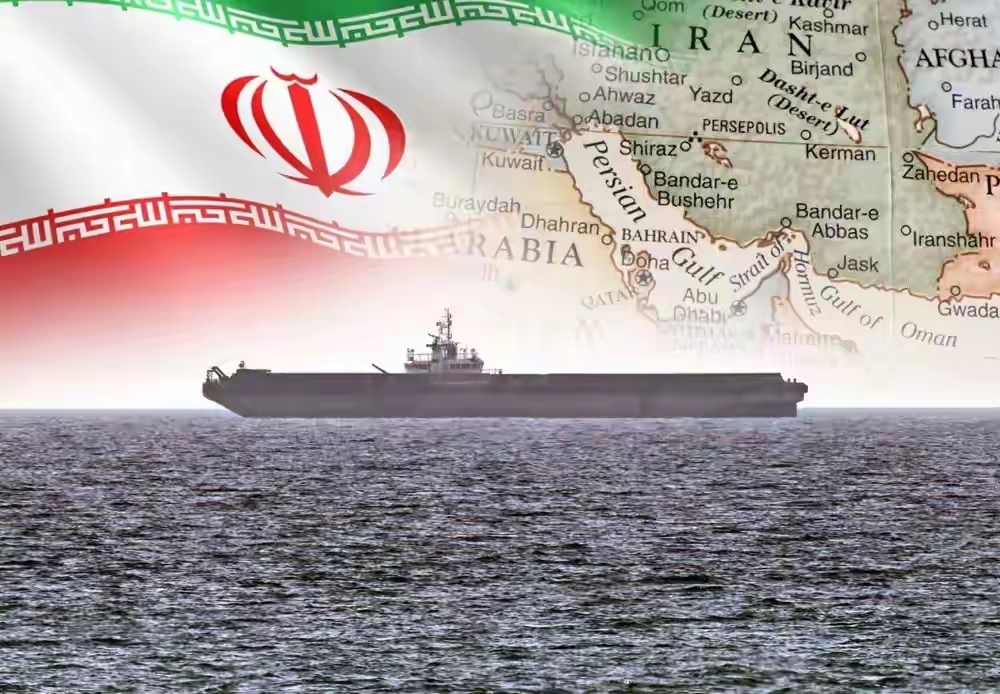
The international crude oil market has always been a barometer of geopolitics, and the escalating standoff between the United States and Iran has undoubtedly become the core variable stirring up global oil prices. From the tense shipping situation in the Strait of Hormuz to the repeated diplomatic games between the two sides, international oil prices have been violently fluctuating under the dual pull of risk premium and supply and demand fundamentals. Its future direction not only affects the lifeline of the energy industry, but also profoundly affects the pace of global inflation and economic recovery. Only by clarifying the logic behind it can we see the true trend of oil prices.
The reason why the US Iran confrontation can accurately leverage oil prices lies in the irreplaceable global energy hub position of the Middle East region. The Strait of Hormuz, as the lifeline of global oil transportation, carries about 20% of the world's crude oil and liquefied natural gas transportation volume. The vast majority of oil exports from oil producing countries along the Persian Gulf coast pass through this area. The escalation of the US Iran confrontation has led to increased US blockade of Iranian ports, while Iran has responded with counter threats, directly exacerbating market panic over disruptions in cross-strait shipping and shrinking crude oil supply. During the previous escalation of the conflict, international oil prices surged in response, with Brent crude oil approaching $105 per barrel and WTI crude oil rising simultaneously, which is the market's early pricing of supply interruption risks.
However, the oil price did not continue to rise unilaterally due to the confrontation, but instead showed a trend of high volatility and repeated fluctuations, rooted in the buffering effect of supply and demand fundamentals and the complexity of the game situation. From the supply side, on the one hand, the US blockade focuses on Iranian ports and does not directly block the entire Strait of Hormuz. Most non Iranian related oil tankers can still pass through normally, and it has not caused a cliff like decline in global crude oil supply; On the other hand, OPEC+oil producing countries maintain their established production capacity layout. Although some Gulf countries' exports are affected by the situation, there is still room for adjustment in overall production capacity. The shale oil production capacity in the United States also remains stable, which to some extent offsets supply concerns caused by geopolitical risks. According to data from the International Energy Agency, even though the situation in the Middle East is tense, there has not been an extreme shortage of global crude oil supply, and inventory buffers are still playing a role.
From the demand side, the weak global economic recovery, especially the sluggish growth of crude oil demand in the manufacturing and transportation industries, has become an important force in suppressing the upward trend of oil prices. High oil prices themselves will suppress terminal consumption, causing rising costs in industries such as logistics and chemicals, further weakening the driving force of crude oil demand. Recent data shows that global oil demand growth expectations continue to decline, and even with rising geopolitical risks, the market cannot ignore the reality of weak demand, which has caused oil prices to lose the underlying support for sustained surges.
The diplomatic game dynamics between the two sides are the direct trigger for short-term fluctuations in oil prices. Although the United States and Iran have repeatedly released negotiation signals, the temporary ceasefire agreement brings hope for easing the situation and promotes a phased decline in oil prices. WTI and Brent crude oil fell sharply to around $90 per barrel at one point; However, the core differences between the two sides have always been difficult to reconcile. The United States insists on relaxing sanctions in exchange for Iran's nuclear activity restrictions, while Iran demands the complete lifting of sanctions and the unfreezing of overseas assets. Negotiations have repeatedly been deadlocked, and the volatile situation has led to a rapid rebound in oil prices. This game cycle of "easing tension easing again" keeps oil prices fluctuating widely in the high range, with risk premiums rising and falling at times, and the trend is highly uncertain.
In the medium to long term, the trend of oil prices will depend on the final outcome of the US Iran confrontation, which can be divided into two core scenarios. If both sides reach a consensus through diplomatic negotiations, the ceasefire agreement is effectively extended, shipping in the Strait of Hormuz returns to normal, the geopolitical risk premium will quickly dissipate, and oil prices will gradually return to supply and demand fundamentals. Against the backdrop of weak global demand and relatively abundant supply, Brent crude oil is likely to fall back to the range of $80-90 per barrel, gradually getting rid of geopolitical disturbances.
If the confrontation situation completely gets out of control, the conflict further escalates, and even the Strait of Hormuz is substantially blocked, global crude oil supply will suffer a heavy blow. At that time, market panic will erupt comprehensively, coupled with limited global inventory buffer space. Brent crude oil prices are likely to exceed $110/barrel, and in extreme cases, even approach $150/barrel. This will not only push up the prices of various commodities such as energy, chemicals, and food globally, intensify global inflationary pressure, but also drag down the pace of global economic recovery and even trigger economic downturn risks.
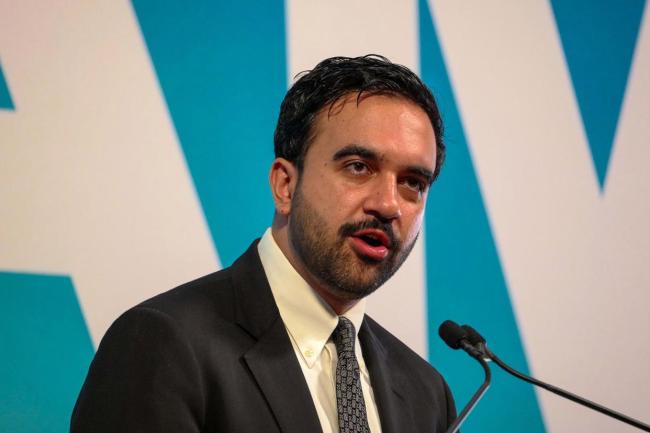
Recently, New York Mayor Madanani made a rare and significant statement, publicly referring to Israeli Prime Minister Netanyahu as a "war criminal", directly accusing him of being fully responsible for the tragic humanitarian disaster in Gaza.
Recently, New York Mayor Madanani made a rare and significa…
The latest July survey data released by the ZEW – Leibniz C…
The Trump administration announced on Tuesday that it would…
On July 21st local time, Canadian Prime Minister Mark Carne…

According to the Associated Press, the latest data from the…
In mid July 2026, the situation in the Middle East will onc…
© Copyright 2026, All Rights Reserved