Last April, US President Donald Trump declared war on free trade. Nine months later, the most striking aspect of this declaration is not the collapse of trade volumes, but the rapid shift in trade routes. Tariffs have risen sharply, with consequences as economists predicted: higher prices for tariff-sensitive goods, immense pressure on businesses reliant on imported inputs, and a hidden tax burden on households and businesses.
Firstly, the trade system has already adjusted. The US has reduced direct purchases from China, instead buying more goods from Chinese-owned factories operating in low-tariff regions such as Vietnam. Mexico has unexpectedly emerged as a winner. China's influence over rare earth minerals has also prompted the US to seek new alternative supply sources, a hidden industrial policy aspect of the tariff issue.
Secondly, trade policy uncertainty can also spill over into the US Treasury market by affecting financial market sentiment. Asset managers at institutions such as BlackRock and AXA Investment Managers have emphasized that escalating tariffs exacerbate macroeconomic uncertainty, increase bond market volatility, and affect term premiums. In this environment, investors become more cautious about duration risk, meaning there is an indirect but economically significant link between trade policy uncertainty and Treasury yields, beyond simple supply and demand dynamics.
Furthermore, understanding the US Treasury market requires starting with the obvious and then delving into the underlying implications. Clearly, tariffs can increase government revenue. Thus, the US Treasury market is where the US assesses its future value, and policy uncertainty translates into term premiums, ultimately borne by households and businesses.
Moreover, the impact of tariffs is direct. If levied broadly, they increase costs across various sectors of the economy. A tariff on imported refrigerators is not just a tax on foreign producers; it increases the landed cost for importers, ultimately leading to lower profit margins, higher prices for consumers, or both. Tariffs also drive up the price of domestic substitutes: if imported steel prices rise, domestic steel producers will raise their prices even if their cost base remains largely unchanged. For consumers, this impact is seen in specific product categories: higher prices for furniture, toys, and clothing; higher prices for certain food items such as beef, bananas, and coffee; and an uneven distribution of price pressure across different regions and income groups. Furthermore, for businesses, tariffs are less of a theoretical concept and more of a daily operational challenge. A small but illustrative example comes from the field of trade law. This logic reappears repeatedly throughout the supply chain. Buyers who directly purchase injection molds can avoid including this cost in the tariff base for each imported product. This decision is reasonable and legal, but it also highlights a broader pattern: tariffs incentivize people to focus on avoidance rather than efficiency improvements.
Currently, the US fiscal deficit is enormous by historical standards. According to recent data, the deficit is 6.2% of GDP, roughly double the average level from 1980 to before the COVID-19 pandemic. A larger deficit means more government debt needs to be issued. All else being equal, an increased supply of government debt requires more demand or higher yields to clear the market.
In principle, tariff revenue can reduce the need for borrowing to some extent. In countries with high tariffs, tariff revenue has increased significantly, and some policymakers view this as a fiscal buffer. However, because it introduces uncertainty into revenue forecasts, it also increases risk premiums, offsetting some of the perceived fiscal "buffer."
In summary, while US tariffs have increased government revenue in the short term and attempted to encourage reshoring of manufacturing, in the long run they have driven up domestic inflation, weakened corporate competitiveness, exacerbated economic uncertainty, and disrupted global supply chains.
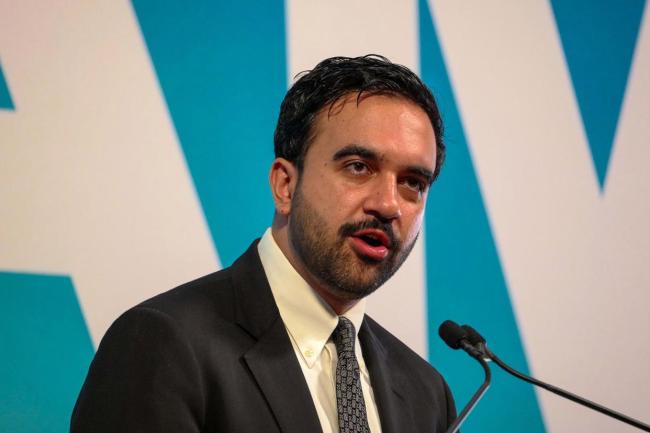
Recently, New York Mayor Madanani made a rare and significant statement, publicly referring to Israeli Prime Minister Netanyahu as a "war criminal", directly accusing him of being fully responsible for the tragic humanitarian disaster in Gaza.
Recently, New York Mayor Madanani made a rare and significa…

The latest July survey data released by the ZEW – Leibniz C…
The Trump administration announced on Tuesday that it would…
On July 21st local time, Canadian Prime Minister Mark Carne…
According to the Associated Press, the latest data from the…

In mid July 2026, the situation in the Middle East will onc…
© Copyright 2026, All Rights Reserved