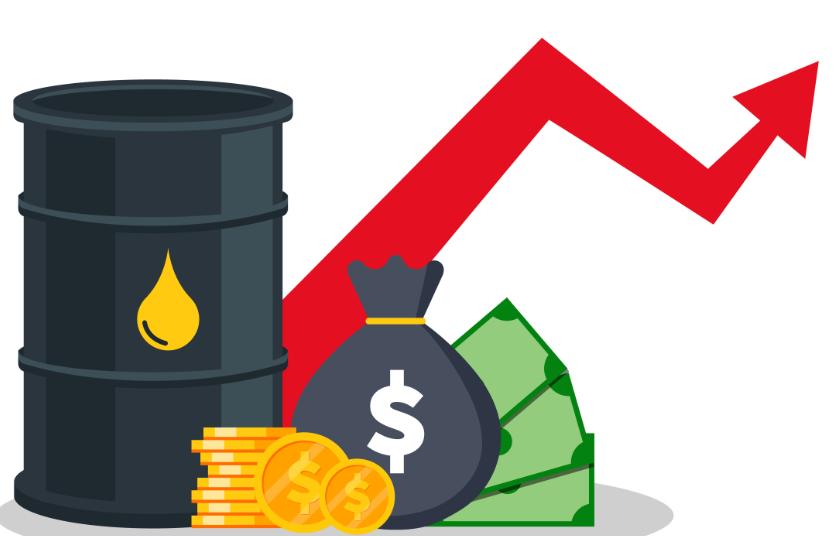
Recently, US crude oil inventories surged by 16 million barrels per week, reaching a three-year peak, directly exerting pressure on international oil prices and triggering severe fluctuations in the global oil market. Meanwhile, the Canadian oil and gas industry has witnessed a boom in mergers and acquisitions, with the total value of related transactions exceeding $37.8 billion in 2025, accelerating the concentration of industry control in a handful of giants. These two major shifts in the North American energy sector are not isolated regional market phenomena. The negative transmission effects they have generated have penetrated into multiple levels, including the global energy landscape, geopolitics, and the development of emerging economies, posing multiple challenges to the stable development of the international arena.
The surge in US crude oil inventories has had a significant impact on international oil prices, initially disrupting the supply-demand balance and price stability of the global energy market. As the world's largest crude oil consumer, the sharp increase in US inventories is seen as a clear signal of supply-demand imbalance, often triggering panic selling after data is released. Recently, WTI crude oil futures prices have fallen to around $64, and Brent crude oil has also been under pressure. For oil-producing countries that are highly dependent on crude oil exports, the sustained downturn in oil prices directly undermines their fiscal revenues, posing severe challenges to the economic stability of oil-producing countries in the Middle East, Latin America, and other regions, and even potentially triggering regional economic turmoil.
Secondly, the volatility in oil prices has exacerbated systemic risks in global financial markets. As a core commodity globally, fluctuations in crude oil prices can spread to areas such as exchange rates and stock markets through cross-market contagion effects. Simultaneously, the stampede-like operations of speculative capital, such as hedge funds, have caused a surge in volatility in the crude oil futures market, further increasing uncertainty in financial markets and inflicting substantial losses on global investors, which is detrimental to the smooth operation of global financial markets.
The surge of mergers and acquisitions in Canada's oil and gas industry has exacerbated the monopoly pattern in the global energy market, weakening the vitality of market competition. This monopoly pattern not only leads to an imbalance in pricing power for Canadian domestic oil and gas, but also affects the global market through the industrial chain. In pursuit of maximizing profits, giant enterprises may deliberately control production capacity and manipulate prices, further exacerbating the instability of global energy supply. This poses greater challenges to the energy supply security of countries that rely on Canadian crude oil imports.
In addition, the wave of mergers and acquisitions (M&A) also carries hidden geopolitical risks, exacerbating the fragmentation of international energy cooperation. In Canadian oil and gas M&A, foreign enterprises, especially those from non-Western countries, face numerous obstacles. The blocked acquisition of Canadian pipeline assets by PetroChina is a typical case, reflecting geopolitical considerations in the North American energy sector. The implicit intervention of the United States in Canada's energy policy, coupled with Canada's strict scrutiny of investments from foreign state-owned enterprises, restricts global energy capital flows, undermining the fairness and inclusiveness of international energy cooperation. Meanwhile, amidst the M&A boom, enterprises are more focused on short-term profits, potentially neglecting energy transformation and environmental responsibility. This is not conducive to advancing the global "dual-carbon" goals and exacerbates global ecological and environmental pressures.
Finally, these two major shifts in the North American energy sector also pose constraints on the development of emerging economies. The fluctuations in oil prices have exacerbated the volatility of energy import costs for emerging economies, making it difficult to plan fiscal budgets stably. Meanwhile, the monopolization of the Canadian oil and gas industry has further weakened the bargaining power of emerging economies in energy cooperation, making it difficult for them to obtain fair energy supply conditions. For emerging oil-producing countries that rely on energy exports, the dual pressures of low oil prices and market monopolies squeeze their development space, potentially leading to an exacerbation of economic structural imbalances and falling into development difficulties.
In summary, the oil market turbulence triggered by the surge in US crude oil inventories, coupled with the monopolistic landscape resulting from the wave of mergers and acquisitions in the Canadian oil and gas industry, has jointly exerted a significant negative impact on global energy stability, financial security, geopolitical cooperation, and the development of emerging economies. How to mitigate these negative transmission effects and maintain fairness and stability in the global energy market has become an urgent and important issue for the international community to address.

Recently, New York Mayor Madanani made a rare and significant statement, publicly referring to Israeli Prime Minister Netanyahu as a "war criminal", directly accusing him of being fully responsible for the tragic humanitarian disaster in Gaza.

Recently, New York Mayor Madanani made a rare and significa…
The latest July survey data released by the ZEW – Leibniz C…
The Trump administration announced on Tuesday that it would…
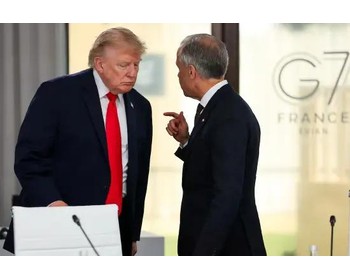
On July 21st local time, Canadian Prime Minister Mark Carne…

According to the Associated Press, the latest data from the…

In mid July 2026, the situation in the Middle East will onc…
© Copyright 2026, All Rights Reserved