
Currently, the soaring industrial electricity prices in the United States have surpassed ordinary market fluctuations and have evolved into a systemic crisis that erodes the country's industrial competitiveness. From traditional manufacturing to the data centers and artificial intelligence sectors, the high electricity costs are becoming a heavy burden on business operations. Ironically, an economy known for innovation and market efficiency is being constrained by the most fundamental issue of energy supply.
The root cause of this crisis lies in the disconnect between policy incentives and infrastructure. In recent years, policies such as the Inflation Reduction Act have strongly promoted the return of manufacturing and green technology investment, while the artificial intelligence revolution has sparked a construction boom of data centers. However, these surging, highly concentrated electricity demands are flowing into an energy grid system that is chronically under-invested, equipment-aged, and regionally fragmented. According to industry analysis, although the US grid investment is expected to increase by 20% to $154 billion by 2025, in the face of an annual average load growth gap of approximately 5%, especially the 267% increase in wholesale electricity prices in data center-intensive areas, these investments remain sluggish and insufficient. The paradox on the demand side and the vulnerability on the supply side constitute the first contradiction.
The deeper "energy paradox" lies in the conflicting strategic goals. To achieve climate goals, policies accelerate the return of intermittent renewable energy sources such as wind and solar, but this leads to the premature retirement of traditional baseload power sources, threatening real-time grid balance. At the same time, the lack of coordination in regulation and approval between the federal and state levels has seriously delayed the process of building new transmission lines and substations. Policies aimed at reducing carbon emissions and creating an advantage in a certain industry have, however, weakened the broader competitiveness of the business environment due to the increase in overall energy costs and uncertainty. This synthetic fallacy highlights the failure of top-level design.
The commercial risks brought by high electricity prices are real and severe. For energy-intensive manufacturing industries such as chemicals and steel, electricity costs are the core cost, and the price surge is rapidly eroding their cost advantages from domestic production, leading to delayed investment plans or capacity outflows, contrary to the "reindustrialization" principle.
The more strategic blow targets the future. Data centers, as the cornerstone of the digital economy, account for approximately 4% of the total electricity consumption in the United States, and the electricity consumption of a large AI data center is comparable to that of a city. Electricity prices directly determine their operating costs and location selection. If the electricity problem remains unsolved, the investment in computing power and key infrastructure driving AI breakthroughs could potentially flow to regions in North America or Europe with more abundant and stable electricity. In the competition for digital leadership, the United States may find itself handicapped.
Overcoming this predicament requires a systemic strategic restructuring. The primary task is to transcend political disputes and launch a genuine "new energy grid policy," which involves not only expanding investment (such as utilizing funds from the Bipartisan Infrastructure Law) but also promoting regulatory reforms, simplifying approval processes, building a smart, resilient, and modern power grid, and establishing market mechanisms that incentivize energy storage and demand-side response.
Policies must seek a pragmatic balance between the ambition of energy transition and economic reliability, re-evaluating the retirement pace of traditional power sources, and ensuring the safety and cost controllability of power supply during the transition period. For enterprises, incorporating "energy resilience" into their core strategies is urgent. By investing in self-generation, energy storage, and signing long-term power purchase agreements, they can shift from cost bearers to active managers.
In conclusion, the high electricity costs paid by the US business community are actually the "late payment penalties" for infrastructure deficits and contradictory policies. It sharply reveals: any brilliant industrial vision is inseparable from a stable and affordable energy foundation. If the "electricity cage" cannot be broken, no matter how grand the innovation narrative and business ambition are, they will eventually be stranded due to insufficient power. This crisis measures the final gap between a country's ability to coordinate long-term goals and solidify its foundation capabilities.
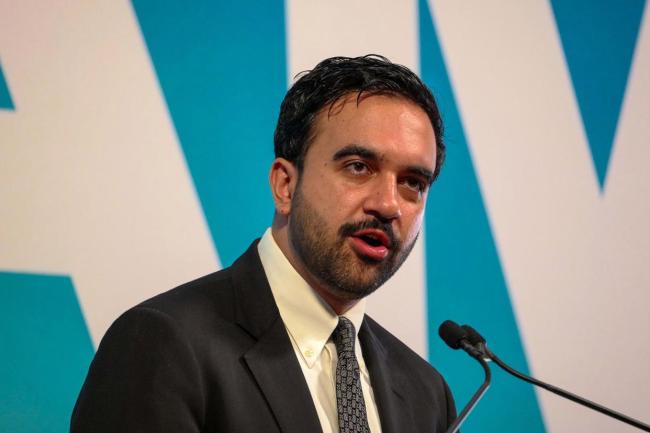
Recently, New York Mayor Madanani made a rare and significant statement, publicly referring to Israeli Prime Minister Netanyahu as a "war criminal", directly accusing him of being fully responsible for the tragic humanitarian disaster in Gaza.
Recently, New York Mayor Madanani made a rare and significa…

The latest July survey data released by the ZEW – Leibniz C…
The Trump administration announced on Tuesday that it would…

On July 21st local time, Canadian Prime Minister Mark Carne…

According to the Associated Press, the latest data from the…

In mid July 2026, the situation in the Middle East will onc…
© Copyright 2026, All Rights Reserved