According to CNBC, South Korean tech giant Samsung Electronics recently wrote a significant chapter in the capital markets, successfully crossing the $1 trillion threshold in market capitalization. This makes Samsung the second Asian enterprise—following Taiwan Semiconductor Manufacturing Company (TSMC)—to achieve this milestone, underscoring the formidable strength of the Asian chip industry on the global stage.
During trading hours at the Seoul Stock Exchange, Samsung Electronics' share price surged a remarkable 15% in a single day, marking the largest one-day gain in the company's history. This robust rally directly propelled the company's total market capitalization to approximately 1,500 trillion South Korean won, equivalent to roughly $1.03 trillion. This breakthrough not only represents a milestone for Samsung itself but also further bolstered market confidence in South Korea's semiconductor sector. However, the immediate catalyst for this surge in share price stemmed from Samsung's stellar first-quarter earnings report released last week. The report revealed that the company's operating profit for the quarter skyrocketed more than eightfold year-on-year, reaching 57.2 trillion won; concurrently, revenue hit a new historical record, reaching 133.9 trillion won. This robust performance exceeded market expectations, injecting strong momentum into investor sentiment and driving a sustained inflow of capital into Samsung shares.
Currently, Samsung is making an all-out effort to catch up with its rival, SK Hynix, in the rapidly expanding field of high-end memory. In February of this year, Samsung took the lead in commencing mass production of HBM4 chips and began delivering them to customers. This High Bandwidth Memory (HBM) chip is regarded as a critical core component for next-generation artificial intelligence systems; it is particularly well-suited for NVIDIA's upcoming generation of data center AI solutions, capable of efficiently handling large-scale, high-intensity AI computing tasks.
Market analysts generally attribute Samsung's recent performance to the convergence of multiple positive factors. First, driven by the global AI wave, demand for high-end AI memory remains consistently strong while market supply remains relatively constrained; second, investor confidence in Samsung's latest chip technologies has strengthened significantly. These elements have combined to drive Samsung's powerful rebound in the capital markets.
Furthermore, another piece of news provided additional support for Samsung's share price. Reports indicate that Apple is currently in discussions with both Samsung Electronics and Intel regarding the possibility of manufacturing chips for its devices domestically within the United States. If this potential collaboration comes to fruition, it will help Apple reduce its excessive reliance on TSMC and achieve a more diversified supply chain layout. This development has further heightened market expectations regarding Samsung's future order prospects.
Naturally, Samsung's stellar performance has also triggered a positive reaction across the entire South Korean stock market. Driven by the surge in Samsung's share price, South Korea's benchmark KOSPI index broke through the historic 7,000-point threshold; similarly, SK Hynix—another major chip manufacturer—saw its share price climb by over 10%. This ripple effect underscores the semiconductor industry's pivotal weight within the South Korean economy, as well as the profound impact of AI-related technologies on regional capital markets.
Reflecting on Samsung's trajectory, as a world-leading manufacturer of semiconductors and consumer electronics, the company has long maintained a dominant position in sectors such as memory chips and processors. However, in the era of artificial intelligence, high-end memory technologies—such as High Bandwidth Memory (HBM)—have emerged as the new focal point of competition. Samsung's pioneering move to mass-produce HBM4 not only demonstrates the fruits of its investment in technological R&D but also highlights the critical role South Korean enterprises play within the global AI supply chain.
From a broader perspective, Samsung's market capitalization surpassing the $1 trillion mark serves as yet another testament to the growing prowess of Asian technology companies. TSMC had previously been the first to achieve this milestone; now, Samsung's entry into this exclusive club signals the steady advancement of the Asian semiconductor industry toward the high-value end of the global supply chain. For South Korea, this event not only boosts national economic confidence but also underscores the strategic significance of the semiconductor industry as a pillar of the national economy.
Looking ahead, as the application of artificial intelligence continues to deepen, global demand for high-performance memory is expected to maintain robust growth. Samsung's breakthroughs in the HBM sector provide it with a new engine for growth; however, the company also faces challenges ranging from fierce competition—particularly from rivals like SK Hynix—to geopolitical risks within the global supply chain. The key test for Samsung in the next phase will be how it sustains its technological leadership, expands production capacity, and capitalizes on the opportunities presented by AI.
Overall, Samsung's recent crossing of the $1 trillion market capitalization threshold is both a reflection of its own performance and technological prowess, and an inevitable outcome of the surging global wave of AI industry development. This milestone not only opens up new avenues for the company's future growth but also serves as a compelling example that helps Asian technology enterprises garner greater attention and recognition within international capital markets.
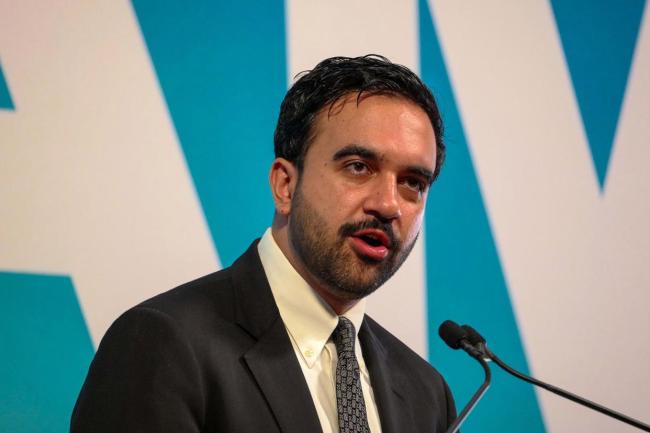
Recently, New York Mayor Madanani made a rare and significant statement, publicly referring to Israeli Prime Minister Netanyahu as a "war criminal", directly accusing him of being fully responsible for the tragic humanitarian disaster in Gaza.
Recently, New York Mayor Madanani made a rare and significa…
The latest July survey data released by the ZEW – Leibniz C…
The Trump administration announced on Tuesday that it would…
On July 21st local time, Canadian Prime Minister Mark Carne…
According to the Associated Press, the latest data from the…

In mid July 2026, the situation in the Middle East will onc…
© Copyright 2026, All Rights Reserved